

139
newly emerging Haldia port-cum- industrial complex. Till date, very few literatures
are available on the bioaccumulation pattern of heavy metals in the halophytes of
lower Gangetic delta (Mitra et al. 2004). Although lot of studies have been done on
tissue metal level of shellfish and finfish (Mitra et al. 1992; Mitra and Choudhury
1993; Mitra et al. 2011; Mitra et al. 2012), but few publications are found on the
bioaccumulation of heavy metals by mangroves in the coastal zones, estuaries and
river mouths of the maritime state of West Bengal. A Department of Environment,
Government of West Bengal (India) funded project on the bioaccumulation of
heavy metals of Sundarbans (Mitra et al. 2004) is very relevant in this context. The
report, however, does not reflect the area-wise sink of heavy metals, which is very
Kakdwip
Harinbari
Chemaguri
Sagar south
Lothian island
Jambu island
Frasergunj
Gosaba
Chotomollakhali
Bali island
Sajnekhali
Bagmara
Concentration of Zn (ppm dry wt.)
Root Premonsoon
Stem Premonsoon
Leaf Premonsoon
Leaf Monsoon
Stem Postmonsoon
Leaf Postmonsoon
Stem Monsoon
Root Postmonsoon
Root Monsoon
70
60
50
40
30
20
10
0
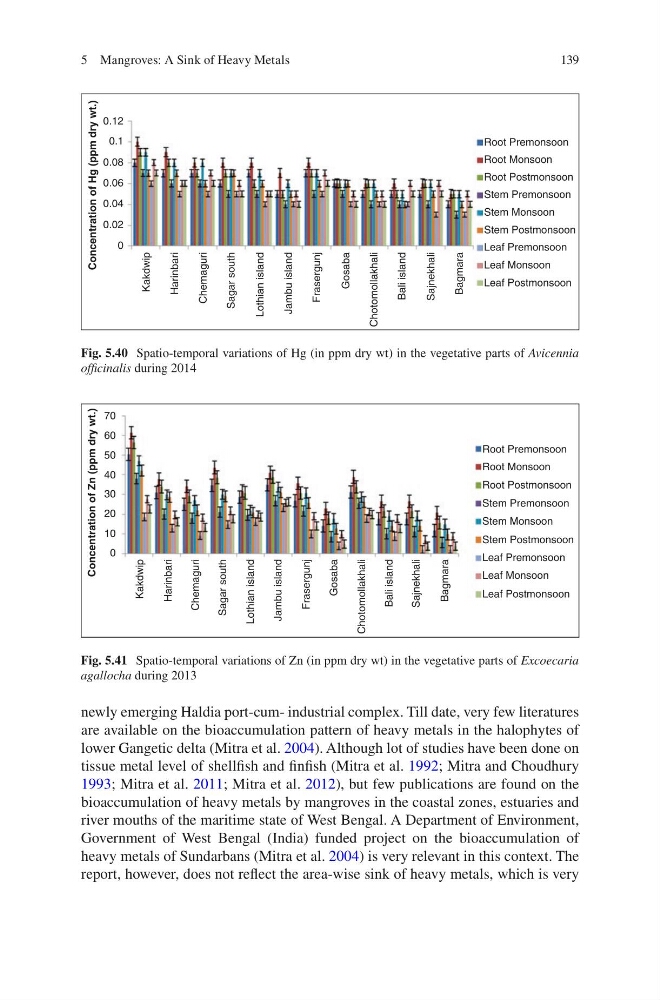
Fig. 5.41 Spatio-temporal variations of Zn (in ppm dry wt) in the vegetative parts of Excoecaria
agallocha during 2013
Kakdwip
Harinbari
Chemaguri
Sagar south
Lothian island
Jambu island
Frasergunj
Gosaba
Chotomollakhali
Bali island
Sajnekhali
Bagmara
Concentration of Hg (ppm dry wt.)
Root Premonsoon
Stem Premonsoon
Leaf Premonsoon
Leaf Monsoon
Stem Postmonsoon
Leaf Postmonsoon
Stem Monsoon
Root Postmonsoon
Root Monsoon
0.1
0.12
0.08
0.06
0.04
0.02
0
Fig. 5.40 Spatio-temporal variations of Hg (in ppm dry wt) in the vegetative parts of Avicennia
officinalis during 2014
5 Mangroves: A Sink of Heavy Metals
newly emerging Haldia port-cum- industrial complex. Till date, very few literatures
are available on the bioaccumulation pattern of heavy metals in the halophytes of
lower Gangetic delta (Mitra et al. 2004). Although lot of studies have been done on
tissue metal level of shellfish and finfish (Mitra et al. 1992; Mitra and Choudhury
1993; Mitra et al. 2011; Mitra et al. 2012), but few publications are found on the
bioaccumulation of heavy metals by mangroves in the coastal zones, estuaries and
river mouths of the maritime state of West Bengal. A Department of Environment,
Government of West Bengal (India) funded project on the bioaccumulation of
heavy metals of Sundarbans (Mitra et al. 2004) is very relevant in this context. The
report, however, does not reflect the area-wise sink of heavy metals, which is very
Kakdwip
Harinbari
Chemaguri
Sagar south
Lothian island
Jambu island
Frasergunj
Gosaba
Chotomollakhali
Bali island
Sajnekhali
Bagmara
Concentration of Zn (ppm dry wt.)
Root Premonsoon
Stem Premonsoon
Leaf Premonsoon
Leaf Monsoon
Stem Postmonsoon
Leaf Postmonsoon
Stem Monsoon
Root Postmonsoon
Root Monsoon
70
60
50
40
30
20
10
0
Fig. 5.41 Spatio-temporal variations of Zn (in ppm dry wt) in the vegetative parts of Excoecaria
agallocha during 2013
Kakdwip
Harinbari
Chemaguri
Sagar south
Lothian island
Jambu island
Frasergunj
Gosaba
Chotomollakhali
Bali island
Sajnekhali
Bagmara
Concentration of Hg (ppm dry wt.)
Root Premonsoon
Stem Premonsoon
Leaf Premonsoon
Leaf Monsoon
Stem Postmonsoon
Leaf Postmonsoon
Stem Monsoon
Root Postmonsoon
Root Monsoon
0.1
0.12
0.08
0.06
0.04
0.02
0
Fig. 5.40 Spatio-temporal variations of Hg (in ppm dry wt) in the vegetative parts of Avicennia
officinalis during 2014
5 Mangroves: A Sink of Heavy Metals