

122
dredging activities and anthropogenic inputs (Panigrahy et al. 1997). Sediments in
much affected areas not only record its history, but also indicate the degree of pollution (Sahu and Bhosale 1991). The mechanism of accumulation of pollutants in
the sediments is strongly controlled by the nature of substrate as well as the
physico- chemical conditions controlling dissolution and precipitation (Panigrahy
et al. 1997). Even though many of the organic compounds occurring in the marine
sediments are known to form complexes with metal ions in solution, it has been
observed that humic substances are responsible for these strong interactions
(Manskaya and Drozdova 1968).
In many pockets of Indian Sundarbans, mangroves mostly grow in the polluted
intertidal mudflats of coastal zone (Fig. 5.12). Hence this study was also extended
Kakdwip
Harinbari
Chemaguri
Sagar south
Lothian island
Jambu island
Frasergunj
Gosaba
Chotomollakhali
Bali island
Sajnekhali
Bagmara
2013 Premonsoon
2013 Postmonsoon
2013 Monsoon
2014 Premonsoon
2014 Postmonsoon
2014 Monsoon
60
50
40
30
20
10
0
Concentration of Pb (ppb)
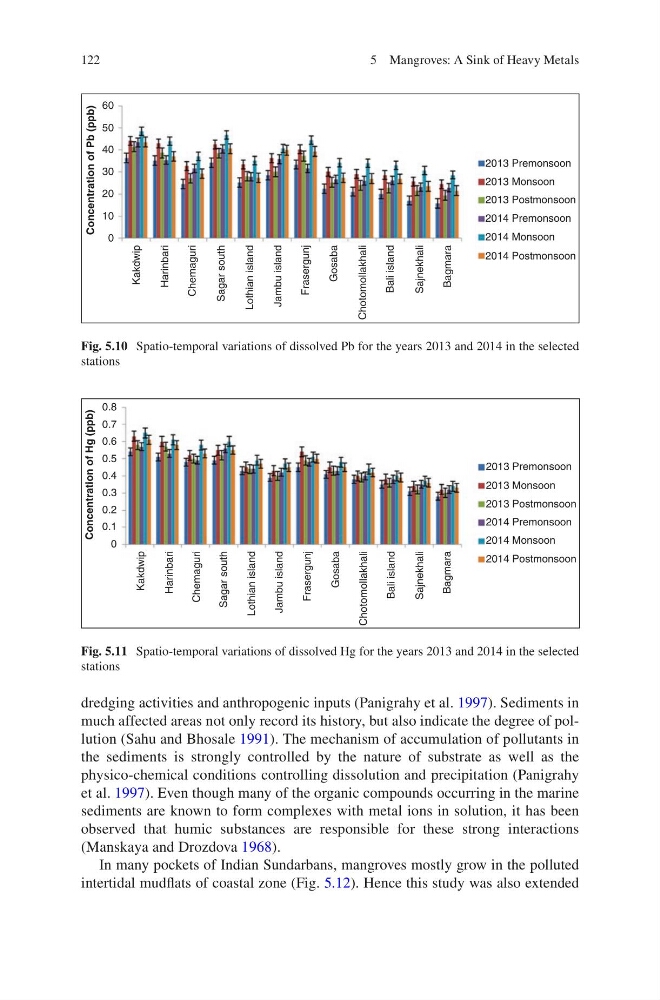
Fig. 5.10 Spatio-temporal variations of dissolved Pb for the years 2013 and 2014 in the selected
stations
Kakdwip
Harinbari
Chemaguri
Sagar south
Lothian island
Jambu island
Frasergunj
Gosaba
Chotomollakhali
Bali island
Sajnekhali
Bagmara
2013 Premonsoon
2013 Postmonsoon
2013 Monsoon
2014 Premonsoon
2014 Postmonsoon
2014 Monsoon
Concentration of Hg (ppb)
0.8
0.7
0.6
0.5
0.4
0.3
0.2
0.1
0
Fig. 5.11 Spatio-temporal variations of dissolved Hg for the years 2013 and 2014 in the selected
stations
5 Mangroves: A Sink of Heavy Metals
dredging activities and anthropogenic inputs (Panigrahy et al. 1997). Sediments in
much affected areas not only record its history, but also indicate the degree of pollution (Sahu and Bhosale 1991). The mechanism of accumulation of pollutants in
the sediments is strongly controlled by the nature of substrate as well as the
physico- chemical conditions controlling dissolution and precipitation (Panigrahy
et al. 1997). Even though many of the organic compounds occurring in the marine
sediments are known to form complexes with metal ions in solution, it has been
observed that humic substances are responsible for these strong interactions
(Manskaya and Drozdova 1968).
In many pockets of Indian Sundarbans, mangroves mostly grow in the polluted
intertidal mudflats of coastal zone (Fig. 5.12). Hence this study was also extended
Kakdwip
Harinbari
Chemaguri
Sagar south
Lothian island
Jambu island
Frasergunj
Gosaba
Chotomollakhali
Bali island
Sajnekhali
Bagmara
2013 Premonsoon
2013 Postmonsoon
2013 Monsoon
2014 Premonsoon
2014 Postmonsoon
2014 Monsoon
60
50
40
30
20
10
0
Concentration of Pb (ppb)
Fig. 5.10 Spatio-temporal variations of dissolved Pb for the years 2013 and 2014 in the selected
stations
Kakdwip
Harinbari
Chemaguri
Sagar south
Lothian island
Jambu island
Frasergunj
Gosaba
Chotomollakhali
Bali island
Sajnekhali
Bagmara
2013 Premonsoon
2013 Postmonsoon
2013 Monsoon
2014 Premonsoon
2014 Postmonsoon
2014 Monsoon
Concentration of Hg (ppb)
0.8
0.7
0.6
0.5
0.4
0.3
0.2
0.1
0
Fig. 5.11 Spatio-temporal variations of dissolved Hg for the years 2013 and 2014 in the selected
stations
5 Mangroves: A Sink of Heavy Metals