

Crafting Luxury with ‘More-ish’ Qualities …
137
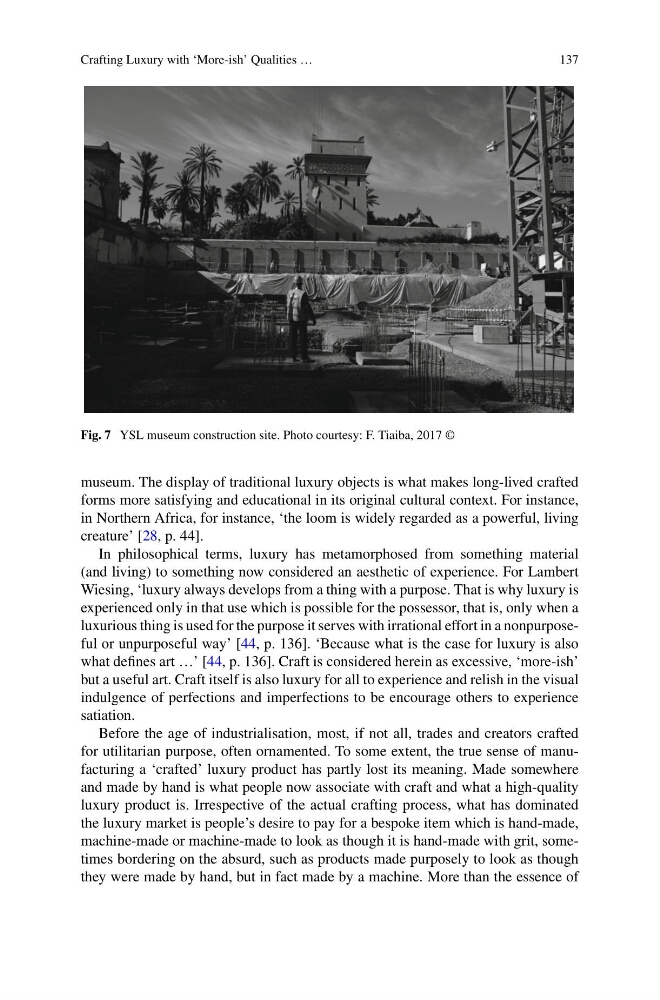
Fig. 7 YSL museum construction site. Photo courtesy: F. Tiaiba, 2017 ©
museum. The display of traditional luxury objects is what makes long-lived crafted
forms more satisfying and educational in its original cultural context. For instance,
in Northern Africa, for instance, ‘the loom is widely regarded as a powerful, living
creature’ [28, p. 44].
In philosophical terms, luxury has metamorphosed from something material
(and living) to something now considered an aesthetic of experience. For Lambert
Wiesing, ‘luxury always develops from a thing with a purpose. That is why luxury is
experienced only in that use which is possible for the possessor, that is, only when a
luxurious thing is used for the purpose it serves with irrational effort in a nonpurposeful or unpurposeful way’ [44, p. 136]. ‘Because what is the case for luxury is also
what defines art …’ [44, p. 136]. Craft is considered herein as excessive, ‘more-ish’
but a useful art. Craft itself is also luxury for all to experience and relish in the visual
indulgence of perfections and imperfections to be encourage others to experience
satiation.
Before the age of industrialisation, most, if not all, trades and creators crafted
for utilitarian purpose, often ornamented. To some extent, the true sense of manufacturing a ‘crafted’ luxury product has partly lost its meaning. Made somewhere
and made by hand is what people now associate with craft and what a high-quality
luxury product is. Irrespective of the actual crafting process, what has dominated
the luxury market is people’s desire to pay for a bespoke item which is hand-made,
machine-made or machine-made to look as though it is hand-made with grit, sometimes bordering on the absurd, such as products made purposely to look as though
they were made by hand, but in fact made by a machine. More than the essence of
137
Fig. 7 YSL museum construction site. Photo courtesy: F. Tiaiba, 2017 ©
museum. The display of traditional luxury objects is what makes long-lived crafted
forms more satisfying and educational in its original cultural context. For instance,
in Northern Africa, for instance, ‘the loom is widely regarded as a powerful, living
creature’ [28, p. 44].
In philosophical terms, luxury has metamorphosed from something material
(and living) to something now considered an aesthetic of experience. For Lambert
Wiesing, ‘luxury always develops from a thing with a purpose. That is why luxury is
experienced only in that use which is possible for the possessor, that is, only when a
luxurious thing is used for the purpose it serves with irrational effort in a nonpurposeful or unpurposeful way’ [44, p. 136]. ‘Because what is the case for luxury is also
what defines art …’ [44, p. 136]. Craft is considered herein as excessive, ‘more-ish’
but a useful art. Craft itself is also luxury for all to experience and relish in the visual
indulgence of perfections and imperfections to be encourage others to experience
satiation.
Before the age of industrialisation, most, if not all, trades and creators crafted
for utilitarian purpose, often ornamented. To some extent, the true sense of manufacturing a ‘crafted’ luxury product has partly lost its meaning. Made somewhere
and made by hand is what people now associate with craft and what a high-quality
luxury product is. Irrespective of the actual crafting process, what has dominated
the luxury market is people’s desire to pay for a bespoke item which is hand-made,
machine-made or machine-made to look as though it is hand-made with grit, sometimes bordering on the absurd, such as products made purposely to look as though
they were made by hand, but in fact made by a machine. More than the essence of