

18
D. K. Subbiah et al.
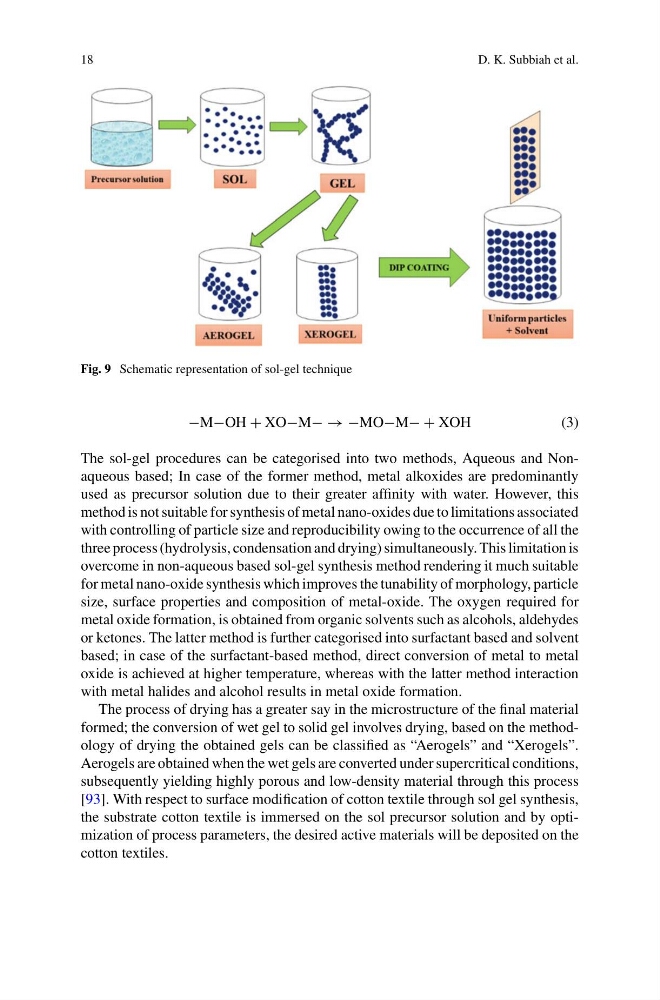
Fig. 9 Schematic representation of sol-gel technique
−M−OH + XO−M− → −MO−M− + XOH
(3)
The sol-gel procedures can be categorised into two methods, Aqueous and Nonaqueous based; In case of the former method, metal alkoxides are predominantly
used as precursor solution due to their greater affinity with water. However, this
method is not suitable for synthesis of metal nano-oxides due to limitations associated
with controlling of particle size and reproducibility owing to the occurrence of all the
three process (hydrolysis, condensation and drying) simultaneously. This limitation is
overcome in non-aqueous based sol-gel synthesis method rendering it much suitable
for metal nano-oxide synthesis which improves the tunability of morphology, particle
size, surface properties and composition of metal-oxide. The oxygen required for
metal oxide formation, is obtained from organic solvents such as alcohols, aldehydes
or ketones. The latter method is further categorised into surfactant based and solvent
based; in case of the surfactant-based method, direct conversion of metal to metal
oxide is achieved at higher temperature, whereas with the latter method interaction
with metal halides and alcohol results in metal oxide formation.
The process of drying has a greater say in the microstructure of the final material
formed; the conversion of wet gel to solid gel involves drying, based on the methodology of drying the obtained gels can be classified as “Aerogels” and “Xerogels”.
Aerogels are obtained when the wet gels are converted under supercritical conditions,
subsequently yielding highly porous and low-density material through this process
[93]. With respect to surface modification of cotton textile through sol gel synthesis,
the substrate cotton textile is immersed on the sol precursor solution and by optimization of process parameters, the desired active materials will be deposited on the
cotton textiles.
D. K. Subbiah et al.
Fig. 9 Schematic representation of sol-gel technique
−M−OH + XO−M− → −MO−M− + XOH
(3)
The sol-gel procedures can be categorised into two methods, Aqueous and Nonaqueous based; In case of the former method, metal alkoxides are predominantly
used as precursor solution due to their greater affinity with water. However, this
method is not suitable for synthesis of metal nano-oxides due to limitations associated
with controlling of particle size and reproducibility owing to the occurrence of all the
three process (hydrolysis, condensation and drying) simultaneously. This limitation is
overcome in non-aqueous based sol-gel synthesis method rendering it much suitable
for metal nano-oxide synthesis which improves the tunability of morphology, particle
size, surface properties and composition of metal-oxide. The oxygen required for
metal oxide formation, is obtained from organic solvents such as alcohols, aldehydes
or ketones. The latter method is further categorised into surfactant based and solvent
based; in case of the surfactant-based method, direct conversion of metal to metal
oxide is achieved at higher temperature, whereas with the latter method interaction
with metal halides and alcohol results in metal oxide formation.
The process of drying has a greater say in the microstructure of the final material
formed; the conversion of wet gel to solid gel involves drying, based on the methodology of drying the obtained gels can be classified as “Aerogels” and “Xerogels”.
Aerogels are obtained when the wet gels are converted under supercritical conditions,
subsequently yielding highly porous and low-density material through this process
[93]. With respect to surface modification of cotton textile through sol gel synthesis,
the substrate cotton textile is immersed on the sol precursor solution and by optimization of process parameters, the desired active materials will be deposited on the
cotton textiles.