

Surface Modification of Textiles with Nanomaterials …
17
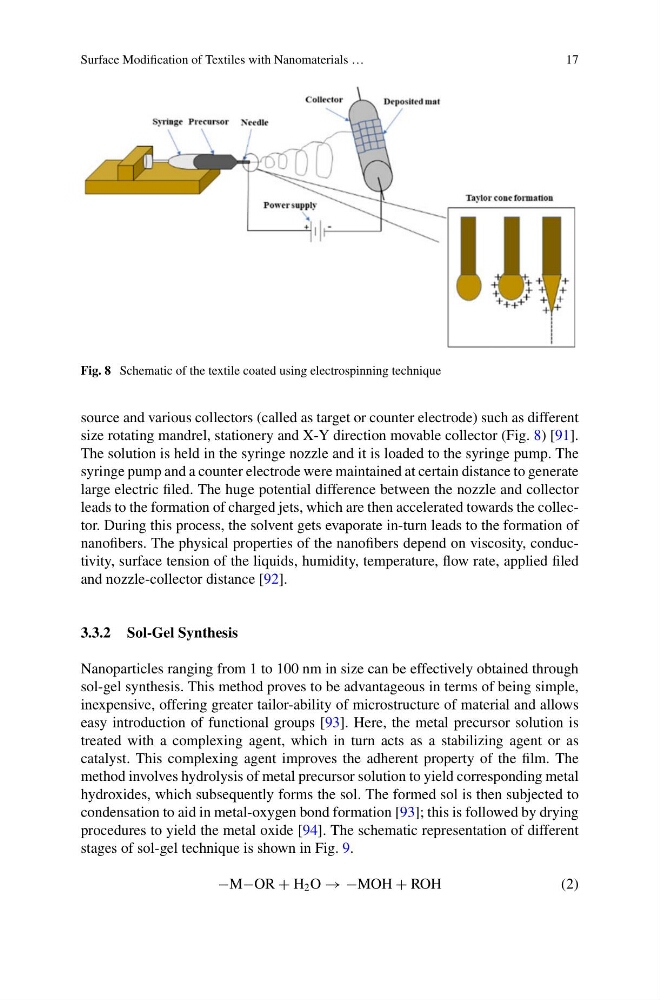
Fig. 8 Schematic of the textile coated using electrospinning technique
source and various collectors (called as target or counter electrode) such as different
size rotating mandrel, stationery and X-Y direction movable collector (Fig. 8) [91].
The solution is held in the syringe nozzle and it is loaded to the syringe pump. The
syringe pump and a counter electrode were maintained at certain distance to generate
large electric filed. The huge potential difference between the nozzle and collector
leads to the formation of charged jets, which are then accelerated towards the collector. During this process, the solvent gets evaporate in-turn leads to the formation of
nanofibers. The physical properties of the nanofibers depend on viscosity, conductivity, surface tension of the liquids, humidity, temperature, flow rate, applied filed
and nozzle-collector distance [92].
3.3.2 Sol-Gel Synthesis
Nanoparticles ranging from 1 to 100 nm in size can be effectively obtained through
sol-gel synthesis. This method proves to be advantageous in terms of being simple,
inexpensive, offering greater tailor-ability of microstructure of material and allows
easy introduction of functional groups [93]. Here, the metal precursor solution is
treated with a complexing agent, which in turn acts as a stabilizing agent or as
catalyst. This complexing agent improves the adherent property of the film. The
method involves hydrolysis of metal precursor solution to yield corresponding metal
hydroxides, which subsequently forms the sol. The formed sol is then subjected to
condensation to aid in metal-oxygen bond formation [93]; this is followed by drying
procedures to yield the metal oxide [94]. The schematic representation of different
stages of sol-gel technique is shown in Fig. 9.
−M−OR + H 2 O → −MOH + ROH
(2)
17
Fig. 8 Schematic of the textile coated using electrospinning technique
source and various collectors (called as target or counter electrode) such as different
size rotating mandrel, stationery and X-Y direction movable collector (Fig. 8) [91].
The solution is held in the syringe nozzle and it is loaded to the syringe pump. The
syringe pump and a counter electrode were maintained at certain distance to generate
large electric filed. The huge potential difference between the nozzle and collector
leads to the formation of charged jets, which are then accelerated towards the collector. During this process, the solvent gets evaporate in-turn leads to the formation of
nanofibers. The physical properties of the nanofibers depend on viscosity, conductivity, surface tension of the liquids, humidity, temperature, flow rate, applied filed
and nozzle-collector distance [92].
3.3.2 Sol-Gel Synthesis
Nanoparticles ranging from 1 to 100 nm in size can be effectively obtained through
sol-gel synthesis. This method proves to be advantageous in terms of being simple,
inexpensive, offering greater tailor-ability of microstructure of material and allows
easy introduction of functional groups [93]. Here, the metal precursor solution is
treated with a complexing agent, which in turn acts as a stabilizing agent or as
catalyst. This complexing agent improves the adherent property of the film. The
method involves hydrolysis of metal precursor solution to yield corresponding metal
hydroxides, which subsequently forms the sol. The formed sol is then subjected to
condensation to aid in metal-oxygen bond formation [93]; this is followed by drying
procedures to yield the metal oxide [94]. The schematic representation of different
stages of sol-gel technique is shown in Fig. 9.
−M−OR + H 2 O → −MOH + ROH
(2)