

29 vol%, and the flame retardance of the composite linearly increased with increase
of PHDDT content. Cone calorimetric results suggested that PC/PHDDT composite
had a much lower peak value of heat release rate (PHRR) than that of neat PC when
adding 5 wt% PHDDT, decreased by approximately 44%. Moreover, tensile strength
of PC/PHDDT composite increased monotonously with increase of PHDDT content,
and the increase reached 50% when 20 wt% PHDDT was incorporated.
Bian and his co-workers used 4,4
0 -oxybis (benzoic acid) to replace part of
terephthalic acid and synthesized a series of TLCPs containing aromatic ether groups
abbreviated as TLCP-AEs (Scheme 8), where the diphenyl ether linkage could also
act as a kinked unit to decrease the transition temperatures of the resulting
copolyesters. The results showed that TLCP-AEs had low and broad mesophase
temperatures (230–400
C). TLCP-AEs also showed excellent thermal stability:
their 5%-weight-loss temperatures were above 440
C, and decomposition residue
at 700
C were higher than 45 wt% (Bian et al. 2010). All TLCP-AE copolyesters
exhibited high flame retardance with an LOI value of higher than 70 vol% and
UL-94 V-0 rating. The SEM observation revealed that TLCP-AEs had good fibrillation ability, showing the feasibility of forming microfibrils, which could enhance
the mechanical properties of thermoplastic polymers. Based on such TLCP-AE,
Chen et al. investigated the effect of TLCP-AE (1/1) (Scheme 8) on both flame
retardance and tensile properties of in situ reinforced PET (Chen et al. 2012). With
increasing TLCP-AE(1:1) content from 0 to 20 wt%, the LOI values of PET/TLCPAE(1:1) composites increased from 21.8 to 32.5. During cone calorimetric tests, the
PHRR values of PET/TLCP-AE(1:1) composites reduced by 15%, 24%, 34%, and
40% compared to neat PET, respectively. Furthermore, tensile strength and modulus
of the in situ composite increased by 12% and 49% respectively, suggesting a good
reinforcing behavior of such phosphorus-containing TLCP.
Hamciuca and his coworkers copolymerized DOPO-HQ and isopropylidene
diphenol (4,4
0
–(hexafluoroisopropylidene) diphenol or 4,4
0
–isopropylidene
diphenol) with an aromatic diacid chloride TOBC as mesogenic unit (Hamciuca
et al. 2006). In such system, different isopropylidene diphenols could act as a kinked
linkage to destroy the linearity and shorten the effective length of the rod-like
structural sequence of the polymer chains. The obtained copolyesters exhibited
acceptable thermal stability having the initial decomposition temperature above
350
C and decomposition residue at 700
C higher than 23 wt%. The glass
transition temperature of the copolyesters was in the range of 139–146
C,
suggesting the isopropylidene diphenyl linkages worked. Compared with the
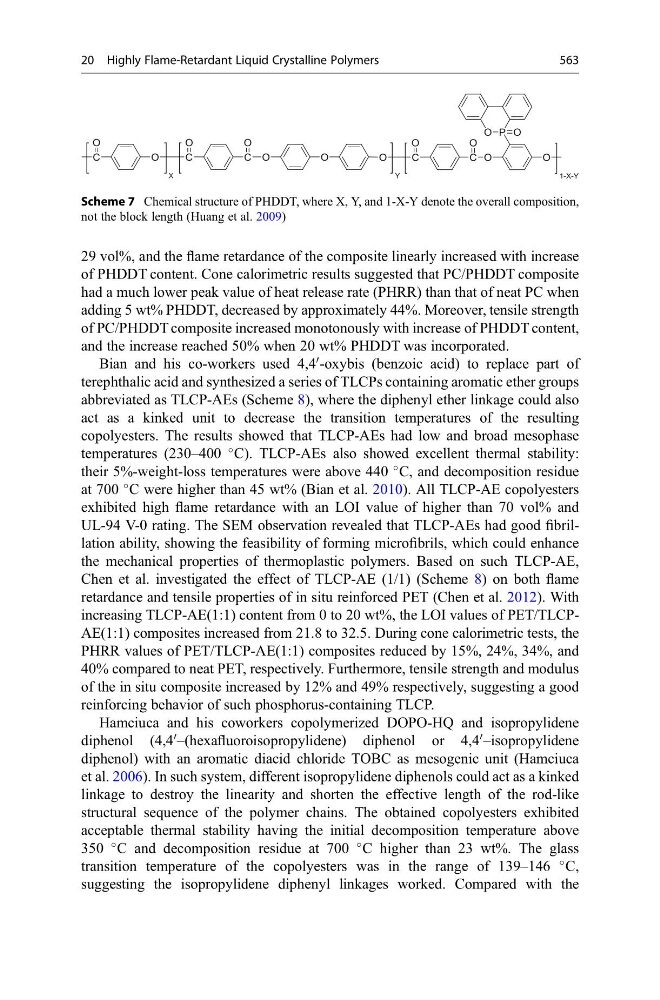
Scheme 7 Chemical structure of PHDDT, where X, Y, and 1-X-Y denote the overall composition,
not the block length (Huang et al. 2009)
20 Highly Flame-Retardant Liquid Crystalline Polymers
563
of PHDDT content. Cone calorimetric results suggested that PC/PHDDT composite
had a much lower peak value of heat release rate (PHRR) than that of neat PC when
adding 5 wt% PHDDT, decreased by approximately 44%. Moreover, tensile strength
of PC/PHDDT composite increased monotonously with increase of PHDDT content,
and the increase reached 50% when 20 wt% PHDDT was incorporated.
Bian and his co-workers used 4,4
0 -oxybis (benzoic acid) to replace part of
terephthalic acid and synthesized a series of TLCPs containing aromatic ether groups
abbreviated as TLCP-AEs (Scheme 8), where the diphenyl ether linkage could also
act as a kinked unit to decrease the transition temperatures of the resulting
copolyesters. The results showed that TLCP-AEs had low and broad mesophase
temperatures (230–400
C). TLCP-AEs also showed excellent thermal stability:
their 5%-weight-loss temperatures were above 440
C, and decomposition residue
at 700
C were higher than 45 wt% (Bian et al. 2010). All TLCP-AE copolyesters
exhibited high flame retardance with an LOI value of higher than 70 vol% and
UL-94 V-0 rating. The SEM observation revealed that TLCP-AEs had good fibrillation ability, showing the feasibility of forming microfibrils, which could enhance
the mechanical properties of thermoplastic polymers. Based on such TLCP-AE,
Chen et al. investigated the effect of TLCP-AE (1/1) (Scheme 8) on both flame
retardance and tensile properties of in situ reinforced PET (Chen et al. 2012). With
increasing TLCP-AE(1:1) content from 0 to 20 wt%, the LOI values of PET/TLCPAE(1:1) composites increased from 21.8 to 32.5. During cone calorimetric tests, the
PHRR values of PET/TLCP-AE(1:1) composites reduced by 15%, 24%, 34%, and
40% compared to neat PET, respectively. Furthermore, tensile strength and modulus
of the in situ composite increased by 12% and 49% respectively, suggesting a good
reinforcing behavior of such phosphorus-containing TLCP.
Hamciuca and his coworkers copolymerized DOPO-HQ and isopropylidene
diphenol (4,4
0
–(hexafluoroisopropylidene) diphenol or 4,4
0
–isopropylidene
diphenol) with an aromatic diacid chloride TOBC as mesogenic unit (Hamciuca
et al. 2006). In such system, different isopropylidene diphenols could act as a kinked
linkage to destroy the linearity and shorten the effective length of the rod-like
structural sequence of the polymer chains. The obtained copolyesters exhibited
acceptable thermal stability having the initial decomposition temperature above
350
C and decomposition residue at 700
C higher than 23 wt%. The glass
transition temperature of the copolyesters was in the range of 139–146
C,
suggesting the isopropylidene diphenyl linkages worked. Compared with the
Scheme 7 Chemical structure of PHDDT, where X, Y, and 1-X-Y denote the overall composition,
not the block length (Huang et al. 2009)
20 Highly Flame-Retardant Liquid Crystalline Polymers
563