

copolyester with dodecyl flexible spacer, isotropic temperature of the synthesized
copolyesters was considerably lower than that of the copolyester with dodecyl
flexible spacer (Table 6), suggesting that the molecules with isopropylidene kinked
units were more flexible than dodecyl spacer and could easily go from one conformation to any other. Same results could also be concluded from the similar
copolyesters where DOPO-NQ was used as the phosphorus-containing moiety
(Vlad-Bubulaca and Hamciuca 2010).
Main-Chain Phosphorus-Containing TLCP
Main-chain phosphorus-containing polymers are not commonly used as flame
retardant, particularly compared with side-group phosphorus-containing ones. Generally, phosphorus-containing substances act as flame retardants either exclusively in
the gaseous phase via inhibiting flame and quenching highly reactive radicals (HÁ
and OHÁ for instance) during combustion to form less reactive or even inert molecules (similar to the mechanism of the halogenated flame retardants), or both in the
gaseous phase and in the condensed phase via formation of a carbonized barriers
simultaneously (close to the mechanism of red phosphorus). Prior of this,
phosphorus-containing segments are firstly released during bond breaking or chain
scission, then generate polyÀ/ultraÀ/pyro-phosphorus acid(s) as the dehydration
agents to accelerate aromatization and carbonization. For side-group phosphoruscontaining polymers, unstable P-C bonds endow the lower releasing temperature of
the phosphorus-containing segments, while for main-chain phosphorus-containing
ones, releasing these segments means the entire chain scission of the polymer. That is
to say, releasing temperature of the phosphorus-containing segments may not match
the burning temperature of the matrices.
Senthil and Kannan reported a series of ferrocene-based main-chain phosphoruscontaining liquid-crystalline copolyesters, phosphonate, or phosphate possessing
even numbers of flexible spaces from 2 to 10 methylenes was incorporated, as
summarized in Scheme 9 and Table 7 (Senthil and Kannan 2001, 2002a, b, c). The
early purpose of this research mainly aimed toward bringing the metallic character to
the polymer using ferrocene due to its excellent aromatic character and thermal
stability over 500
C. Also, thanks to the flame-retardant activity of the phosphoruscontaining groups, these ferrocene-based main-chain phosphorus-containing LCP
attracted attentions. As the phosphates incorporated with different numbers of
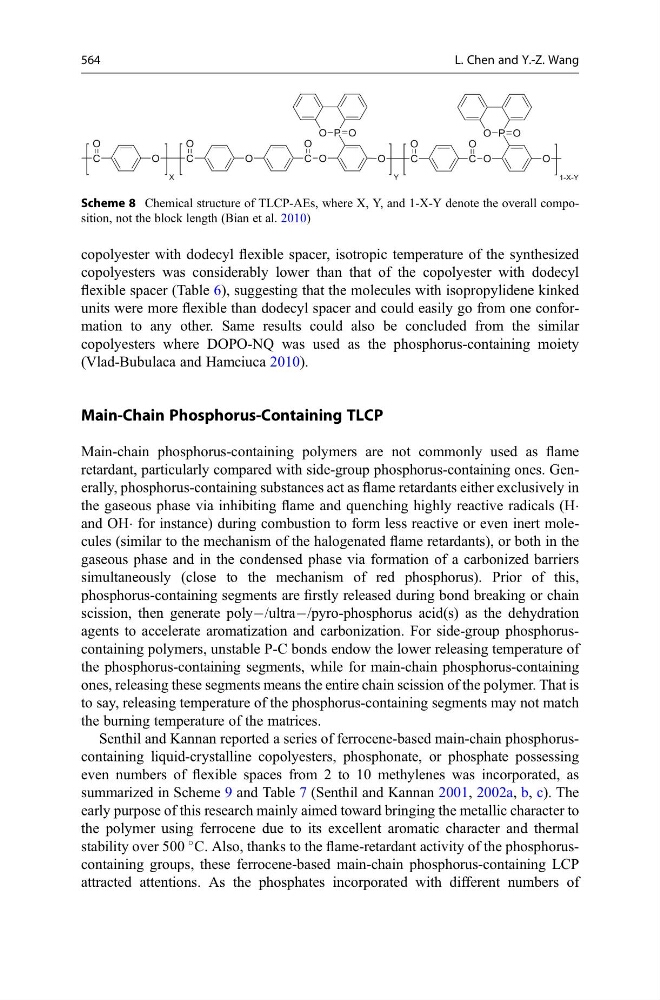
Scheme 8 Chemical structure of TLCP-AEs, where X, Y, and 1-X-Y denote the overall composition, not the block length (Bian et al. 2010)
564
L. Chen and Y.-Z. Wang
copolyesters was considerably lower than that of the copolyester with dodecyl
flexible spacer (Table 6), suggesting that the molecules with isopropylidene kinked
units were more flexible than dodecyl spacer and could easily go from one conformation to any other. Same results could also be concluded from the similar
copolyesters where DOPO-NQ was used as the phosphorus-containing moiety
(Vlad-Bubulaca and Hamciuca 2010).
Main-Chain Phosphorus-Containing TLCP
Main-chain phosphorus-containing polymers are not commonly used as flame
retardant, particularly compared with side-group phosphorus-containing ones. Generally, phosphorus-containing substances act as flame retardants either exclusively in
the gaseous phase via inhibiting flame and quenching highly reactive radicals (HÁ
and OHÁ for instance) during combustion to form less reactive or even inert molecules (similar to the mechanism of the halogenated flame retardants), or both in the
gaseous phase and in the condensed phase via formation of a carbonized barriers
simultaneously (close to the mechanism of red phosphorus). Prior of this,
phosphorus-containing segments are firstly released during bond breaking or chain
scission, then generate polyÀ/ultraÀ/pyro-phosphorus acid(s) as the dehydration
agents to accelerate aromatization and carbonization. For side-group phosphoruscontaining polymers, unstable P-C bonds endow the lower releasing temperature of
the phosphorus-containing segments, while for main-chain phosphorus-containing
ones, releasing these segments means the entire chain scission of the polymer. That is
to say, releasing temperature of the phosphorus-containing segments may not match
the burning temperature of the matrices.
Senthil and Kannan reported a series of ferrocene-based main-chain phosphoruscontaining liquid-crystalline copolyesters, phosphonate, or phosphate possessing
even numbers of flexible spaces from 2 to 10 methylenes was incorporated, as
summarized in Scheme 9 and Table 7 (Senthil and Kannan 2001, 2002a, b, c). The
early purpose of this research mainly aimed toward bringing the metallic character to
the polymer using ferrocene due to its excellent aromatic character and thermal
stability over 500
C. Also, thanks to the flame-retardant activity of the phosphoruscontaining groups, these ferrocene-based main-chain phosphorus-containing LCP
attracted attentions. As the phosphates incorporated with different numbers of
Scheme 8 Chemical structure of TLCP-AEs, where X, Y, and 1-X-Y denote the overall composition, not the block length (Bian et al. 2010)
564
L. Chen and Y.-Z. Wang