

Zhu et al. designed a model of photo-activated micropump, mainly including photodeformable material, pump membrane, pump chamber, and pipes (Chen et al. 2010).
Water is chosen as the pump medium. The flow rate of the water varied in a stroke of the
pump membrane, which means, the bending speed of the laminated film decreased in this
process. The smaller pressure would lead to a higher flow rate and a larger volume
pumped in a stroke. In further study, they utilized the bending of CLCP films to act as a
valve membrane (Chen et al. 2011).
Microscaled Actuators
Yu et al. designed and fabricated a light-regulated adhesion switch on
a microarrayed azobenzene CLCP superhydrophobic surface, by which water droplets could be rapidly, precisely, locally, and through no contact controlled
(Li et al. 2012b). It is well known that surface chemical composition as well as a
suitable microÀ/nanoscale rough surface cooperatively creates superhydrophobicity.
Polydimethylsiloxane-soft-template-based secondary replication was utilized to
introduce uniform and quantitatively controllable surface roughness to the
azobenzene CLCP film. After UV light irradiation, the azobenzene mesogens at
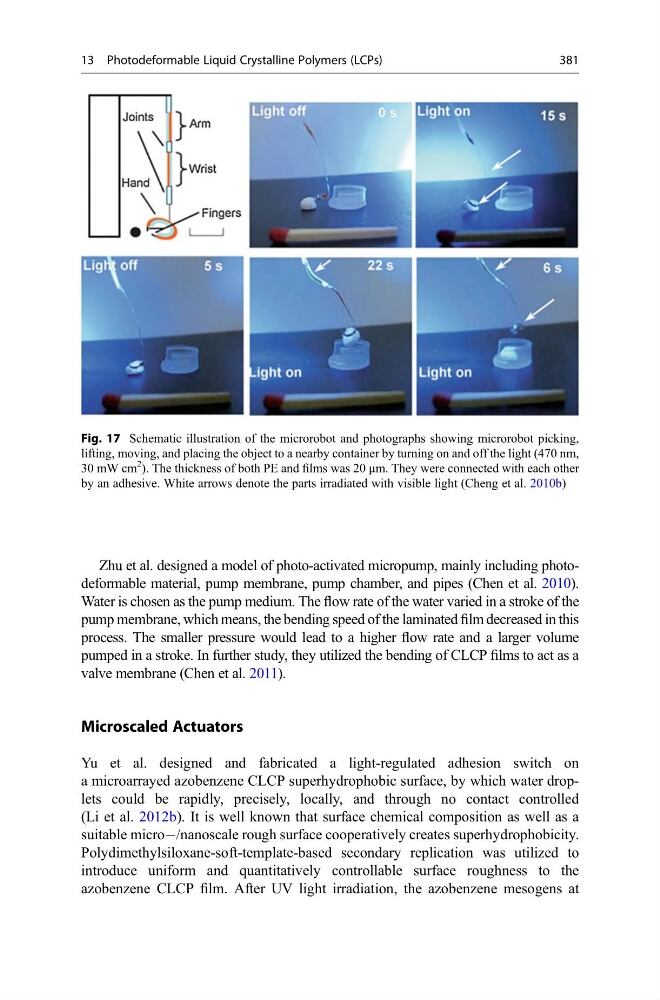
Fig. 17 Schematic illustration of the microrobot and photographs showing microrobot picking,
lifting, moving, and placing the object to a nearby container by turning on and off the light (470 nm,
30 mW cm
2
). The thickness of both PE and films was 20 μm. They were connected with each other
by an adhesive. White arrows denote the parts irradiated with visible light (Cheng et al. 2010b)
13 Photodeformable Liquid Crystalline Polymers (LCPs)
381
Water is chosen as the pump medium. The flow rate of the water varied in a stroke of the
pump membrane, which means, the bending speed of the laminated film decreased in this
process. The smaller pressure would lead to a higher flow rate and a larger volume
pumped in a stroke. In further study, they utilized the bending of CLCP films to act as a
valve membrane (Chen et al. 2011).
Microscaled Actuators
Yu et al. designed and fabricated a light-regulated adhesion switch on
a microarrayed azobenzene CLCP superhydrophobic surface, by which water droplets could be rapidly, precisely, locally, and through no contact controlled
(Li et al. 2012b). It is well known that surface chemical composition as well as a
suitable microÀ/nanoscale rough surface cooperatively creates superhydrophobicity.
Polydimethylsiloxane-soft-template-based secondary replication was utilized to
introduce uniform and quantitatively controllable surface roughness to the
azobenzene CLCP film. After UV light irradiation, the azobenzene mesogens at
Fig. 17 Schematic illustration of the microrobot and photographs showing microrobot picking,
lifting, moving, and placing the object to a nearby container by turning on and off the light (470 nm,
30 mW cm
2
). The thickness of both PE and films was 20 μm. They were connected with each other
by an adhesive. White arrows denote the parts irradiated with visible light (Cheng et al. 2010b)
13 Photodeformable Liquid Crystalline Polymers (LCPs)
381