

soft polyurethane film and then assembled with an azotolane-containing CLCP film, a
soft material system was achieved (Fig. 10). Upon excitation of 635 nm laser, the
PtTPBP&BDPPA-containing polyurethane film acts as an antenna to trap the 635 nm
light and upconvert it into the blue TTA-UCL emission; then the TTA-UCL is absorbed
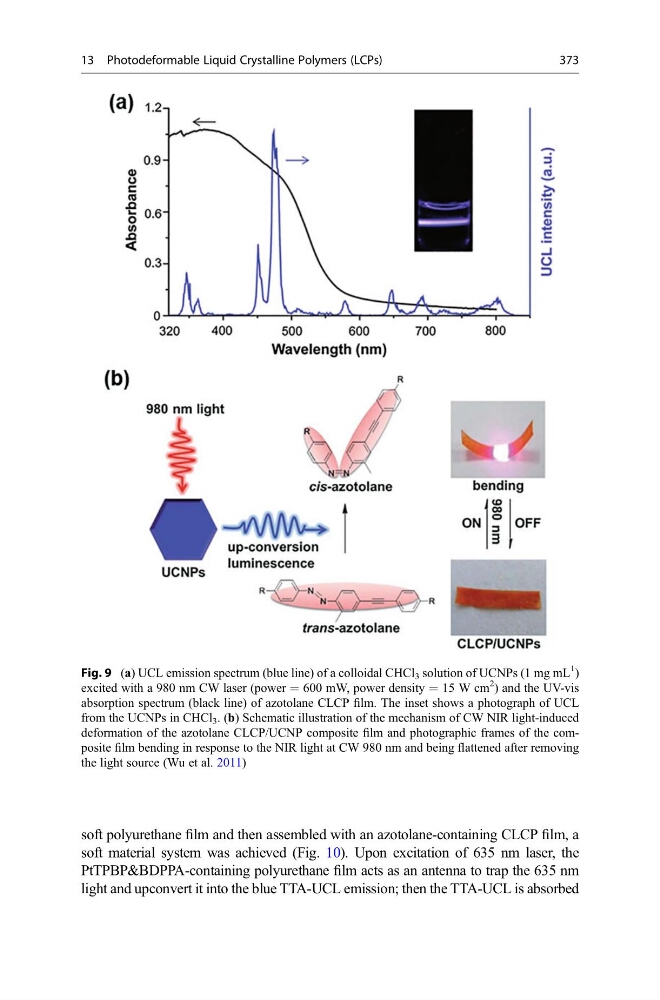
Fig. 9 (a) UCL emission spectrum (blue line) of a colloidal CHCl 3 solution of UCNPs (1 mg mL
1
)
excited with a 980 nm CW laser (power = 600 mW, power density = 15 W cm
2
) and the UV-vis
absorption spectrum (black line) of azotolane CLCP film. The inset shows a photograph of UCL
from the UCNPs in CHCl 3 . (b) Schematic illustration of the mechanism of CW NIR light-induced
deformation of the azotolane CLCP/UCNP composite film and photographic frames of the composite film bending in response to the NIR light at CW 980 nm and being flattened after removing
the light source (Wu et al. 2011)
13 Photodeformable Liquid Crystalline Polymers (LCPs)
373
soft material system was achieved (Fig. 10). Upon excitation of 635 nm laser, the
PtTPBP&BDPPA-containing polyurethane film acts as an antenna to trap the 635 nm
light and upconvert it into the blue TTA-UCL emission; then the TTA-UCL is absorbed
Fig. 9 (a) UCL emission spectrum (blue line) of a colloidal CHCl 3 solution of UCNPs (1 mg mL
1
)
excited with a 980 nm CW laser (power = 600 mW, power density = 15 W cm
2
) and the UV-vis
absorption spectrum (black line) of azotolane CLCP film. The inset shows a photograph of UCL
from the UCNPs in CHCl 3 . (b) Schematic illustration of the mechanism of CW NIR light-induced
deformation of the azotolane CLCP/UCNP composite film and photographic frames of the composite film bending in response to the NIR light at CW 980 nm and being flattened after removing
the light source (Wu et al. 2011)
13 Photodeformable Liquid Crystalline Polymers (LCPs)
373