

and utilization of solar energy because it converts solar energy into mechanical
energy directly.
Furthermore, Yu et al. gave the first example to incorporate upconversion nanophosphors (UCNPs) NaYF4:Yb,Tm into the azotolane-containing CLCP film and
succeeded in generating fast bending of the resulting composite film upon irradiation
with continuous-wave (CW) NIR light at 980 nm (Fig. 9) (Wu et al. 2011). Here,
upconversion luminescence (UCL) of the nanophosphors not only induces trans-cis
photoisomerization of the azo groups but also leads to alignment change of the
mesogens. Under excitation with a CW 980 nm laser, the as-prepared UCNPs show
blue emission, and the main UCL emission peaks at 450 nm and 475 nm, as shown in
Fig. 9a, overlap the absorption band of the azotolane CLCP film (between 320 nm
and 550 nm) perfectly; thus the UCL light emitted by UCNPs triggers the trans-cis
photoisomerization of the azotolane moieties. This kind of novel photodeformable
CLCP system is promising for biological applications, since NIR light penetrates
deeper into tissues and has less damage to biosamples.
Lately, Yu et al. achieved a red light-controllable composite film driven by low-power
excited UCL based on triplet-triplet annihilation (TTA) (Jiang et al. 2013).
This TTA-based UCL process shows several advantages over the lanthanide
upconversion techniques, such as higher quantum efficiency, large absorption efficiency,
and low excitation power density. When PtTPBP and BDPPA were incorporated into a
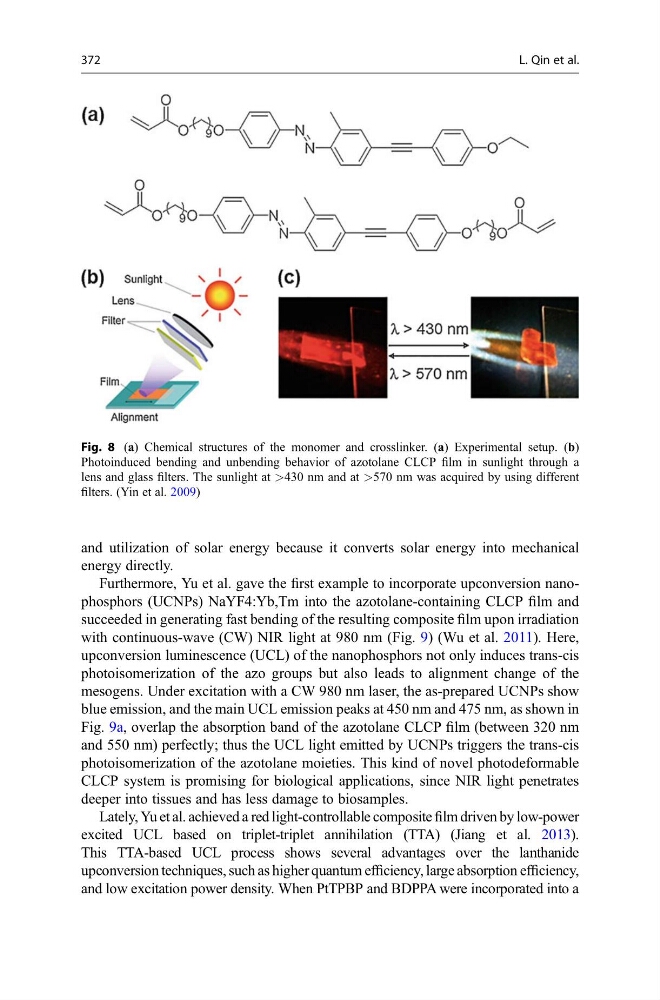
Fig. 8 (a) Chemical structures of the monomer and crosslinker. (a) Experimental setup. (b)
Photoinduced bending and unbending behavior of azotolane CLCP film in sunlight through a
lens and glass filters. The sunlight at >430 nm and at >570 nm was acquired by using different
filters. (Yin et al. 2009)
372
L. Qin et al.
energy directly.
Furthermore, Yu et al. gave the first example to incorporate upconversion nanophosphors (UCNPs) NaYF4:Yb,Tm into the azotolane-containing CLCP film and
succeeded in generating fast bending of the resulting composite film upon irradiation
with continuous-wave (CW) NIR light at 980 nm (Fig. 9) (Wu et al. 2011). Here,
upconversion luminescence (UCL) of the nanophosphors not only induces trans-cis
photoisomerization of the azo groups but also leads to alignment change of the
mesogens. Under excitation with a CW 980 nm laser, the as-prepared UCNPs show
blue emission, and the main UCL emission peaks at 450 nm and 475 nm, as shown in
Fig. 9a, overlap the absorption band of the azotolane CLCP film (between 320 nm
and 550 nm) perfectly; thus the UCL light emitted by UCNPs triggers the trans-cis
photoisomerization of the azotolane moieties. This kind of novel photodeformable
CLCP system is promising for biological applications, since NIR light penetrates
deeper into tissues and has less damage to biosamples.
Lately, Yu et al. achieved a red light-controllable composite film driven by low-power
excited UCL based on triplet-triplet annihilation (TTA) (Jiang et al. 2013).
This TTA-based UCL process shows several advantages over the lanthanide
upconversion techniques, such as higher quantum efficiency, large absorption efficiency,
and low excitation power density. When PtTPBP and BDPPA were incorporated into a
Fig. 8 (a) Chemical structures of the monomer and crosslinker. (a) Experimental setup. (b)
Photoinduced bending and unbending behavior of azotolane CLCP film in sunlight through a
lens and glass filters. The sunlight at >430 nm and at >570 nm was acquired by using different
filters. (Yin et al. 2009)
372
L. Qin et al.