

Ikeda et al. prepared CLCP fibers containing an azobenzene moiety by two-step
reactions (Yoshino et al. 2010). It was found that the CLCP fibers exhibited a T g
of around 60
C and showed a high order of mesogens along the fiber axis. When
the CLCP fiber was irradiated with UV light, the CLCP fiber bent toward the
actinic light source along the fiber axis. The bent fiber recovered to the initial
state upon exposure to visible light. The photoinduced bending and unbending of
the CLCP fiber was reversible simply by changing the wavelength of the actinic
light, similar to that of CLCP films. Furthermore, a three-dimensional control of
bending direction in the CLCP fibers was carried out with the experimental setup
shown in Fig. 5b. Since the shape of the CLCP fiber was approximately cylindrical, the direction of the bending could be controlled by changing the irradiation direction of the actinic light. The generated stress upon contraction of the
natural surface length reached 210 kPa, which is similar to the stress in human
muscles (around 300 kPa).
In order to achieve the orientation in the CLCP films, generally, an aligned
polyimide layer with parallel grooves generated by mechanical rubbing along one
direction was often used to orient the LC molecules. Lately, by using highly aligned
carbon nanotube (CNT) sheets, a new and general method to prepare photodeformable CLCP/CNT nanocomposite films was developed (Wang et al. 2012).
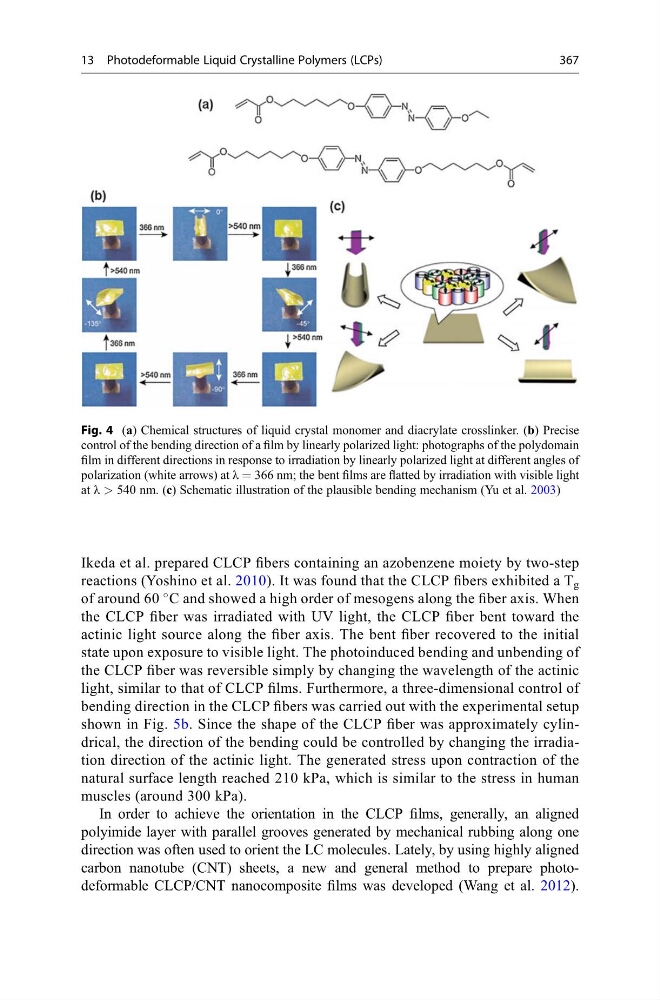
Fig. 4 (a) Chemical structures of liquid crystal monomer and diacrylate crosslinker. (b) Precise
control of the bending direction of a film by linearly polarized light: photographs of the polydomain
film in different directions in response to irradiation by linearly polarized light at different angles of
polarization (white arrows) at λ = 366 nm; the bent films are flatted by irradiation with visible light
at λ > 540 nm. (c) Schematic illustration of the plausible bending mechanism (Yu et al. 2003)
13 Photodeformable Liquid Crystalline Polymers (LCPs)
367
reactions (Yoshino et al. 2010). It was found that the CLCP fibers exhibited a T g
of around 60
C and showed a high order of mesogens along the fiber axis. When
the CLCP fiber was irradiated with UV light, the CLCP fiber bent toward the
actinic light source along the fiber axis. The bent fiber recovered to the initial
state upon exposure to visible light. The photoinduced bending and unbending of
the CLCP fiber was reversible simply by changing the wavelength of the actinic
light, similar to that of CLCP films. Furthermore, a three-dimensional control of
bending direction in the CLCP fibers was carried out with the experimental setup
shown in Fig. 5b. Since the shape of the CLCP fiber was approximately cylindrical, the direction of the bending could be controlled by changing the irradiation direction of the actinic light. The generated stress upon contraction of the
natural surface length reached 210 kPa, which is similar to the stress in human
muscles (around 300 kPa).
In order to achieve the orientation in the CLCP films, generally, an aligned
polyimide layer with parallel grooves generated by mechanical rubbing along one
direction was often used to orient the LC molecules. Lately, by using highly aligned
carbon nanotube (CNT) sheets, a new and general method to prepare photodeformable CLCP/CNT nanocomposite films was developed (Wang et al. 2012).
Fig. 4 (a) Chemical structures of liquid crystal monomer and diacrylate crosslinker. (b) Precise
control of the bending direction of a film by linearly polarized light: photographs of the polydomain
film in different directions in response to irradiation by linearly polarized light at different angles of
polarization (white arrows) at λ = 366 nm; the bent films are flatted by irradiation with visible light
at λ > 540 nm. (c) Schematic illustration of the plausible bending mechanism (Yu et al. 2003)
13 Photodeformable Liquid Crystalline Polymers (LCPs)
367