

orientation-induced flow, such as back-flow, transverse flow, and hydrodynamic
interactions during defect-defect annihilation is less characterized (Rey 2007,
2009, 2010; Rey and Herrera-Valencia 2012; Rey et al. 2014). Furthermore, flowinduced textural transformations can only be understood using defect physics and
rheo-physics. Two different levels have been used for this paradigm: (i) A macroscopic level using the Leslie Ericksen (LE) in terms of the director n-vector
description (Rey 2007, 2009, 2010; de Andrade Lima et al. 2003a, b, c, 2004a, b,
c, d, e, 2005, 2006a, b, c, d, e; Larson 1999) and (ii) A mesoscopic level using the
Q-tensor Landau – de Gennes (LdG) model (Tsuji and Rey 1998; Rey 2007, 2010;
Murugesan and Rey 2010). Only the latter captures important features such as
singular defect nucleation, singular defect-defect reactions, and singular defectflow interactions.
Characteristic Length Scales in LC Modeling
The Landau – de Gennes model is characterized for having two length scales: an
external l e and an internal l i defined as follows: (Tsuji and Rey 1998; Rey and Denn
2002)
l e ¼ H,
l i ¼
ffiffiffiffiffiffiffiffiffiffiffiffi
L
3ckT
Ã
r
,
R¼
l e
l i
2
¼
3ckT
Ã
L=H
2
) 1
(3)
where H is the macroscopic characteristic length, L (with dimensions of energy/
length) is a characteristic orientation elasticity constant associated with gradients in
the directors (n, m, l), and ckT
à is the energy per unit volume associated with
Flow kinematics ,
D
v v
Microstructure kinematics dQ/ dt
Orientation-induced flow
Defects
and
Textures
Flow-induced orientation
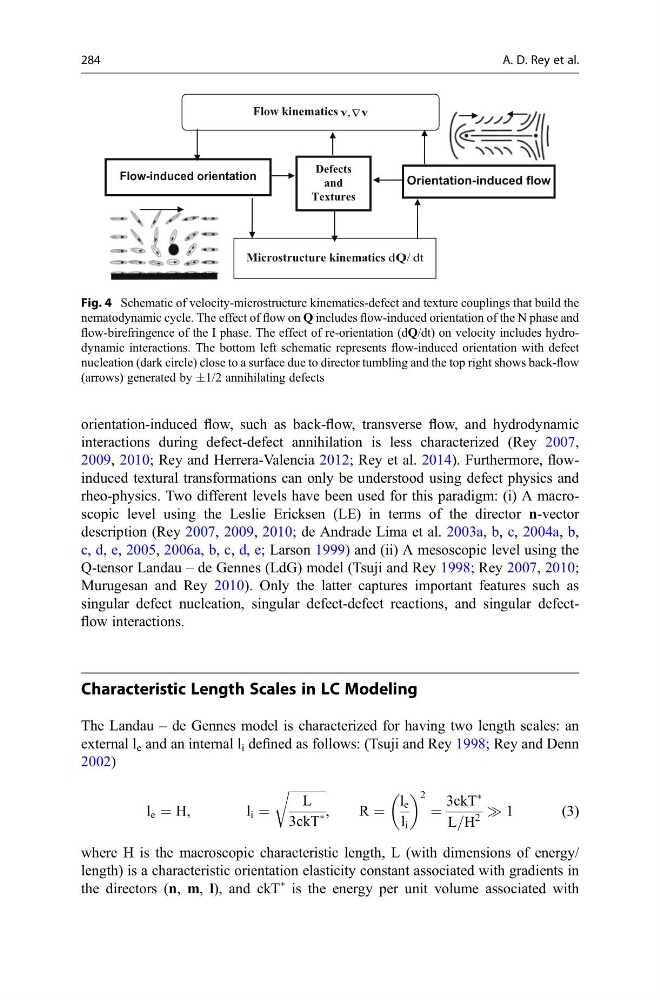
Fig. 4 Schematic of velocity-microstructure kinematics-defect and texture couplings that build the
nematodynamic cycle. The effect of flow on Q includes flow-induced orientation of the N phase and
flow-birefringence of the I phase. The effect of re-orientation (dQ/dt) on velocity includes hydrodynamic interactions. The bottom left schematic represents flow-induced orientation with defect
nucleation (dark circle) close to a surface due to director tumbling and the top right shows back-flow
(arrows) generated by Æ1/2 annihilating defects
284
A. D. Rey et al.
interactions during defect-defect annihilation is less characterized (Rey 2007,
2009, 2010; Rey and Herrera-Valencia 2012; Rey et al. 2014). Furthermore, flowinduced textural transformations can only be understood using defect physics and
rheo-physics. Two different levels have been used for this paradigm: (i) A macroscopic level using the Leslie Ericksen (LE) in terms of the director n-vector
description (Rey 2007, 2009, 2010; de Andrade Lima et al. 2003a, b, c, 2004a, b,
c, d, e, 2005, 2006a, b, c, d, e; Larson 1999) and (ii) A mesoscopic level using the
Q-tensor Landau – de Gennes (LdG) model (Tsuji and Rey 1998; Rey 2007, 2010;
Murugesan and Rey 2010). Only the latter captures important features such as
singular defect nucleation, singular defect-defect reactions, and singular defectflow interactions.
Characteristic Length Scales in LC Modeling
The Landau – de Gennes model is characterized for having two length scales: an
external l e and an internal l i defined as follows: (Tsuji and Rey 1998; Rey and Denn
2002)
l e ¼ H,
l i ¼
ffiffiffiffiffiffiffiffiffiffiffiffi
L
3ckT
Ã
r
,
R¼
l e
l i
2
¼
3ckT
Ã
L=H
2
) 1
(3)
where H is the macroscopic characteristic length, L (with dimensions of energy/
length) is a characteristic orientation elasticity constant associated with gradients in
the directors (n, m, l), and ckT
à is the energy per unit volume associated with
Flow kinematics ,
D
v v
Microstructure kinematics dQ/ dt
Orientation-induced flow
Defects
and
Textures
Flow-induced orientation
Fig. 4 Schematic of velocity-microstructure kinematics-defect and texture couplings that build the
nematodynamic cycle. The effect of flow on Q includes flow-induced orientation of the N phase and
flow-birefringence of the I phase. The effect of re-orientation (dQ/dt) on velocity includes hydrodynamic interactions. The bottom left schematic represents flow-induced orientation with defect
nucleation (dark circle) close to a surface due to director tumbling and the top right shows back-flow
(arrows) generated by Æ1/2 annihilating defects
284
A. D. Rey et al.