

Fig. 14a and b, respectively. Apparently, this reflection did not belong to the
crystalline structure determined above, but is typical from the π-π stacking in ordered
Tp-based columnar liquid crystals. Therefore, these XRD results indicate that the Py
cores and the Tp arms must microphase separate into distinct phases at nanoscales;
the Py cores crystallized into a crystalline lamella due to intermolecular H-bonding
along the trans amide linkages, while the Tps formed an ordered columnar liquid
crystalline phase sandwiched between neighboring Py lamellar crystals. For sample
12, no 0.35 nm spacing was observed in Fig. 14c, suggesting that the Tps might form
a disordered columnar phase sandwiched between neighboring porphyrin crystals.
Nematic discotic phase was unlikely to exist because no diffuse nematic discotic
reflection was observed at low angles.
Taking into account of the molecular sizes for Py (side length of the squareshaped core = 1.42 nm) and Tp (core diameter = 0.9 nm) moieties, we propose a
molecular packing model for the amide-linked Py(Tp) 4 supermolecules 9, 10, and 12
(see Fig. 15). First, Py and Tp moieties form a microphase-separated lamellar
nanostructure, where Py is crystalline and Tp is liquid crystalline. Second, the
square-shaped Py cores are linked together via H-bonds at the four corners into a
2D lamellar crystal, and the Tp moieties form columnar liquid crystals with a doublelayer structure due to the aromatic π-π stacking (see the top and side views in
Fig. 15a and b). Note that in the top-view packing scheme in Fig. 15a, each Py
core only corresponds to two Tps. The only way to arrange four Tps covalently
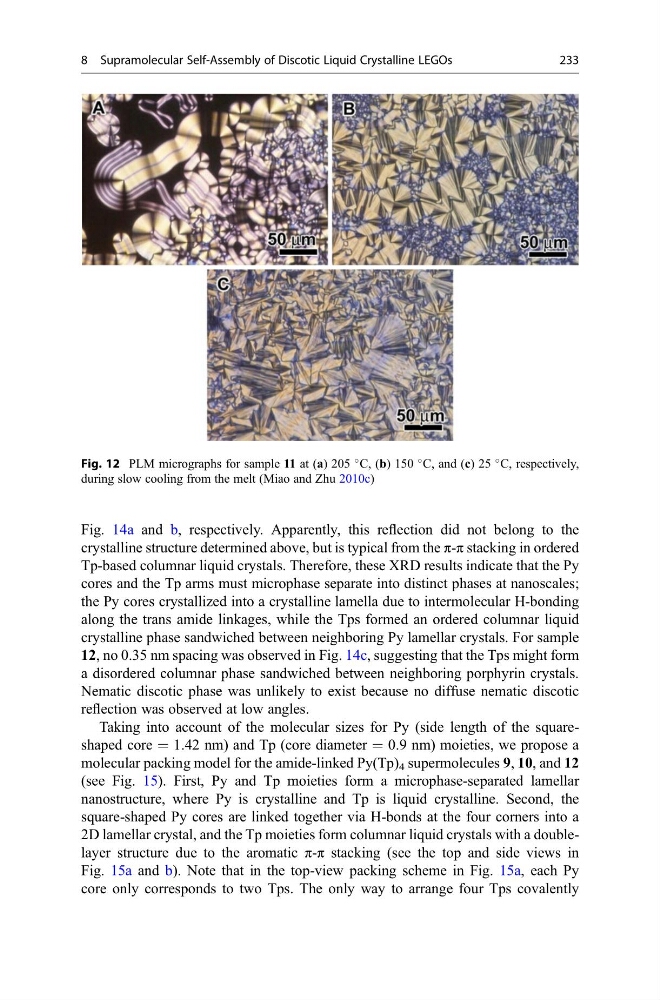
Fig. 12 PLM micrographs for sample 11 at (a) 205
C, (b) 150
C, and (c) 25
C, respectively,
during slow cooling from the melt (Miao and Zhu 2010c)
8 Supramolecular Self-Assembly of Discotic Liquid Crystalline LEGOs
233
crystalline structure determined above, but is typical from the π-π stacking in ordered
Tp-based columnar liquid crystals. Therefore, these XRD results indicate that the Py
cores and the Tp arms must microphase separate into distinct phases at nanoscales;
the Py cores crystallized into a crystalline lamella due to intermolecular H-bonding
along the trans amide linkages, while the Tps formed an ordered columnar liquid
crystalline phase sandwiched between neighboring Py lamellar crystals. For sample
12, no 0.35 nm spacing was observed in Fig. 14c, suggesting that the Tps might form
a disordered columnar phase sandwiched between neighboring porphyrin crystals.
Nematic discotic phase was unlikely to exist because no diffuse nematic discotic
reflection was observed at low angles.
Taking into account of the molecular sizes for Py (side length of the squareshaped core = 1.42 nm) and Tp (core diameter = 0.9 nm) moieties, we propose a
molecular packing model for the amide-linked Py(Tp) 4 supermolecules 9, 10, and 12
(see Fig. 15). First, Py and Tp moieties form a microphase-separated lamellar
nanostructure, where Py is crystalline and Tp is liquid crystalline. Second, the
square-shaped Py cores are linked together via H-bonds at the four corners into a
2D lamellar crystal, and the Tp moieties form columnar liquid crystals with a doublelayer structure due to the aromatic π-π stacking (see the top and side views in
Fig. 15a and b). Note that in the top-view packing scheme in Fig. 15a, each Py
core only corresponds to two Tps. The only way to arrange four Tps covalently
Fig. 12 PLM micrographs for sample 11 at (a) 205
C, (b) 150
C, and (c) 25
C, respectively,
during slow cooling from the melt (Miao and Zhu 2010c)
8 Supramolecular Self-Assembly of Discotic Liquid Crystalline LEGOs
233