

therefore conclude that H-bonding is the primary driving force for the supramolecular self-assembly of samples 9–12 below the isotropization/melting temperature.
The low-temperature transition at 71
C for sample 11 could be attributed to the
partial ordering of C12 alkyl chains as well as the whole molecule crystallization. At
room temperature (below 71
C), the C12 alkyl chains had a significant amount of
the trans conformation as evidenced by a relatively strong 2850 cm
À1 CH 2 asymmetric stretching band in FTIR, while above 100
C the band shifts to 2854 cm
À1
indicating substantially decreased amount of the trans conformation. Similar result
was also found for sample 12. Judging from the breath of the low-temperature
transition and its heat of fusion, we conclude that the broad low-temperature
transitions upon heating for samples 11 and 12 should be combined melting processes of partially ordered alkyl chains and molecular crystals. This is different from
the sharp melting peaks of C12 alkyl chain crystals in samples 15 and 16.
The direction of H-bonding in sample 11 was studied by polarized FTIR at room
temperature, and the results are shown in Fig. 13b. The 0
angle was defined as the
polarization plane parallel to the shear direction. Presumably, after mechanical shear,
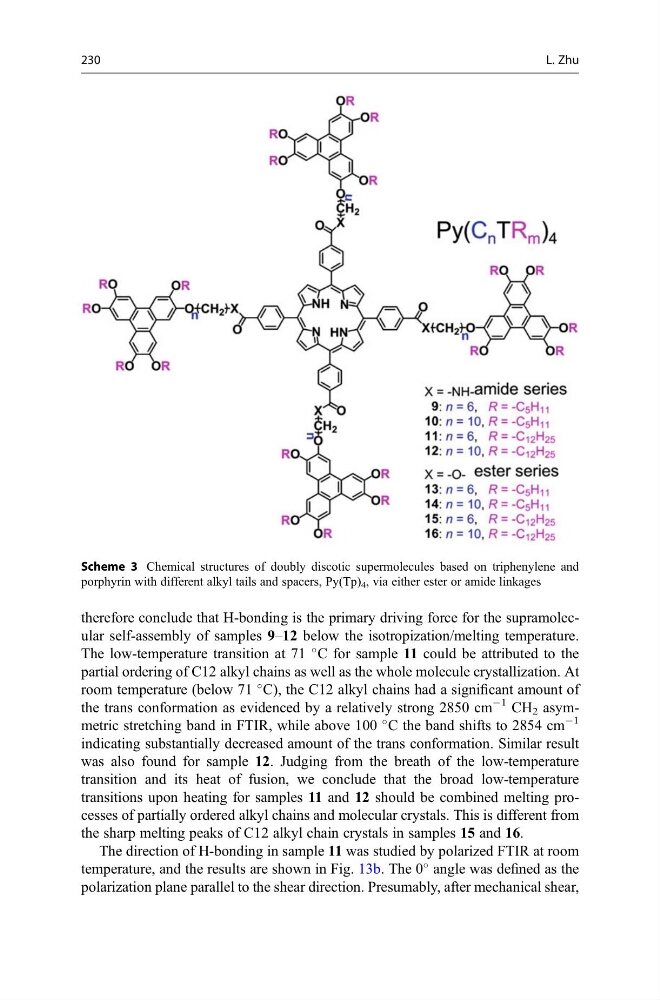
Scheme 3 Chemical structures of doubly discotic supermolecules based on triphenylene and
porphyrin with different alkyl tails and spacers, Py(Tp) 4 , via either ester or amide linkages
230
L. Zhu
The low-temperature transition at 71
C for sample 11 could be attributed to the
partial ordering of C12 alkyl chains as well as the whole molecule crystallization. At
room temperature (below 71
C), the C12 alkyl chains had a significant amount of
the trans conformation as evidenced by a relatively strong 2850 cm
À1 CH 2 asymmetric stretching band in FTIR, while above 100
C the band shifts to 2854 cm
À1
indicating substantially decreased amount of the trans conformation. Similar result
was also found for sample 12. Judging from the breath of the low-temperature
transition and its heat of fusion, we conclude that the broad low-temperature
transitions upon heating for samples 11 and 12 should be combined melting processes of partially ordered alkyl chains and molecular crystals. This is different from
the sharp melting peaks of C12 alkyl chain crystals in samples 15 and 16.
The direction of H-bonding in sample 11 was studied by polarized FTIR at room
temperature, and the results are shown in Fig. 13b. The 0
angle was defined as the
polarization plane parallel to the shear direction. Presumably, after mechanical shear,
Scheme 3 Chemical structures of doubly discotic supermolecules based on triphenylene and
porphyrin with different alkyl tails and spacers, Py(Tp) 4 , via either ester or amide linkages
230
L. Zhu