

poly(styrene-b-dimethylsiloxane) (PS-b-PDMS) (Chu et al. 1995) that underscores
the generality of coil-coil BCP phase behavior.
Liquid Crystals and Liquid Crystalline Polymers
LCs are another class of materials that undergo self-assembly and form phase
structures in the 1–10 nm length scale (de Gennes 1975; Kato et al. 2006; Tschierske
2007; Wang and Zhou 2004). However, unlike semicrystalline polymers, LC polymers (LCPs) possess excellent electro-optical properties that can be controlled using
external stimuli (Collings and Hird 1997). Associating an LCP into a BCP results in
LCBCPs that exhibit hierarchy in structure and also functionality. Prior to the
discussion of LC BCPs, we shall first briefly discuss LCs and LCPs.
Liquid Crystals
LC phase is a state of matter that is intermediate between crystalline solid and
isotropic liquid states and is often referred to as mesomorphic (intermediate) state.
LC phase is characterized by lack of long range positional and/or translational order
in the system compared with crystals. Mesogens are generally anisotropic with
aspect ratio greater than 4 (Wang and Zhou 2004). Generally, they consist of rigid
molecules (such as aromatic rings) forming the core of the mesogen and the rings can
be directly linked to one another or can be joined using linking groups such as
–CH 2 CH 2 –, –CH CH–, –CH=N–, etc. as shown in Fig. 3a (Collings and Hird
1997). The aromatic rings provide rigidity to mesogens and help maintain their
anisotropic structure. Attached to the rigid aromatic core are aliphatic tails that
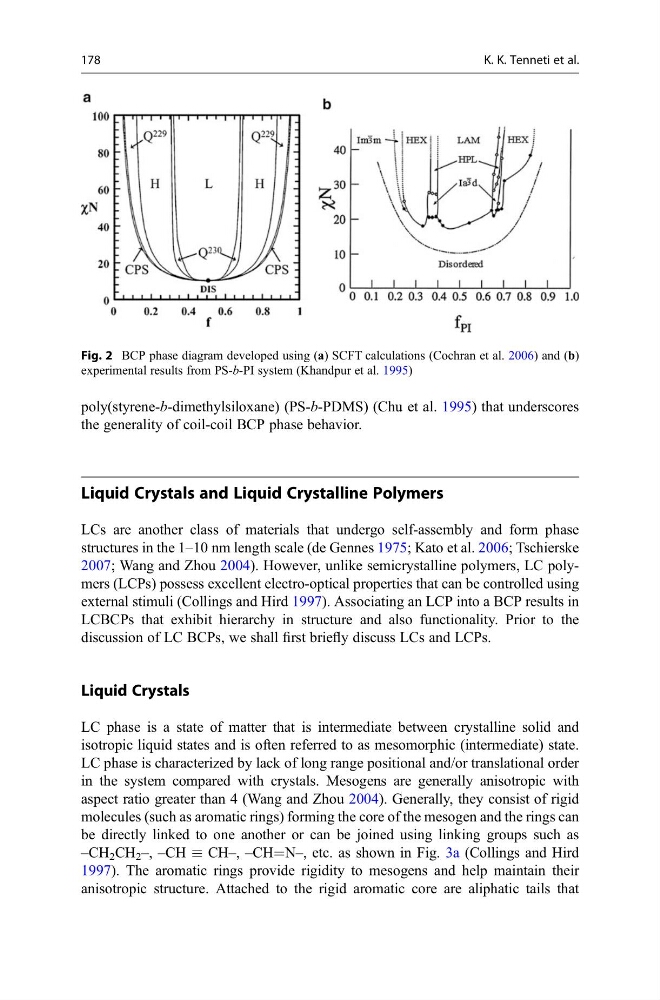
Fig. 2 BCP phase diagram developed using (a) SCFT calculations (Cochran et al. 2006) and (b)
experimental results from PS-b-PI system (Khandpur et al. 1995)
178
K. K. Tenneti et al.
the generality of coil-coil BCP phase behavior.
Liquid Crystals and Liquid Crystalline Polymers
LCs are another class of materials that undergo self-assembly and form phase
structures in the 1–10 nm length scale (de Gennes 1975; Kato et al. 2006; Tschierske
2007; Wang and Zhou 2004). However, unlike semicrystalline polymers, LC polymers (LCPs) possess excellent electro-optical properties that can be controlled using
external stimuli (Collings and Hird 1997). Associating an LCP into a BCP results in
LCBCPs that exhibit hierarchy in structure and also functionality. Prior to the
discussion of LC BCPs, we shall first briefly discuss LCs and LCPs.
Liquid Crystals
LC phase is a state of matter that is intermediate between crystalline solid and
isotropic liquid states and is often referred to as mesomorphic (intermediate) state.
LC phase is characterized by lack of long range positional and/or translational order
in the system compared with crystals. Mesogens are generally anisotropic with
aspect ratio greater than 4 (Wang and Zhou 2004). Generally, they consist of rigid
molecules (such as aromatic rings) forming the core of the mesogen and the rings can
be directly linked to one another or can be joined using linking groups such as
–CH 2 CH 2 –, –CH CH–, –CH=N–, etc. as shown in Fig. 3a (Collings and Hird
1997). The aromatic rings provide rigidity to mesogens and help maintain their
anisotropic structure. Attached to the rigid aromatic core are aliphatic tails that
Fig. 2 BCP phase diagram developed using (a) SCFT calculations (Cochran et al. 2006) and (b)
experimental results from PS-b-PI system (Khandpur et al. 1995)
178
K. K. Tenneti et al.