

Topics in Current Chemistry (2020) 378:29
1 3
surface as aggregates, leading to higher material deposition. The increased loading
of Ag also enhanced the visible light absorption of the semiconductor, subsequently
increasing the photocatalytic degradation of acetone [34]. Uniform coating and distribution of gold on titanium dioxide has been reported to be effectively achieved
under sonication in another set of investigations [35, 36]. Ultrasonically loaded
gold nanoparticles onto the TiO 2 surface readily accept the electronic charges during photoexcitation due to their highly ordered distribution, thereby preventing electron–hole recombination processes. Similarly, N, Cl-co-doped TiO 2 was synthesized
from titanium(IV) butoxide and ammonium chloride using the sonochemical method
[37]. The authors reported that sonication shifted the start of absorption toward a
lower energy, thereby subsequently improving the crystallinity of the semiconductor. Another advantage reported was the rapid synthesis within 4 h. In a recent study,
nanosized (4–5 nm) TiO 2 particles on graphene were reported to be synthesized
within a few hours with no surfactant using sonication [38]. In that study, graphene
facilitated electron transfer and prevented recombination in UV light spectrum for
photodegradation giving enhanced effects. Another novel method of nanoparticle
synthesis was based on the pH swing method combined with ultrasound. pH swings
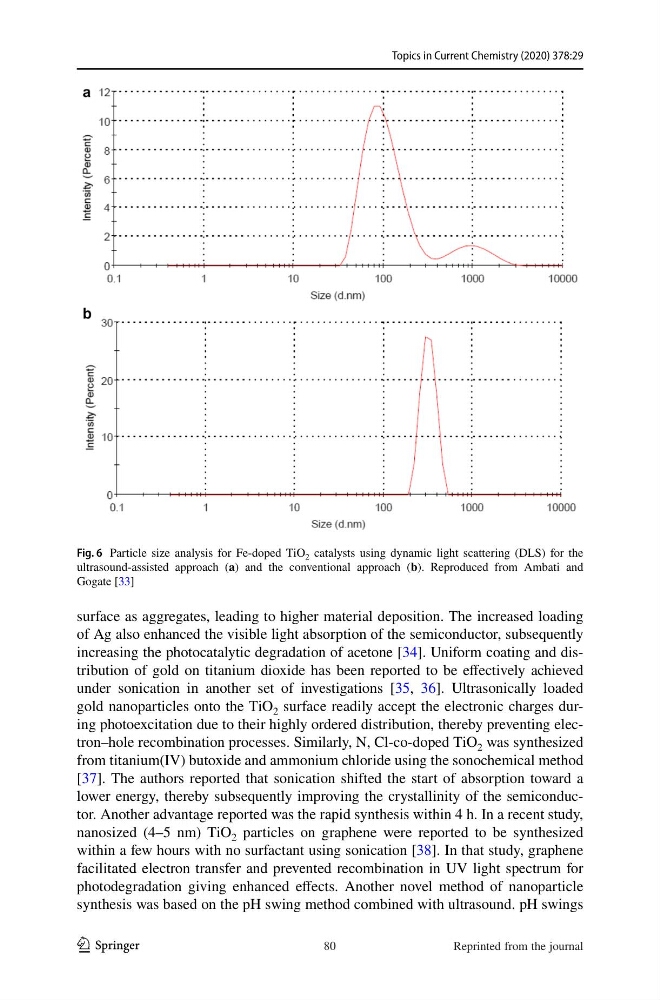
Fig. 6 Particle size analysis for Fe-doped TiO 2 catalysts using dynamic light scattering (DLS) for the
ultrasound-assisted approach (a) and the conventional approach (b). Reproduced from Ambati and
Gogate [33]
80
Reprinted from the journal
1 3
surface as aggregates, leading to higher material deposition. The increased loading
of Ag also enhanced the visible light absorption of the semiconductor, subsequently
increasing the photocatalytic degradation of acetone [34]. Uniform coating and distribution of gold on titanium dioxide has been reported to be effectively achieved
under sonication in another set of investigations [35, 36]. Ultrasonically loaded
gold nanoparticles onto the TiO 2 surface readily accept the electronic charges during photoexcitation due to their highly ordered distribution, thereby preventing electron–hole recombination processes. Similarly, N, Cl-co-doped TiO 2 was synthesized
from titanium(IV) butoxide and ammonium chloride using the sonochemical method
[37]. The authors reported that sonication shifted the start of absorption toward a
lower energy, thereby subsequently improving the crystallinity of the semiconductor. Another advantage reported was the rapid synthesis within 4 h. In a recent study,
nanosized (4–5 nm) TiO 2 particles on graphene were reported to be synthesized
within a few hours with no surfactant using sonication [38]. In that study, graphene
facilitated electron transfer and prevented recombination in UV light spectrum for
photodegradation giving enhanced effects. Another novel method of nanoparticle
synthesis was based on the pH swing method combined with ultrasound. pH swings
Fig. 6 Particle size analysis for Fe-doped TiO 2 catalysts using dynamic light scattering (DLS) for the
ultrasound-assisted approach (a) and the conventional approach (b). Reproduced from Ambati and
Gogate [33]
80
Reprinted from the journal