

Topics in Current Chemistry (2019) 377:24
1 3
The characterization of materials makes use of other techniques than the ones
previously described (with the exception of Raman) to focus on the analysis of the
reactant–catalyst interface. The study of the interaction of solids with reactants and
the formation of reaction intermediates and products is followed by vibrational spectroscopies, infrared and Raman, and nuclear magnetic resonance (NMR). Raman
was utilized to follow the photo-degradation of p-aminonitrophenol with a titania
material and visible light. The study followed the formation of several azo compounds described as kinetically relevant intermediates in the degradation process
[55]. NMR was used to analyze the formation of C-containing intermediates in
hydrogen photo-production through alcohol reforming, indicating that the reaction
occurs through a chain of consecutive reactions [56].
Infrared spectroscopy has been profusely utilized in operando or spectrokinetic studies and here we first described the operando studies dedicated to
describe the interaction and evolution of reactants at the photo-catalyst surface.
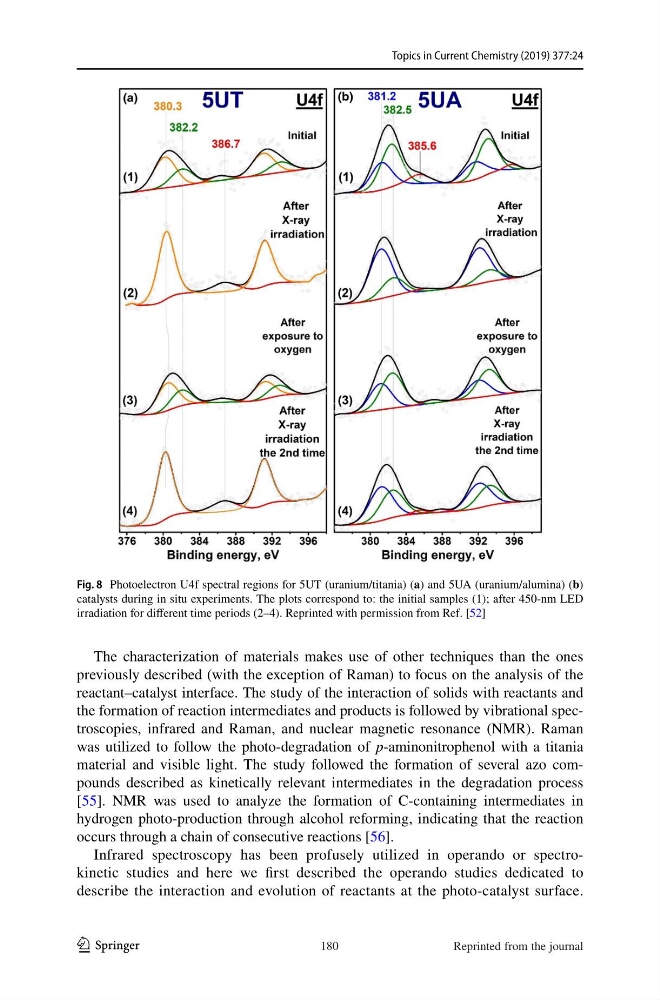
Fig. 8 Photoelectron U4f spectral regions for 5UT (uranium/titania) (a) and 5UA (uranium/alumina) (b)
catalysts during in situ experiments. The plots correspond to: the initial samples (1); after 450-nm LED
irradiation for different time periods (2–4). Reprinted with permission from Ref. [52]
180
Reprinted from the journal
1 3
The characterization of materials makes use of other techniques than the ones
previously described (with the exception of Raman) to focus on the analysis of the
reactant–catalyst interface. The study of the interaction of solids with reactants and
the formation of reaction intermediates and products is followed by vibrational spectroscopies, infrared and Raman, and nuclear magnetic resonance (NMR). Raman
was utilized to follow the photo-degradation of p-aminonitrophenol with a titania
material and visible light. The study followed the formation of several azo compounds described as kinetically relevant intermediates in the degradation process
[55]. NMR was used to analyze the formation of C-containing intermediates in
hydrogen photo-production through alcohol reforming, indicating that the reaction
occurs through a chain of consecutive reactions [56].
Infrared spectroscopy has been profusely utilized in operando or spectrokinetic studies and here we first described the operando studies dedicated to
describe the interaction and evolution of reactants at the photo-catalyst surface.
Fig. 8 Photoelectron U4f spectral regions for 5UT (uranium/titania) (a) and 5UA (uranium/alumina) (b)
catalysts during in situ experiments. The plots correspond to: the initial samples (1); after 450-nm LED
irradiation for different time periods (2–4). Reprinted with permission from Ref. [52]
180
Reprinted from the journal