

Topics in Current Chemistry (2018) 376:42
1 3
In this part, we briefly introduced some advanced achievements in the application
of urea electrolysis. It is found that hydrogen production from electrolysis seems to be
more meaningful for future energy storage. Nevertheless, this process exists a demand
of difficult operation devices and conditions, which restricts their industrial applications. Otherwise, more consideration should be taken into the amount of urine-containing waste water, the further purification of waste water will increase the electrolysis
cost.
3 Mechanism of Urea Electro‑Oxidation
In above introduction part about the urea electro-oxidation applied in DUFCs, urea
is generally oxidized in alkaline or acid medium, the products of which are nontoxic N 2 and CO 2 . However, some initial investigations concerning urea electro-oxidation were carried out in neutral NaCl medium, the products of which include not
only N 2 and CO 2 but also extra H
+
. Therefore, the accurate mechanisms might be
different for the decomposition of urea in various media. Furthermore, the treatment
of waste water also possibly includes some intermediates.
3.1 Mechanism in Neutral Cl
–
Medium
In the neutral NaCl solutions, Cl
–
is firstly electro-oxidized to Cl 2 , and then Cl 2 is
disproportionated in aqueous solution to form HClO. Finally, urea is oxidized by
HClO and meanwhile HClO itself is reduced to Cl
–
(Eqs. 3–6). In fact, Cl
–
acts as a
transition oxidant throughout the overall process, with no change in quantity before
and after reactions.
(3)
Step 1 ∶ 6Cl
− ⇄ 3Cl 2 + 6e
−
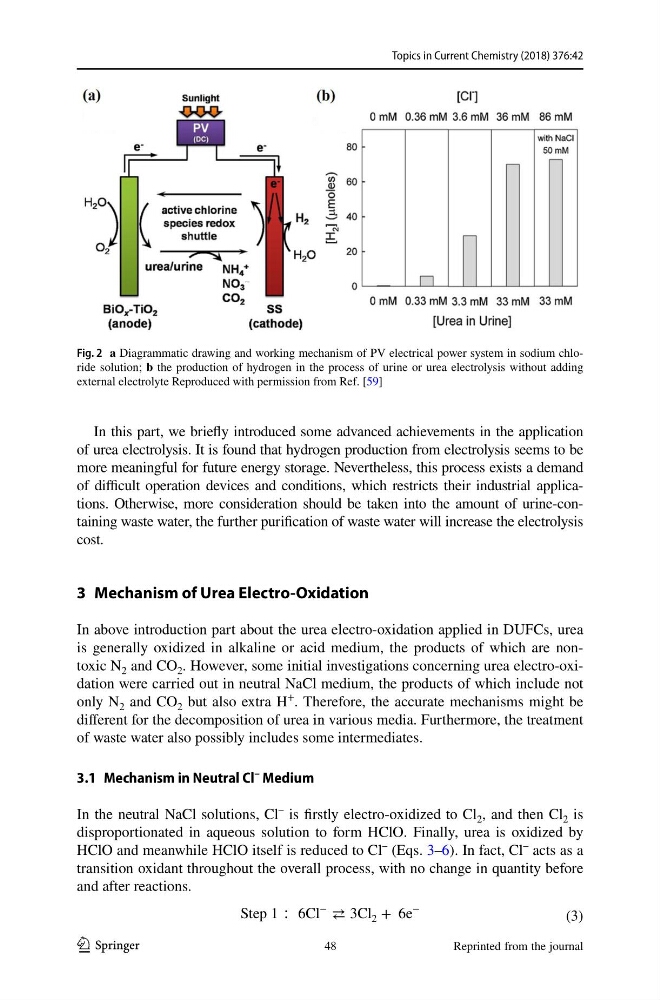
Fig. 2 a Diagrammatic drawing and working mechanism of PV electrical power system in sodium chloride solution; b the production of hydrogen in the process of urine or urea electrolysis without adding
external electrolyte Reproduced with permission from Ref. [59]
Reprinted from the journal
48
1 3
In this part, we briefly introduced some advanced achievements in the application
of urea electrolysis. It is found that hydrogen production from electrolysis seems to be
more meaningful for future energy storage. Nevertheless, this process exists a demand
of difficult operation devices and conditions, which restricts their industrial applications. Otherwise, more consideration should be taken into the amount of urine-containing waste water, the further purification of waste water will increase the electrolysis
cost.
3 Mechanism of Urea Electro‑Oxidation
In above introduction part about the urea electro-oxidation applied in DUFCs, urea
is generally oxidized in alkaline or acid medium, the products of which are nontoxic N 2 and CO 2 . However, some initial investigations concerning urea electro-oxidation were carried out in neutral NaCl medium, the products of which include not
only N 2 and CO 2 but also extra H
+
. Therefore, the accurate mechanisms might be
different for the decomposition of urea in various media. Furthermore, the treatment
of waste water also possibly includes some intermediates.
3.1 Mechanism in Neutral Cl
–
Medium
In the neutral NaCl solutions, Cl
–
is firstly electro-oxidized to Cl 2 , and then Cl 2 is
disproportionated in aqueous solution to form HClO. Finally, urea is oxidized by
HClO and meanwhile HClO itself is reduced to Cl
–
(Eqs. 3–6). In fact, Cl
–
acts as a
transition oxidant throughout the overall process, with no change in quantity before
and after reactions.
(3)
Step 1 ∶ 6Cl
− ⇄ 3Cl 2 + 6e
−
Fig. 2 a Diagrammatic drawing and working mechanism of PV electrical power system in sodium chloride solution; b the production of hydrogen in the process of urine or urea electrolysis without adding
external electrolyte Reproduced with permission from Ref. [59]
Reprinted from the journal
48