

transition metal NPs represents a hurdle to their practical application. Li et al.
reported that a nitrogen-rich carbon-coated cobalt NPs (Co@NC) catalyst, synthesized by direct polycondensation in the presence of g-C 3 N 4 powder, exhibited a high
TOF of 8.12 for the direct base-free aerobic oxidation of benzyl alcohols to methyl
benzoate. This TOF was 30-fold higher than those of state-of-the-art transition
metal-based nanocatalysts previously reported [87].
Nitrogen-rich carbon, which has a higher band potential than that of metallic Co
materials, will accept electrons from Co NPs until their Fermi level reaches equilibrium, described as the Mott–Schottky effect. The resulting electron-poor Co NPs
sufficiently attract and activate O 2 for proton removal from the Co–H intermediates
to accelerate the whole reaction process. N-doped carbon could also act as a
strengthened Lewis base to accelerate the deprotonation process of alcohols. Conclusively, the Co@NC-x-based Mott–Schottky catalysts not only boosted the oxidative power of the Co NPs but also enabled the reaction to proceed in the absence of
bases, constituting an overall mild and additive-free catalytic system.
Continuous flow technology has attracted much attention because it can maximize catalyst efficiency in the simple workup procedure. Heterogeneous catalysts
also have a significant advantage in the application to the use in column flow reactor.
Kappe et al. found that iron oxide NPs stabilized on a mesoporous aluminosilicate
support acted as highly efficient catalysts for the selective aerobic oxidation of a
primary alcohol in continuous flow reactor [88]. In a single pass of the reactor,
benzyl alcohol as a model substrate was selectively converted to benzaldehyde. This
catalyst was highly stable and did not leach from support under the investigated
conditions, providing solid evidence for the participation of a heterogeneous iron
species in the catalytic cycle.
3.4 Wacker-Type Oxidation Using Pd NPs
Ethylene and palladium chloride react in the presence of water under atmospheric
conditions to produce a stoichiometric amount of acetaldehyde with simultaneous
formation of the precipitates of Pd (0) (Pd black) [89]. When copper dichloride
(CuCl 2 ) is added to this system, in situ-formed Pd(0) species are reoxidized to Pd
(II) by Cu(II), and then O 2 oxidizes the resulting Cu(I) back to Cu(II), thereby
allowing this catalytic cycle. This method is called the Wacker process, which is
limited to the synthesis of acetaldehydes through ethylene oxidation [90]. Using N,
N-dimethylformamide (DMF) as a solvent in this process allowed the substrates to
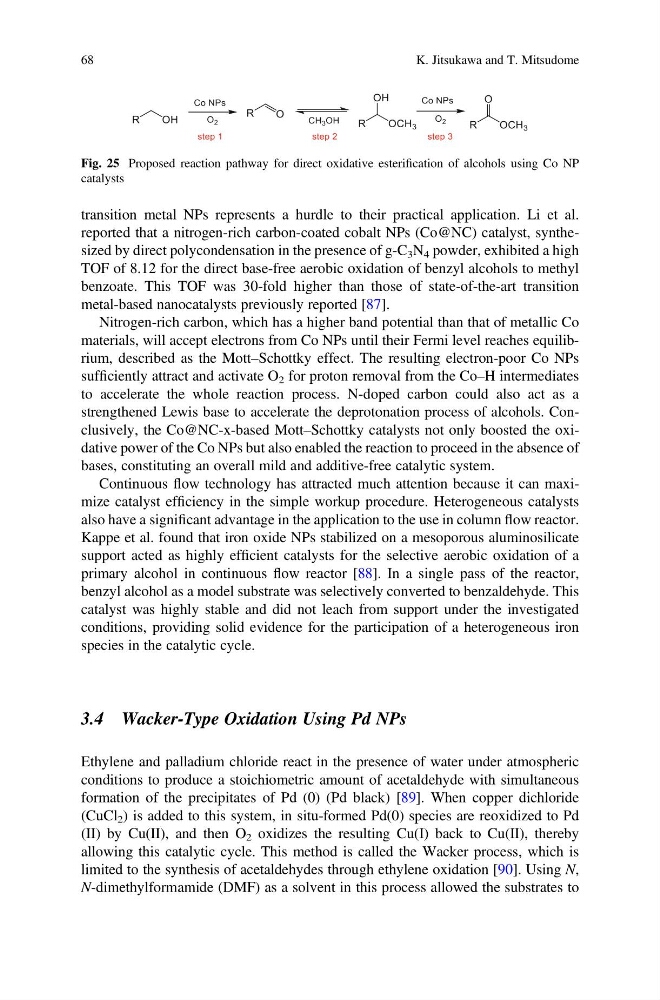
Fig. 25 Proposed reaction pathway for direct oxidative esterification of alcohols using Co NP
catalysts
68
K. Jitsukawa and T. Mitsudome
reported that a nitrogen-rich carbon-coated cobalt NPs (Co@NC) catalyst, synthesized by direct polycondensation in the presence of g-C 3 N 4 powder, exhibited a high
TOF of 8.12 for the direct base-free aerobic oxidation of benzyl alcohols to methyl
benzoate. This TOF was 30-fold higher than those of state-of-the-art transition
metal-based nanocatalysts previously reported [87].
Nitrogen-rich carbon, which has a higher band potential than that of metallic Co
materials, will accept electrons from Co NPs until their Fermi level reaches equilibrium, described as the Mott–Schottky effect. The resulting electron-poor Co NPs
sufficiently attract and activate O 2 for proton removal from the Co–H intermediates
to accelerate the whole reaction process. N-doped carbon could also act as a
strengthened Lewis base to accelerate the deprotonation process of alcohols. Conclusively, the Co@NC-x-based Mott–Schottky catalysts not only boosted the oxidative power of the Co NPs but also enabled the reaction to proceed in the absence of
bases, constituting an overall mild and additive-free catalytic system.
Continuous flow technology has attracted much attention because it can maximize catalyst efficiency in the simple workup procedure. Heterogeneous catalysts
also have a significant advantage in the application to the use in column flow reactor.
Kappe et al. found that iron oxide NPs stabilized on a mesoporous aluminosilicate
support acted as highly efficient catalysts for the selective aerobic oxidation of a
primary alcohol in continuous flow reactor [88]. In a single pass of the reactor,
benzyl alcohol as a model substrate was selectively converted to benzaldehyde. This
catalyst was highly stable and did not leach from support under the investigated
conditions, providing solid evidence for the participation of a heterogeneous iron
species in the catalytic cycle.
3.4 Wacker-Type Oxidation Using Pd NPs
Ethylene and palladium chloride react in the presence of water under atmospheric
conditions to produce a stoichiometric amount of acetaldehyde with simultaneous
formation of the precipitates of Pd (0) (Pd black) [89]. When copper dichloride
(CuCl 2 ) is added to this system, in situ-formed Pd(0) species are reoxidized to Pd
(II) by Cu(II), and then O 2 oxidizes the resulting Cu(I) back to Cu(II), thereby
allowing this catalytic cycle. This method is called the Wacker process, which is
limited to the synthesis of acetaldehydes through ethylene oxidation [90]. Using N,
N-dimethylformamide (DMF) as a solvent in this process allowed the substrates to
Fig. 25 Proposed reaction pathway for direct oxidative esterification of alcohols using Co NP
catalysts
68
K. Jitsukawa and T. Mitsudome