

Given that Co(III) species in Au/Co 3 O 4 was reduced to Co(II) after the C–H
homocoupling under N 2 to give the biaryls, the redox properties of Co 3 O 4 facilitate
the reaction. Kinetic studies suggested that the C–H homocoupling takes place by an
electrophilic aromatic substitution pathway (Fig. 24). The aromatic ring would react
with cationic Au sites located at the perimeter interface between Au and MO x to
make Au–C bond followed by C–H bond cleavage. After the second electrophilic
substitution takes place, the reductive elimination produces biaryl and the reduced
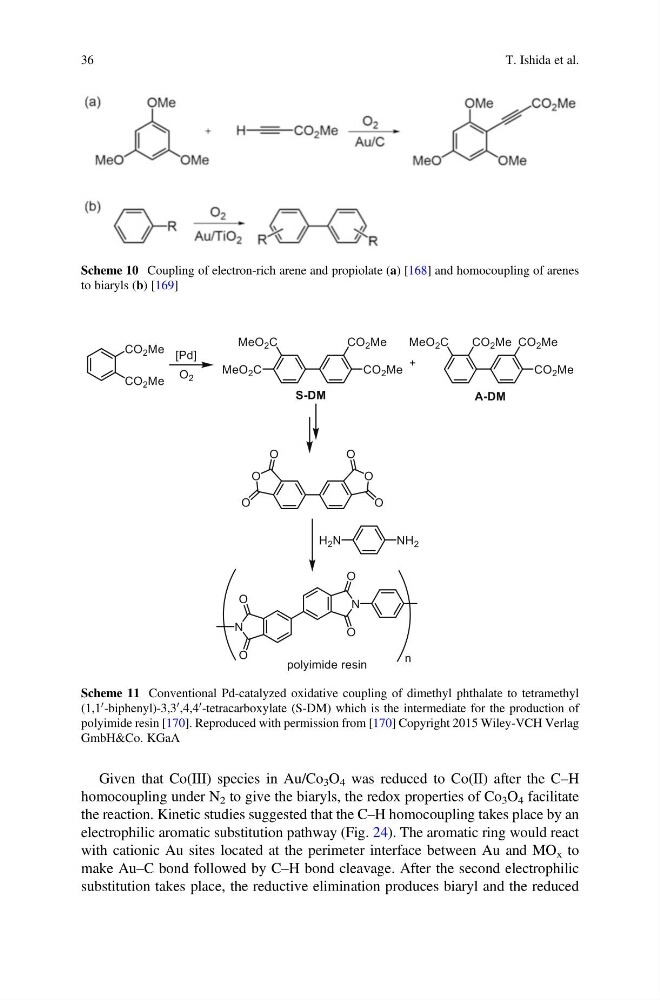
Scheme 11 Conventional Pd-catalyzed oxidative coupling of dimethyl phthalate to tetramethyl
(1,1
0 -biphenyl)-3,3
0 ,4,4
0 -tetracarboxylate (S-DM) which is the intermediate for the production of
polyimide resin [170]. Reproduced with permission from [170] Copyright 2015 Wiley-VCH Verlag
GmbH&Co. KGaA
Scheme 10 Coupling of electron-rich arene and propiolate (a) [168] and homocoupling of arenes
to biaryls (b) [169]
36
T. Ishida et al.
homocoupling under N 2 to give the biaryls, the redox properties of Co 3 O 4 facilitate
the reaction. Kinetic studies suggested that the C–H homocoupling takes place by an
electrophilic aromatic substitution pathway (Fig. 24). The aromatic ring would react
with cationic Au sites located at the perimeter interface between Au and MO x to
make Au–C bond followed by C–H bond cleavage. After the second electrophilic
substitution takes place, the reductive elimination produces biaryl and the reduced
Scheme 11 Conventional Pd-catalyzed oxidative coupling of dimethyl phthalate to tetramethyl
(1,1
0 -biphenyl)-3,3
0 ,4,4
0 -tetracarboxylate (S-DM) which is the intermediate for the production of
polyimide resin [170]. Reproduced with permission from [170] Copyright 2015 Wiley-VCH Verlag
GmbH&Co. KGaA
Scheme 10 Coupling of electron-rich arene and propiolate (a) [168] and homocoupling of arenes
to biaryls (b) [169]
36
T. Ishida et al.