

Pd@CCOF-MPC was applied to asymmetric Henry reactions, and various aromatic aldehydes were converted to the corresponding β-nitro alcohols in high
enantioselectivity (Scheme 56). CCOF-MPC itself hardly catalyzed the reaction
indicating that Pd nanoparticles in the CCOF-MPC matrix are responsible for the
catalytic activity. The catalyst was also applied to asymmetric reductive Heck
reactions of 2-cyclohexen-1-one with aryl halides (Scheme 57). Although Pd
nanoparticles were aggregated and leached out after five runs in both reactions,
relatively high levels of yield and enantioselectivity were maintained.
In 2017, Sharma et al. reported Pt nanoparticles incorporated chiral polyamide for
asymmetric hydrogenation of an α-ketoester [130]. Chiral polyamides were synthesized from camphoric dichloride and diamine monomers by interfacial condensation
reactions. A Pt(IV) salt was loaded on the polymer followed by reduction under
high-pressure hydrogen to afford the catalyst, Pt(0)/chiral polyamide (Scheme 58).
Several diamine linkers were examined, and the catalyst prepared from
hexamethylenediamine showed the best performance in asymmetric hydrogenation
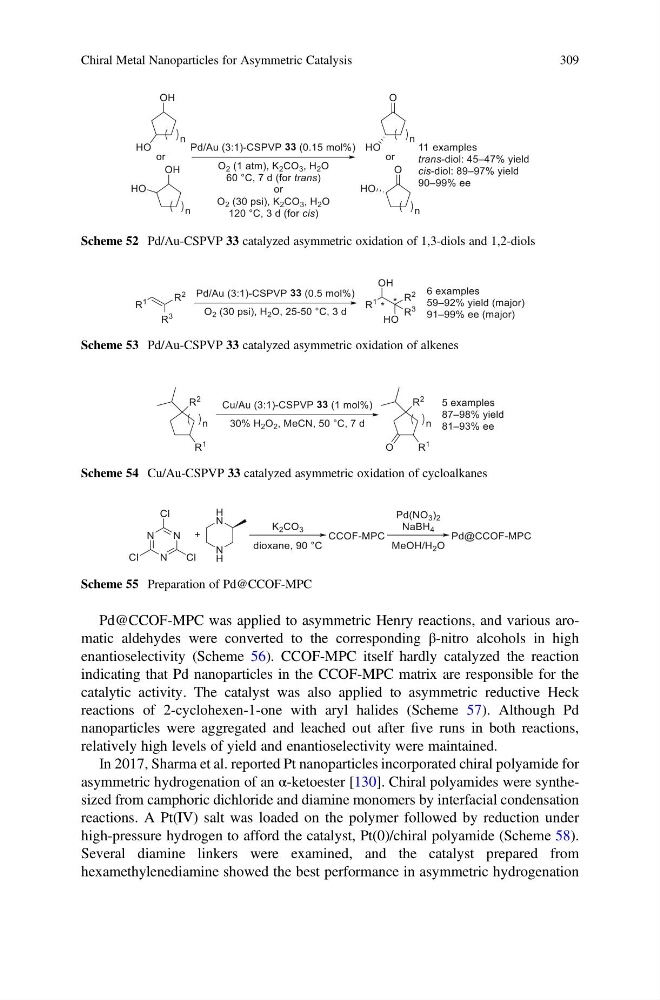
Scheme 54 Cu/Au-CSPVP 33 catalyzed asymmetric oxidation of cycloalkanes
Scheme 52 Pd/Au-CSPVP 33 catalyzed asymmetric oxidation of 1,3-diols and 1,2-diols
Scheme 53 Pd/Au-CSPVP 33 catalyzed asymmetric oxidation of alkenes
Scheme 55 Preparation of Pd@CCOF-MPC
Chiral Metal Nanoparticles for Asymmetric Catalysis
309
enantioselectivity (Scheme 56). CCOF-MPC itself hardly catalyzed the reaction
indicating that Pd nanoparticles in the CCOF-MPC matrix are responsible for the
catalytic activity. The catalyst was also applied to asymmetric reductive Heck
reactions of 2-cyclohexen-1-one with aryl halides (Scheme 57). Although Pd
nanoparticles were aggregated and leached out after five runs in both reactions,
relatively high levels of yield and enantioselectivity were maintained.
In 2017, Sharma et al. reported Pt nanoparticles incorporated chiral polyamide for
asymmetric hydrogenation of an α-ketoester [130]. Chiral polyamides were synthesized from camphoric dichloride and diamine monomers by interfacial condensation
reactions. A Pt(IV) salt was loaded on the polymer followed by reduction under
high-pressure hydrogen to afford the catalyst, Pt(0)/chiral polyamide (Scheme 58).
Several diamine linkers were examined, and the catalyst prepared from
hexamethylenediamine showed the best performance in asymmetric hydrogenation
Scheme 54 Cu/Au-CSPVP 33 catalyzed asymmetric oxidation of cycloalkanes
Scheme 52 Pd/Au-CSPVP 33 catalyzed asymmetric oxidation of 1,3-diols and 1,2-diols
Scheme 53 Pd/Au-CSPVP 33 catalyzed asymmetric oxidation of alkenes
Scheme 55 Preparation of Pd@CCOF-MPC
Chiral Metal Nanoparticles for Asymmetric Catalysis
309