

hydroxy ketones in excellent enantioselectivity (Scheme 52). The same catalyst was
also utilized for asymmetric oxidation of alkenes to afford diols with excellent
enantioselectivities (Scheme 53). Interestingly, resulting diols did not undergo
further oxidation even though benzylic alcohols were easily oxidized by Au nanoparticle catalysts [128]. Furthermore, Cu/Au bimetallic nanoparticle catalysts on
CSPVP 33 were applied to asymmetric C–H oxidation of cycloalkanes to produce
ketones with excellent enantioselectivities (Scheme 54).
In 2017, Chen and Dong et al. reported Pd nanoparticles loaded on a homochiral
covalent organic framework (COF) for asymmetric catalysis [129]. The chiral COF
support (CCOF-MPC) was synthesized from cyanuric chloride and S-(+)-2methylpiperazine at 90
C, and the Pd nanoparticles were loaded on CCOF-MPC
via sequential solution impregnation and reduction of a Pd salt by NaBH 4 to afford
the catalyst (Pd@CCOF-MPC) (Scheme 55). High-resolution transmission electron
microscopy (HRTEM) analysis of the catalyst showed highly dispersed Pd
nanoparticles with a particle size of 2–5 nm. The size of the Pd nanoparticles was
larger than that of the pore size (1.5 nm) in Pd@CCOF-MPC indicating that Pd
nanoparticles might be located between the 2D COF layers. An increase in the
interlayer spacing of COF was also demonstrated by the PXRD pattern of the
catalyst.
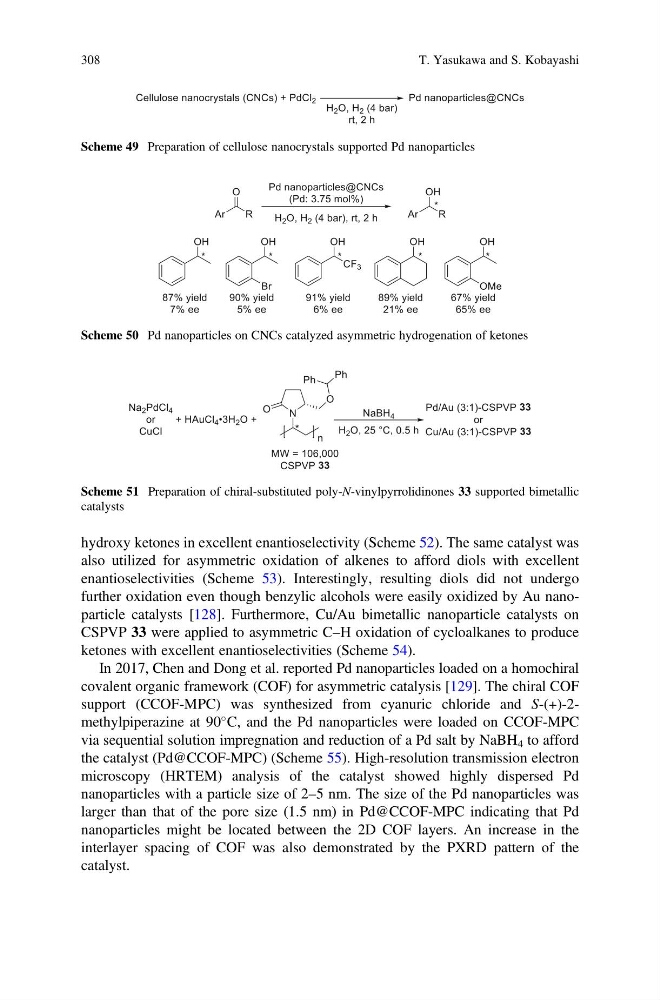
Scheme 49 Preparation of cellulose nanocrystals supported Pd nanoparticles
Scheme 50 Pd nanoparticles on CNCs catalyzed asymmetric hydrogenation of ketones
Scheme 51 Preparation of chiral-substituted poly-N-vinylpyrrolidinones 33 supported bimetallic
catalysts
308
T. Yasukawa and S. Kobayashi
also utilized for asymmetric oxidation of alkenes to afford diols with excellent
enantioselectivities (Scheme 53). Interestingly, resulting diols did not undergo
further oxidation even though benzylic alcohols were easily oxidized by Au nanoparticle catalysts [128]. Furthermore, Cu/Au bimetallic nanoparticle catalysts on
CSPVP 33 were applied to asymmetric C–H oxidation of cycloalkanes to produce
ketones with excellent enantioselectivities (Scheme 54).
In 2017, Chen and Dong et al. reported Pd nanoparticles loaded on a homochiral
covalent organic framework (COF) for asymmetric catalysis [129]. The chiral COF
support (CCOF-MPC) was synthesized from cyanuric chloride and S-(+)-2methylpiperazine at 90
C, and the Pd nanoparticles were loaded on CCOF-MPC
via sequential solution impregnation and reduction of a Pd salt by NaBH 4 to afford
the catalyst (Pd@CCOF-MPC) (Scheme 55). High-resolution transmission electron
microscopy (HRTEM) analysis of the catalyst showed highly dispersed Pd
nanoparticles with a particle size of 2–5 nm. The size of the Pd nanoparticles was
larger than that of the pore size (1.5 nm) in Pd@CCOF-MPC indicating that Pd
nanoparticles might be located between the 2D COF layers. An increase in the
interlayer spacing of COF was also demonstrated by the PXRD pattern of the
catalyst.
Scheme 49 Preparation of cellulose nanocrystals supported Pd nanoparticles
Scheme 50 Pd nanoparticles on CNCs catalyzed asymmetric hydrogenation of ketones
Scheme 51 Preparation of chiral-substituted poly-N-vinylpyrrolidinones 33 supported bimetallic
catalysts
308
T. Yasukawa and S. Kobayashi