

3.2 Poly(dimethyl)silane-Supported Palladium Nanoparticles
for Continuous-Flow Hydrogenation
In 2015, Kobayashi and co-workers developed a poly(dimethyl)silane-supported
palladium/alumina hybrid catalyst [Pd/(DMPSi-Al 2 O 3 )] [13]. Poly(dimethyl)silane
is readily available and inexpensive, although poly(methylphenyl)silane is relatively
limited and expensive. The catalysts were prepared from poly(methylphenyl)silane
and palladium acetate without the use of external reductant (Scheme 9). Pd
nanoparticles with an average size of (6.4 Æ 3.4) nm were found using scanning
transmission electron microscopy (STEM) and energy-dispersive X-ray spectroscopy (EDS) to exist on silicon-rich areas rather than on aluminum- or oxygen-rich
areas. This observation suggested that these nanoparticles were formed through
reduction by the polysilane support and were simultaneously immobilized on the
polymer through electronic interactions. Approximately 900 mg of the catalyst was
packed in a SUS column (5 mm diameter, 50 mm length), which was then placed in
an aluminum heating block to control the reaction temperature (Fig. 12). The
substrate, either neat or in solution, was introduced into the SUS column packed
with the catalyst using a peristaltic pump, and, simultaneously, H 2 gas was introduced at atmospheric pressure into the catalyst column through a mass-flow
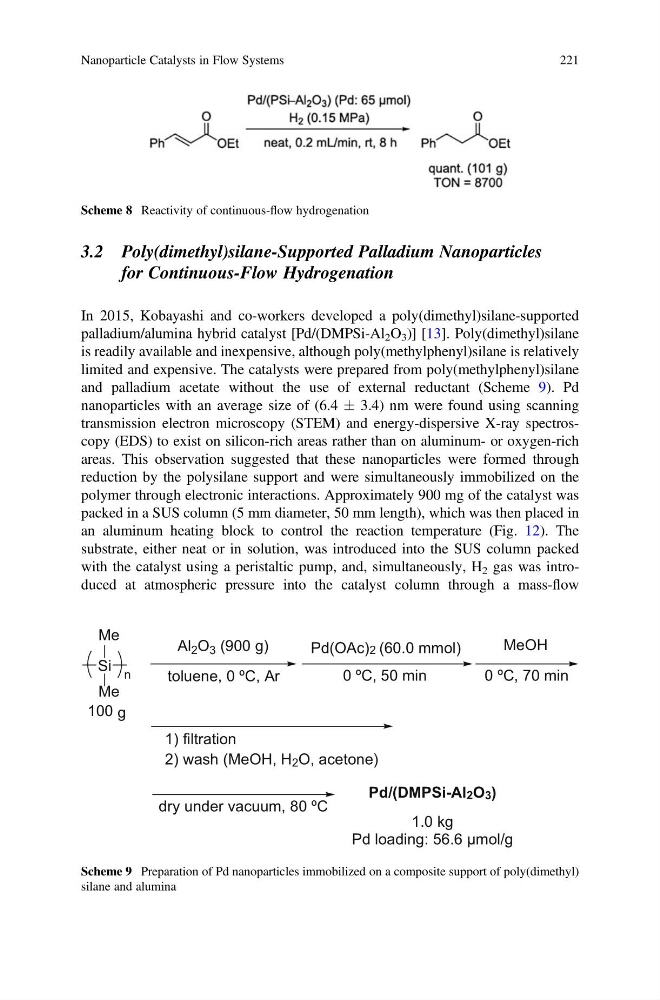
Scheme 8 Reactivity of continuous-flow hydrogenation
Si
Me
Me
n
Al 2 O 3 (900 g)
toluene, 0 ºC, Ar
Pd(OAc)2 (60.0 mmol)
0 ºC, 50 min
100 g
MeOH
0 ºC, 70 min
1) filtration
2) wash (MeOH, H 2 O, acetone)
dry under vacuum, 80 ºC
Pd/(DMPSi-Al 2 O 3 )
1.0 kg
Pd loading: 56.6 µmol/g
Scheme 9 Preparation of Pd nanoparticles immobilized on a composite support of poly(dimethyl)
silane and alumina
Nanoparticle Catalysts in Flow Systems
221
for Continuous-Flow Hydrogenation
In 2015, Kobayashi and co-workers developed a poly(dimethyl)silane-supported
palladium/alumina hybrid catalyst [Pd/(DMPSi-Al 2 O 3 )] [13]. Poly(dimethyl)silane
is readily available and inexpensive, although poly(methylphenyl)silane is relatively
limited and expensive. The catalysts were prepared from poly(methylphenyl)silane
and palladium acetate without the use of external reductant (Scheme 9). Pd
nanoparticles with an average size of (6.4 Æ 3.4) nm were found using scanning
transmission electron microscopy (STEM) and energy-dispersive X-ray spectroscopy (EDS) to exist on silicon-rich areas rather than on aluminum- or oxygen-rich
areas. This observation suggested that these nanoparticles were formed through
reduction by the polysilane support and were simultaneously immobilized on the
polymer through electronic interactions. Approximately 900 mg of the catalyst was
packed in a SUS column (5 mm diameter, 50 mm length), which was then placed in
an aluminum heating block to control the reaction temperature (Fig. 12). The
substrate, either neat or in solution, was introduced into the SUS column packed
with the catalyst using a peristaltic pump, and, simultaneously, H 2 gas was introduced at atmospheric pressure into the catalyst column through a mass-flow
Scheme 8 Reactivity of continuous-flow hydrogenation
Si
Me
Me
n
Al 2 O 3 (900 g)
toluene, 0 ºC, Ar
Pd(OAc)2 (60.0 mmol)
0 ºC, 50 min
100 g
MeOH
0 ºC, 70 min
1) filtration
2) wash (MeOH, H 2 O, acetone)
dry under vacuum, 80 ºC
Pd/(DMPSi-Al 2 O 3 )
1.0 kg
Pd loading: 56.6 µmol/g
Scheme 9 Preparation of Pd nanoparticles immobilized on a composite support of poly(dimethyl)
silane and alumina
Nanoparticle Catalysts in Flow Systems
221