

2.2 Polysilane-Supported Palladium Nanoparticles
Immobilized in Microchannels for Hydrogenation
In 2006, Kobayashi and co-workers developed a poly(methylphenylsilane)encapsulated Pd nanoparticle catalyst for hydrogenation reactions as well as crosscoupling reactions [4]. Polysilane is a polymer with particular electronic properties
that derive from the σ-conjugated electrons of the silicon backbone. σ-Conjugated
electrons show reduction ability to generate metal nanoparticles from metal salts and
stabilize metal nanoparticles by multiple, weak interactions as well as those of
aromatic π-electrons. Polysilane is also commercially available and inexpensive. In
addition, polysilane is a highly stable and safe material that does not swell with
organic solvents. Polysilane operated not only as a backbone for the immobilized
catalysts but also as a connecting material between the surface of the glass wall and
catalyst via silicon–oxygen networks. To improve the activity and stability, a range
of metal oxides were used as a second support to construct polysilane–metal oxide
91
5
O
O
4
O
O
H
4
OH
O
O
OH
Pd
OH
O
O
OH
Pd
OH
O
O
OH
Pd
Pd(PPh 3 ) 4
CH 2 Cl 2 /t-amyl alcohol
Microencapsulated Pd
SiO 2
OH
OH
OH
MeOH, rt, 15 h
Si
NH 2
SiO 2
O
O
O
(EtO) 3 Si
NH 2
slow addition
rt
Wall of microchannel
Si
NH
SiO 2
O
O
O
OH
O
OH
Pd
OH
150 ºC
Cross-inking
Pd-immobilized Microchannel (2)
Pd-immobilized Microchannel (2)
H 2
Substrate in THF
0.1 M; 0.1 mL/h
Product solution
polymer (1)
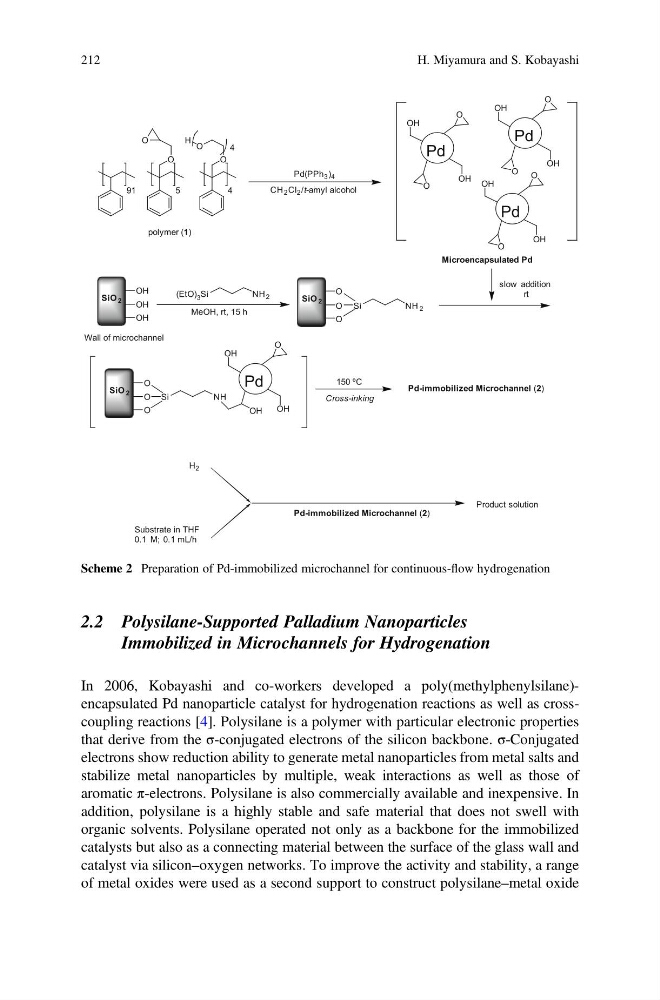
Scheme 2 Preparation of Pd-immobilized microchannel for continuous-flow hydrogenation
212
H. Miyamura and S. Kobayashi
Immobilized in Microchannels for Hydrogenation
In 2006, Kobayashi and co-workers developed a poly(methylphenylsilane)encapsulated Pd nanoparticle catalyst for hydrogenation reactions as well as crosscoupling reactions [4]. Polysilane is a polymer with particular electronic properties
that derive from the σ-conjugated electrons of the silicon backbone. σ-Conjugated
electrons show reduction ability to generate metal nanoparticles from metal salts and
stabilize metal nanoparticles by multiple, weak interactions as well as those of
aromatic π-electrons. Polysilane is also commercially available and inexpensive. In
addition, polysilane is a highly stable and safe material that does not swell with
organic solvents. Polysilane operated not only as a backbone for the immobilized
catalysts but also as a connecting material between the surface of the glass wall and
catalyst via silicon–oxygen networks. To improve the activity and stability, a range
of metal oxides were used as a second support to construct polysilane–metal oxide
91
5
O
O
4
O
O
H
4
OH
O
O
OH
Pd
OH
O
O
OH
Pd
OH
O
O
OH
Pd
Pd(PPh 3 ) 4
CH 2 Cl 2 /t-amyl alcohol
Microencapsulated Pd
SiO 2
OH
OH
OH
MeOH, rt, 15 h
Si
NH 2
SiO 2
O
O
O
(EtO) 3 Si
NH 2
slow addition
rt
Wall of microchannel
Si
NH
SiO 2
O
O
O
OH
O
OH
Pd
OH
150 ºC
Cross-inking
Pd-immobilized Microchannel (2)
Pd-immobilized Microchannel (2)
H 2
Substrate in THF
0.1 M; 0.1 mL/h
Product solution
polymer (1)
Scheme 2 Preparation of Pd-immobilized microchannel for continuous-flow hydrogenation
212
H. Miyamura and S. Kobayashi