

clusters onto several kinds of MOFs (MOF-5: [Zn 4 O(bdc) 3 ] n (bdc ¼ benzene-1,4dicarboxylate), Al-MIL-53: [Al(OH)(bdc)] n , and CPL-2: [Cu 2 (pzdc) 2 (bpy)] n
(pzdc ¼ pyrazine-2,3-dicarboxylate, bpy ¼ 4,4
0 -bipyridine)), and the resultant
Au/MOFs were examined for the oxidation of alcohols in methanol in the absence
of base [55]. The catalytic activity was much influenced on the kinds of MOFs rather
than the size of Au particles: the catalytic activity for 1-phenylethanol oxidation
increased in the order of Au/MOF-5 > Au/Al-MIL-5 > Au/CPL-2. The selectivity
also varied by the kind of MOFs. When Au/MOF-5 and Au/Al-MIL-53 were used,
methyl benzoate was selectively obtained, whereas benzaldehyde was obtained as a
major product by Au/CPL-2. The size dependence of Au on the same MOF was
studied for Au/MIL-101 prepared by different methods. The 2 nm of Au clusters on
MIL-101 exhibited TOF of 258 h
À1 , although the Au NPs larger than 6 nm showed
very low TOF [56]. For Au/MOFs, the size of Au particles is more critically
important for hydrogenation reactions [79, 80]. Au/MIL-101 (Cr 3 (F,OH)O(bdc) 3 )
[56] and Au/UiO-66 (Zr 6 O 4 (OH) 4 (bdc) 6 ) [57–59] also exhibited high activity for
oxidation of alcohols. Van der Voort et al. demonstrated the formation of oxygen
ad-atoms (Au–O) and peroxo species (Au–OO) on Au/UiO-66 in a stream of O 2 by
Raman spectroscopy [59]. It is also known that MOFs themselves work as heterogeneous acid catalysts. By combining the catalysis by Au and MOFs, Au/Cu(II)MOF worked as a bifunctional catalyst to enable a one-pot reaction of benzyl alcohol
oxidation followed by Knoevenagel condensation with malononitrile to obtain
benzylidenemalononitrile (Scheme 3) [60].
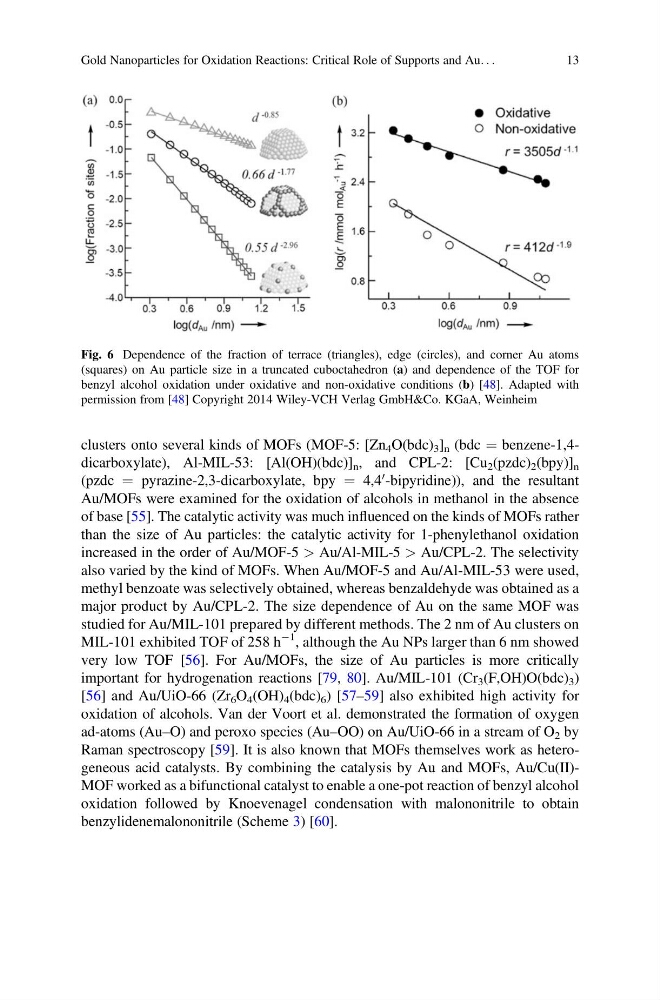
Fig. 6 Dependence of the fraction of terrace (triangles), edge (circles), and corner Au atoms
(squares) on Au particle size in a truncated cuboctahedron (a) and dependence of the TOF for
benzyl alcohol oxidation under oxidative and non-oxidative conditions (b) [48]. Adapted with
permission from [48] Copyright 2014 Wiley-VCH Verlag GmbH&Co. KGaA, Weinheim
Gold Nanoparticles for Oxidation Reactions: Critical Role of Supports and Au. . .
13
(pzdc ¼ pyrazine-2,3-dicarboxylate, bpy ¼ 4,4
0 -bipyridine)), and the resultant
Au/MOFs were examined for the oxidation of alcohols in methanol in the absence
of base [55]. The catalytic activity was much influenced on the kinds of MOFs rather
than the size of Au particles: the catalytic activity for 1-phenylethanol oxidation
increased in the order of Au/MOF-5 > Au/Al-MIL-5 > Au/CPL-2. The selectivity
also varied by the kind of MOFs. When Au/MOF-5 and Au/Al-MIL-53 were used,
methyl benzoate was selectively obtained, whereas benzaldehyde was obtained as a
major product by Au/CPL-2. The size dependence of Au on the same MOF was
studied for Au/MIL-101 prepared by different methods. The 2 nm of Au clusters on
MIL-101 exhibited TOF of 258 h
À1 , although the Au NPs larger than 6 nm showed
very low TOF [56]. For Au/MOFs, the size of Au particles is more critically
important for hydrogenation reactions [79, 80]. Au/MIL-101 (Cr 3 (F,OH)O(bdc) 3 )
[56] and Au/UiO-66 (Zr 6 O 4 (OH) 4 (bdc) 6 ) [57–59] also exhibited high activity for
oxidation of alcohols. Van der Voort et al. demonstrated the formation of oxygen
ad-atoms (Au–O) and peroxo species (Au–OO) on Au/UiO-66 in a stream of O 2 by
Raman spectroscopy [59]. It is also known that MOFs themselves work as heterogeneous acid catalysts. By combining the catalysis by Au and MOFs, Au/Cu(II)MOF worked as a bifunctional catalyst to enable a one-pot reaction of benzyl alcohol
oxidation followed by Knoevenagel condensation with malononitrile to obtain
benzylidenemalononitrile (Scheme 3) [60].
Fig. 6 Dependence of the fraction of terrace (triangles), edge (circles), and corner Au atoms
(squares) on Au particle size in a truncated cuboctahedron (a) and dependence of the TOF for
benzyl alcohol oxidation under oxidative and non-oxidative conditions (b) [48]. Adapted with
permission from [48] Copyright 2014 Wiley-VCH Verlag GmbH&Co. KGaA, Weinheim
Gold Nanoparticles for Oxidation Reactions: Critical Role of Supports and Au. . .
13