

New heterogeneous dendritic catalysts were tested using a combination of a silica
polyamine composite with PPI dendrimers containing Pd NPs (1.95 Æ 0.02 nm,
Fig. 18) [73]. The Pd NPs were effective for catalytic hydrogenation of styrene,
phenylacetylene, and dienes; their specific activities exceeded 100,000 h
À1 with the
aid of nitrogen coordination of the PPI dendrimers. Optimal conditions for selective
hydrogenation of phenylacetylene were at a substrate/Pd ratio equal to 20,100,
which resulted in a conversion up to 91% and selectivity for styrene of 90%
(Fig. 18, entry 7). The hybrid materials based on the Pd NPs effectively prevented
metal leaching and could be used for several cycles. As a result, these catalyst
systems possessed greater activity than Pd NPs combined with PPI dendrimers
alone or Lindlar catalysts.
4 Click (Triazolyl) Dendrimers
Astruc et al. [74–81] prepared a series of “click” dendrimers composed of interior
1,2,3-triazolyl units and ferrocenyl, sulfonate or triethylene glycol (TEG) terminus,
and so on. They investigated the encapsulation properties of the functionalized
dendrimers containing hydrophobic and hydrophilic units. The functionalized click
dendrimers are much interested in electrochemical, photochemical, and also catalytic
performances.
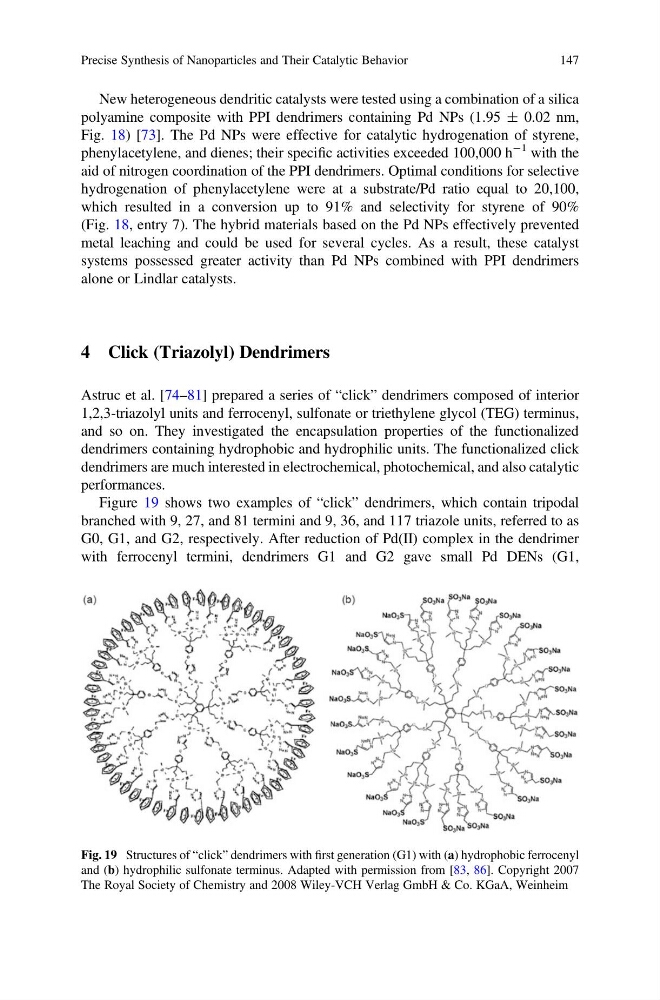
Figure 19 shows two examples of “click” dendrimers, which contain tripodal
branched with 9, 27, and 81 termini and 9, 36, and 117 triazole units, referred to as
G0, G1, and G2, respectively. After reduction of Pd(II) complex in the dendrimer
with ferrocenyl termini, dendrimers G1 and G2 gave small Pd DENs (G1,
Fig. 19 Structures of “click” dendrimers with first generation (G1) with (a) hydrophobic ferrocenyl
and (b) hydrophilic sulfonate terminus. Adapted with permission from [83, 86]. Copyright 2007
The Royal Society of Chemistry and 2008 Wiley-VCH Verlag GmbH & Co. KGaA, Weinheim
Precise Synthesis of Nanoparticles and Their Catalytic Behavior
147
polyamine composite with PPI dendrimers containing Pd NPs (1.95 Æ 0.02 nm,
Fig. 18) [73]. The Pd NPs were effective for catalytic hydrogenation of styrene,
phenylacetylene, and dienes; their specific activities exceeded 100,000 h
À1 with the
aid of nitrogen coordination of the PPI dendrimers. Optimal conditions for selective
hydrogenation of phenylacetylene were at a substrate/Pd ratio equal to 20,100,
which resulted in a conversion up to 91% and selectivity for styrene of 90%
(Fig. 18, entry 7). The hybrid materials based on the Pd NPs effectively prevented
metal leaching and could be used for several cycles. As a result, these catalyst
systems possessed greater activity than Pd NPs combined with PPI dendrimers
alone or Lindlar catalysts.
4 Click (Triazolyl) Dendrimers
Astruc et al. [74–81] prepared a series of “click” dendrimers composed of interior
1,2,3-triazolyl units and ferrocenyl, sulfonate or triethylene glycol (TEG) terminus,
and so on. They investigated the encapsulation properties of the functionalized
dendrimers containing hydrophobic and hydrophilic units. The functionalized click
dendrimers are much interested in electrochemical, photochemical, and also catalytic
performances.
Figure 19 shows two examples of “click” dendrimers, which contain tripodal
branched with 9, 27, and 81 termini and 9, 36, and 117 triazole units, referred to as
G0, G1, and G2, respectively. After reduction of Pd(II) complex in the dendrimer
with ferrocenyl termini, dendrimers G1 and G2 gave small Pd DENs (G1,
Fig. 19 Structures of “click” dendrimers with first generation (G1) with (a) hydrophobic ferrocenyl
and (b) hydrophilic sulfonate terminus. Adapted with permission from [83, 86]. Copyright 2007
The Royal Society of Chemistry and 2008 Wiley-VCH Verlag GmbH & Co. KGaA, Weinheim
Precise Synthesis of Nanoparticles and Their Catalytic Behavior
147