

One of the main advantages of using the ZLC as a tool to characterise the
adsorption performance of novel adsorbents is that it allows a rapid feedback of
the relevant information to the chemists working on the synthesis process. This
allows to identify the strength and weaknesses of the material and modify the
synthesis procedure to further improve and engineer the materials. Beyond the
purely scientific and academic interest for these complex adsorbents, the Rho
samples present some properties, namely, the flexible structure and the very high
selectivity towards CO 2 , which makes them promising candidates for carbon capture
applications. Nevertheless, the high selectivity comes with the price of an extremely
slow CO 2 kinetics which limits their applicability in real processes.
The insights provided by the ZLC analysis allowed to identify the key factors
responsible for the limitations and represented the foundations on which a new series
of Rho zeolites with improved characteristics were synthesised. This is the case of
the Li- form of Rho zeolites. Similar to Na-Rho, Li-Rho presents a distorted
framework which makes the material selective to CO 2 retaining a relatively high
CO 2 adsorption. In addition, Li
+ cations seat preferentially in 6R sites leaving the
majority of 8R and D8R sites free facilitating the access of CO 2 . For this reason, the
research effort concentrated on the preparation of the variant of the Li- form Rho
zeolites: a fully exchanged version and two samples with low occupancy of larger
cations, Li,Na-Rho and Li,Cs-Rho. To compare the sample directly and at conditions
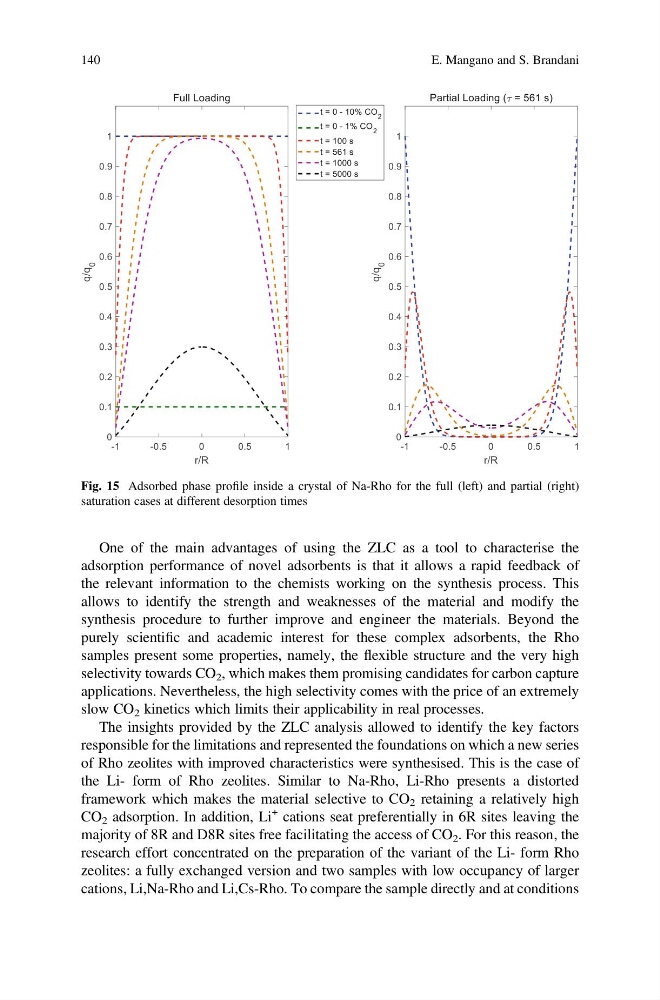
Fig. 15 Adsorbed phase profile inside a crystal of Na-Rho for the full (left) and partial (right)
saturation cases at different desorption times
140
E. Mangano and S. Brandani
adsorption performance of novel adsorbents is that it allows a rapid feedback of
the relevant information to the chemists working on the synthesis process. This
allows to identify the strength and weaknesses of the material and modify the
synthesis procedure to further improve and engineer the materials. Beyond the
purely scientific and academic interest for these complex adsorbents, the Rho
samples present some properties, namely, the flexible structure and the very high
selectivity towards CO 2 , which makes them promising candidates for carbon capture
applications. Nevertheless, the high selectivity comes with the price of an extremely
slow CO 2 kinetics which limits their applicability in real processes.
The insights provided by the ZLC analysis allowed to identify the key factors
responsible for the limitations and represented the foundations on which a new series
of Rho zeolites with improved characteristics were synthesised. This is the case of
the Li- form of Rho zeolites. Similar to Na-Rho, Li-Rho presents a distorted
framework which makes the material selective to CO 2 retaining a relatively high
CO 2 adsorption. In addition, Li
+ cations seat preferentially in 6R sites leaving the
majority of 8R and D8R sites free facilitating the access of CO 2 . For this reason, the
research effort concentrated on the preparation of the variant of the Li- form Rho
zeolites: a fully exchanged version and two samples with low occupancy of larger
cations, Li,Na-Rho and Li,Cs-Rho. To compare the sample directly and at conditions
Fig. 15 Adsorbed phase profile inside a crystal of Na-Rho for the full (left) and partial (right)
saturation cases at different desorption times
140
E. Mangano and S. Brandani