

10 Qualitative Characterization of Healthcare Wastes
171
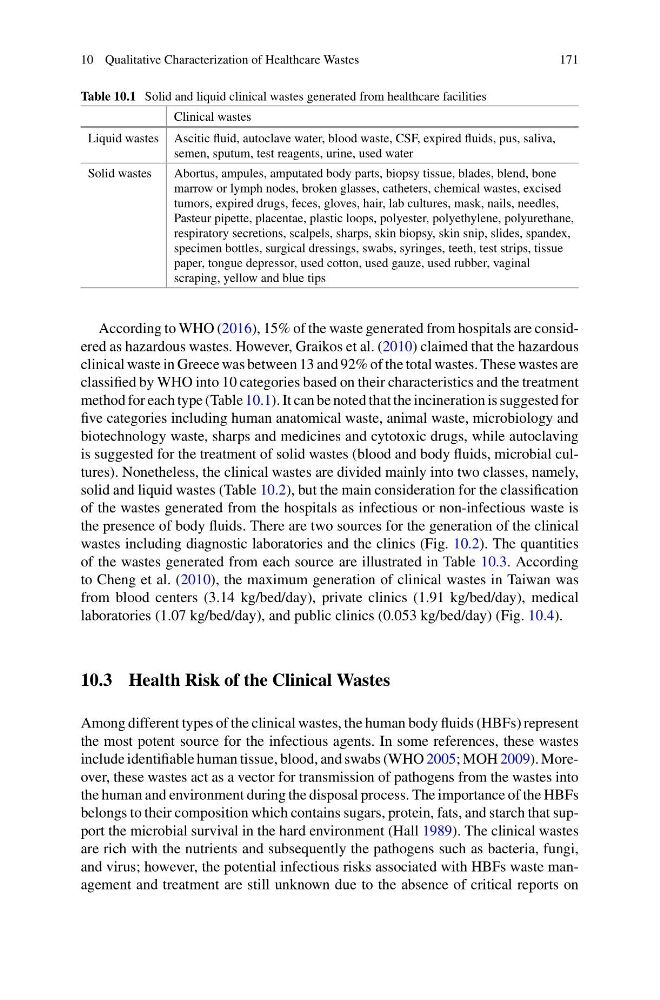
Table 10.1 Solid and liquid clinical wastes generated from healthcare facilities
Clinical wastes
Liquid wastes Ascitic fluid, autoclave water, blood waste, CSF, expired fluids, pus, saliva,
semen, sputum, test reagents, urine, used water
Solid wastes
Abortus, ampules, amputated body parts, biopsy tissue, blades, blend, bone
marrow or lymph nodes, broken glasses, catheters, chemical wastes, excised
tumors, expired drugs, feces, gloves, hair, lab cultures, mask, nails, needles,
Pasteur pipette, placentae, plastic loops, polyester, polyethylene, polyurethane,
respiratory secretions, scalpels, sharps, skin biopsy, skin snip, slides, spandex,
specimen bottles, surgical dressings, swabs, syringes, teeth, test strips, tissue
paper, tongue depressor, used cotton, used gauze, used rubber, vaginal
scraping, yellow and blue tips
According to WHO (2016), 15% of the waste generated from hospitals are considered as hazardous wastes. However, Graikos et al. (2010) claimed that the hazardous
clinical waste in Greece was between 13 and 92% of the total wastes. These wastes are
classified by WHO into 10 categories based on their characteristics and the treatment
method for each type (Table 10.1). It can be noted that the incineration is suggested for
five categories including human anatomical waste, animal waste, microbiology and
biotechnology waste, sharps and medicines and cytotoxic drugs, while autoclaving
is suggested for the treatment of solid wastes (blood and body fluids, microbial cultures). Nonetheless, the clinical wastes are divided mainly into two classes, namely,
solid and liquid wastes (Table 10.2), but the main consideration for the classification
of the wastes generated from the hospitals as infectious or non-infectious waste is
the presence of body fluids. There are two sources for the generation of the clinical
wastes including diagnostic laboratories and the clinics (Fig. 10.2). The quantities
of the wastes generated from each source are illustrated in Table 10.3. According
to Cheng et al. (2010), the maximum generation of clinical wastes in Taiwan was
from blood centers (3.14 kg/bed/day), private clinics (1.91 kg/bed/day), medical
laboratories (1.07 kg/bed/day), and public clinics (0.053 kg/bed/day) (Fig. 10.4).
10.3 Health Risk of the Clinical Wastes
Among different types of the clinical wastes, the human body fluids (HBFs) represent
the most potent source for the infectious agents. In some references, these wastes
include identifiable human tissue, blood, and swabs (WHO 2005; MOH 2009). Moreover, these wastes act as a vector for transmission of pathogens from the wastes into
the human and environment during the disposal process. The importance of the HBFs
belongs to their composition which contains sugars, protein, fats, and starch that support the microbial survival in the hard environment (Hall 1989). The clinical wastes
are rich with the nutrients and subsequently the pathogens such as bacteria, fungi,
and virus; however, the potential infectious risks associated with HBFs waste management and treatment are still unknown due to the absence of critical reports on
171
Table 10.1 Solid and liquid clinical wastes generated from healthcare facilities
Clinical wastes
Liquid wastes Ascitic fluid, autoclave water, blood waste, CSF, expired fluids, pus, saliva,
semen, sputum, test reagents, urine, used water
Solid wastes
Abortus, ampules, amputated body parts, biopsy tissue, blades, blend, bone
marrow or lymph nodes, broken glasses, catheters, chemical wastes, excised
tumors, expired drugs, feces, gloves, hair, lab cultures, mask, nails, needles,
Pasteur pipette, placentae, plastic loops, polyester, polyethylene, polyurethane,
respiratory secretions, scalpels, sharps, skin biopsy, skin snip, slides, spandex,
specimen bottles, surgical dressings, swabs, syringes, teeth, test strips, tissue
paper, tongue depressor, used cotton, used gauze, used rubber, vaginal
scraping, yellow and blue tips
According to WHO (2016), 15% of the waste generated from hospitals are considered as hazardous wastes. However, Graikos et al. (2010) claimed that the hazardous
clinical waste in Greece was between 13 and 92% of the total wastes. These wastes are
classified by WHO into 10 categories based on their characteristics and the treatment
method for each type (Table 10.1). It can be noted that the incineration is suggested for
five categories including human anatomical waste, animal waste, microbiology and
biotechnology waste, sharps and medicines and cytotoxic drugs, while autoclaving
is suggested for the treatment of solid wastes (blood and body fluids, microbial cultures). Nonetheless, the clinical wastes are divided mainly into two classes, namely,
solid and liquid wastes (Table 10.2), but the main consideration for the classification
of the wastes generated from the hospitals as infectious or non-infectious waste is
the presence of body fluids. There are two sources for the generation of the clinical
wastes including diagnostic laboratories and the clinics (Fig. 10.2). The quantities
of the wastes generated from each source are illustrated in Table 10.3. According
to Cheng et al. (2010), the maximum generation of clinical wastes in Taiwan was
from blood centers (3.14 kg/bed/day), private clinics (1.91 kg/bed/day), medical
laboratories (1.07 kg/bed/day), and public clinics (0.053 kg/bed/day) (Fig. 10.4).
10.3 Health Risk of the Clinical Wastes
Among different types of the clinical wastes, the human body fluids (HBFs) represent
the most potent source for the infectious agents. In some references, these wastes
include identifiable human tissue, blood, and swabs (WHO 2005; MOH 2009). Moreover, these wastes act as a vector for transmission of pathogens from the wastes into
the human and environment during the disposal process. The importance of the HBFs
belongs to their composition which contains sugars, protein, fats, and starch that support the microbial survival in the hard environment (Hall 1989). The clinical wastes
are rich with the nutrients and subsequently the pathogens such as bacteria, fungi,
and virus; however, the potential infectious risks associated with HBFs waste management and treatment are still unknown due to the absence of critical reports on