

172
E. Noman et al.
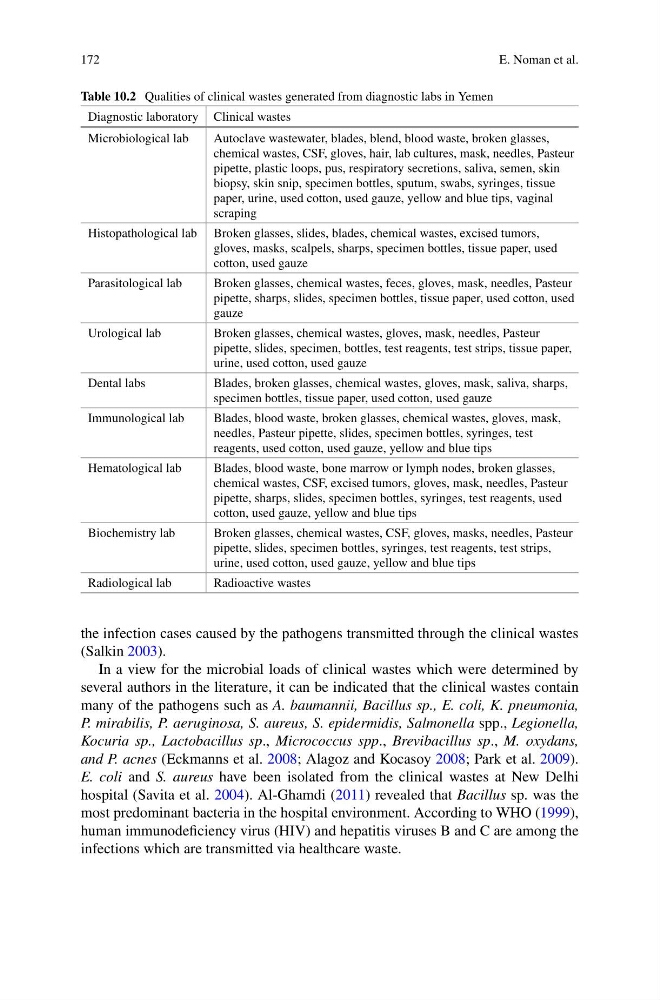
Table 10.2 Qualities of clinical wastes generated from diagnostic labs in Yemen
Diagnostic laboratory Clinical wastes
Microbiological lab
Autoclave wastewater, blades, blend, blood waste, broken glasses,
chemical wastes, CSF, gloves, hair, lab cultures, mask, needles, Pasteur
pipette, plastic loops, pus, respiratory secretions, saliva, semen, skin
biopsy, skin snip, specimen bottles, sputum, swabs, syringes, tissue
paper, urine, used cotton, used gauze, yellow and blue tips, vaginal
scraping
Histopathological lab Broken glasses, slides, blades, chemical wastes, excised tumors,
gloves, masks, scalpels, sharps, specimen bottles, tissue paper, used
cotton, used gauze
Parasitological lab
Broken glasses, chemical wastes, feces, gloves, mask, needles, Pasteur
pipette, sharps, slides, specimen bottles, tissue paper, used cotton, used
gauze
Urological lab
Broken glasses, chemical wastes, gloves, mask, needles, Pasteur
pipette, slides, specimen, bottles, test reagents, test strips, tissue paper,
urine, used cotton, used gauze
Dental labs
Blades, broken glasses, chemical wastes, gloves, mask, saliva, sharps,
specimen bottles, tissue paper, used cotton, used gauze
Immunological lab
Blades, blood waste, broken glasses, chemical wastes, gloves, mask,
needles, Pasteur pipette, slides, specimen bottles, syringes, test
reagents, used cotton, used gauze, yellow and blue tips
Hematological lab
Blades, blood waste, bone marrow or lymph nodes, broken glasses,
chemical wastes, CSF, excised tumors, gloves, mask, needles, Pasteur
pipette, sharps, slides, specimen bottles, syringes, test reagents, used
cotton, used gauze, yellow and blue tips
Biochemistry lab
Broken glasses, chemical wastes, CSF, gloves, masks, needles, Pasteur
pipette, slides, specimen bottles, syringes, test reagents, test strips,
urine, used cotton, used gauze, yellow and blue tips
Radiological lab
Radioactive wastes
the infection cases caused by the pathogens transmitted through the clinical wastes
(Salkin 2003).
In a view for the microbial loads of clinical wastes which were determined by
several authors in the literature, it can be indicated that the clinical wastes contain
many of the pathogens such as A. baumannii, Bacillus sp., E. coli, K. pneumonia,
P. mirabilis, P. aeruginosa, S. aureus, S. epidermidis, Salmonella spp., Legionella,
Kocuria sp., Lactobacillus sp., Micrococcus spp., Brevibacillus sp., M. oxydans,
and P. acnes (Eckmanns et al. 2008; Alagoz and Kocasoy 2008; Park et al. 2009).
E. coli and S. aureus have been isolated from the clinical wastes at New Delhi
hospital (Savita et al. 2004). Al-Ghamdi (2011) revealed that Bacillus sp. was the
most predominant bacteria in the hospital environment. According to WHO (1999),
human immunodeficiency virus (HIV) and hepatitis viruses B and C are among the
infections which are transmitted via healthcare waste.
E. Noman et al.
Table 10.2 Qualities of clinical wastes generated from diagnostic labs in Yemen
Diagnostic laboratory Clinical wastes
Microbiological lab
Autoclave wastewater, blades, blend, blood waste, broken glasses,
chemical wastes, CSF, gloves, hair, lab cultures, mask, needles, Pasteur
pipette, plastic loops, pus, respiratory secretions, saliva, semen, skin
biopsy, skin snip, specimen bottles, sputum, swabs, syringes, tissue
paper, urine, used cotton, used gauze, yellow and blue tips, vaginal
scraping
Histopathological lab Broken glasses, slides, blades, chemical wastes, excised tumors,
gloves, masks, scalpels, sharps, specimen bottles, tissue paper, used
cotton, used gauze
Parasitological lab
Broken glasses, chemical wastes, feces, gloves, mask, needles, Pasteur
pipette, sharps, slides, specimen bottles, tissue paper, used cotton, used
gauze
Urological lab
Broken glasses, chemical wastes, gloves, mask, needles, Pasteur
pipette, slides, specimen, bottles, test reagents, test strips, tissue paper,
urine, used cotton, used gauze
Dental labs
Blades, broken glasses, chemical wastes, gloves, mask, saliva, sharps,
specimen bottles, tissue paper, used cotton, used gauze
Immunological lab
Blades, blood waste, broken glasses, chemical wastes, gloves, mask,
needles, Pasteur pipette, slides, specimen bottles, syringes, test
reagents, used cotton, used gauze, yellow and blue tips
Hematological lab
Blades, blood waste, bone marrow or lymph nodes, broken glasses,
chemical wastes, CSF, excised tumors, gloves, mask, needles, Pasteur
pipette, sharps, slides, specimen bottles, syringes, test reagents, used
cotton, used gauze, yellow and blue tips
Biochemistry lab
Broken glasses, chemical wastes, CSF, gloves, masks, needles, Pasteur
pipette, slides, specimen bottles, syringes, test reagents, test strips,
urine, used cotton, used gauze, yellow and blue tips
Radiological lab
Radioactive wastes
the infection cases caused by the pathogens transmitted through the clinical wastes
(Salkin 2003).
In a view for the microbial loads of clinical wastes which were determined by
several authors in the literature, it can be indicated that the clinical wastes contain
many of the pathogens such as A. baumannii, Bacillus sp., E. coli, K. pneumonia,
P. mirabilis, P. aeruginosa, S. aureus, S. epidermidis, Salmonella spp., Legionella,
Kocuria sp., Lactobacillus sp., Micrococcus spp., Brevibacillus sp., M. oxydans,
and P. acnes (Eckmanns et al. 2008; Alagoz and Kocasoy 2008; Park et al. 2009).
E. coli and S. aureus have been isolated from the clinical wastes at New Delhi
hospital (Savita et al. 2004). Al-Ghamdi (2011) revealed that Bacillus sp. was the
most predominant bacteria in the hospital environment. According to WHO (1999),
human immunodeficiency virus (HIV) and hepatitis viruses B and C are among the
infections which are transmitted via healthcare waste.