

7 Reduction of Seafood Processing Wastewater …
113
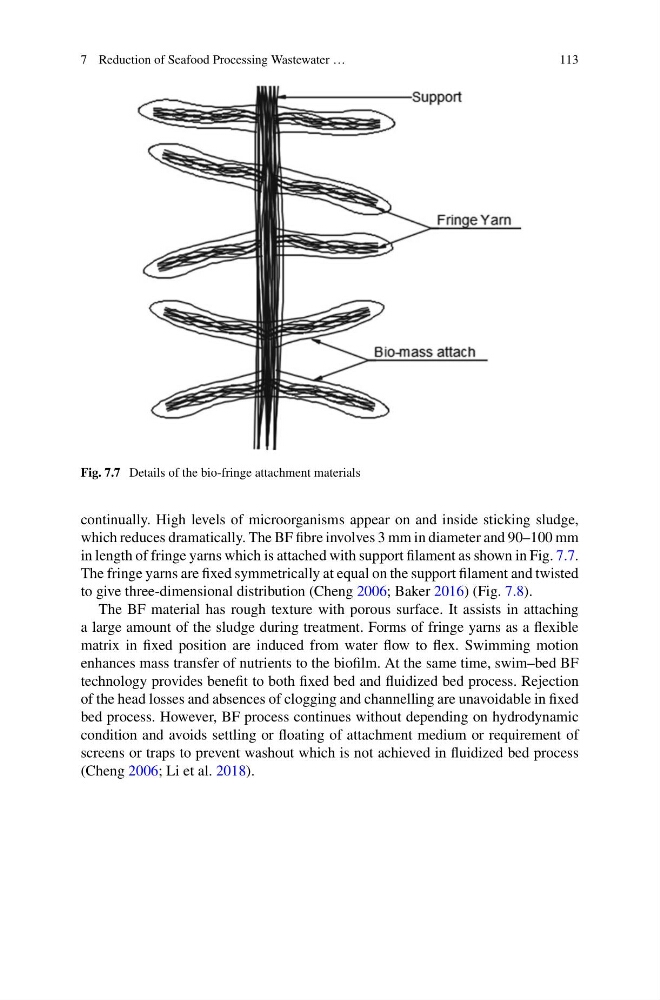
Fig. 7.7 Details of the bio-fringe attachment materials
continually. High levels of microorganisms appear on and inside sticking sludge,
which reduces dramatically. The BF fibre involves 3 mm in diameter and 90–100 mm
in length of fringe yarns which is attached with support filament as shown in Fig. 7.7.
The fringe yarns are fixed symmetrically at equal on the support filament and twisted
to give three-dimensional distribution (Cheng 2006; Baker 2016) (Fig. 7.8).
The BF material has rough texture with porous surface. It assists in attaching
a large amount of the sludge during treatment. Forms of fringe yarns as a flexible
matrix in fixed position are induced from water flow to flex. Swimming motion
enhances mass transfer of nutrients to the biofilm. At the same time, swim–bed BF
technology provides benefit to both fixed bed and fluidized bed process. Rejection
of the head losses and absences of clogging and channelling are unavoidable in fixed
bed process. However, BF process continues without depending on hydrodynamic
condition and avoids settling or floating of attachment medium or requirement of
screens or traps to prevent washout which is not achieved in fluidized bed process
(Cheng 2006; Li et al. 2018).
113
Fig. 7.7 Details of the bio-fringe attachment materials
continually. High levels of microorganisms appear on and inside sticking sludge,
which reduces dramatically. The BF fibre involves 3 mm in diameter and 90–100 mm
in length of fringe yarns which is attached with support filament as shown in Fig. 7.7.
The fringe yarns are fixed symmetrically at equal on the support filament and twisted
to give three-dimensional distribution (Cheng 2006; Baker 2016) (Fig. 7.8).
The BF material has rough texture with porous surface. It assists in attaching
a large amount of the sludge during treatment. Forms of fringe yarns as a flexible
matrix in fixed position are induced from water flow to flex. Swimming motion
enhances mass transfer of nutrients to the biofilm. At the same time, swim–bed BF
technology provides benefit to both fixed bed and fluidized bed process. Rejection
of the head losses and absences of clogging and channelling are unavoidable in fixed
bed process. However, BF process continues without depending on hydrodynamic
condition and avoids settling or floating of attachment medium or requirement of
screens or traps to prevent washout which is not achieved in fluidized bed process
(Cheng 2006; Li et al. 2018).