

82
3 The Reactivity of Nitrile Imines
NH
N
H
NO 2
Pb(OAc) 4
DCM
0
o C, 1 h
54 %
NO 2
N
N
NO 2
N
O
O
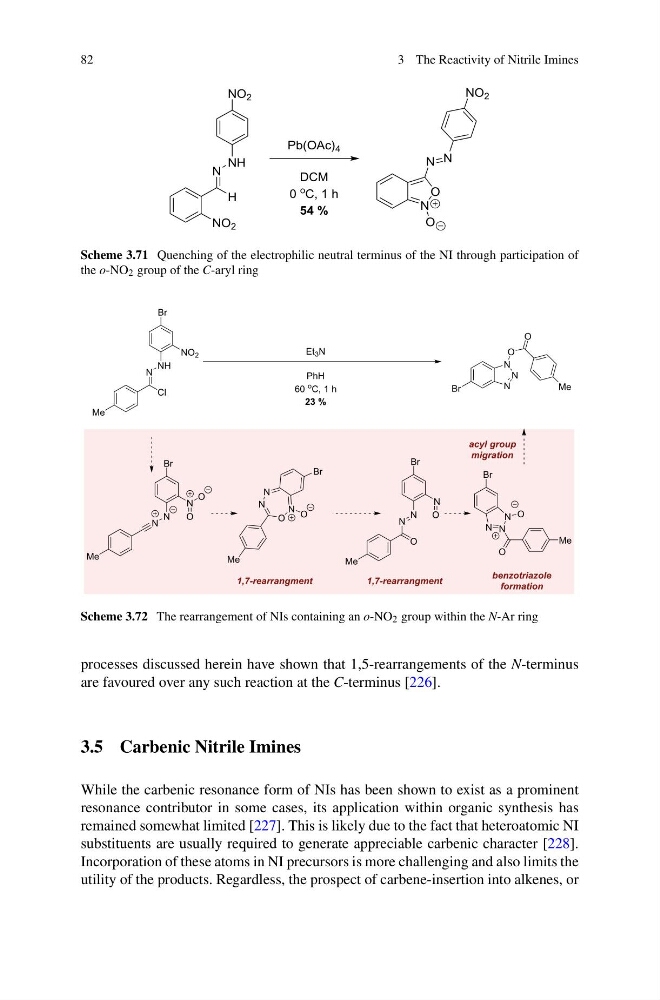
Scheme 3.71 Quenching of the electrophilic neutral terminus of the NI through participation of
the o-NO 2 group of the C-aryl ring
NH
N
Cl
Me
Br
NO 2
Et 3 N
PhH
60
o C, 1 h
23 %
N
N
N
O
O
Me
Br
N
N
Me
Br
N
O
O
N
N
Me
Br
N O
O
N
N
Me
Br
N
O
O
N N
Me
Br
N O
O
1,7-rearrangment
benzotriazole
formation
acyl group
migration
1,7-rearrangment
Scheme 3.72 The rearrangement of NIs containing an o-NO 2 group within the N-Ar ring
processes discussed herein have shown that 1,5-rearrangements of the N-terminus
are favoured over any such reaction at the C-terminus [226].
3.5 Carbenic Nitrile Imines
While the carbenic resonance form of NIs has been shown to exist as a prominent
resonance contributor in some cases, its application within organic synthesis has
remained somewhat limited [227]. This is likely due to the fact that heteroatomic NI
substituents are usually required to generate appreciable carbenic character [228].
Incorporation of these atoms in NI precursors is more challenging and also limits the
utility of the products. Regardless, the prospect of carbene-insertion into alkenes, or
3 The Reactivity of Nitrile Imines
NH
N
H
NO 2
Pb(OAc) 4
DCM
0
o C, 1 h
54 %
NO 2
N
N
NO 2
N
O
O
Scheme 3.71 Quenching of the electrophilic neutral terminus of the NI through participation of
the o-NO 2 group of the C-aryl ring
NH
N
Cl
Me
Br
NO 2
Et 3 N
PhH
60
o C, 1 h
23 %
N
N
N
O
O
Me
Br
N
N
Me
Br
N
O
O
N
N
Me
Br
N O
O
N
N
Me
Br
N
O
O
N N
Me
Br
N O
O
1,7-rearrangment
benzotriazole
formation
acyl group
migration
1,7-rearrangment
Scheme 3.72 The rearrangement of NIs containing an o-NO 2 group within the N-Ar ring
processes discussed herein have shown that 1,5-rearrangements of the N-terminus
are favoured over any such reaction at the C-terminus [226].
3.5 Carbenic Nitrile Imines
While the carbenic resonance form of NIs has been shown to exist as a prominent
resonance contributor in some cases, its application within organic synthesis has
remained somewhat limited [227]. This is likely due to the fact that heteroatomic NI
substituents are usually required to generate appreciable carbenic character [228].
Incorporation of these atoms in NI precursors is more challenging and also limits the
utility of the products. Regardless, the prospect of carbene-insertion into alkenes, or