

3.2 Nucleophiles
75
F 3 C
OSO 2 Ph
N
NH
Et 3 N, THF
10
o C, 10 min
ii. HCl
rt, 1 h
72 %
N
O
Me
i.
SO 2 NH 2
F 3 C
N
N
SO 2 NH 2
Me
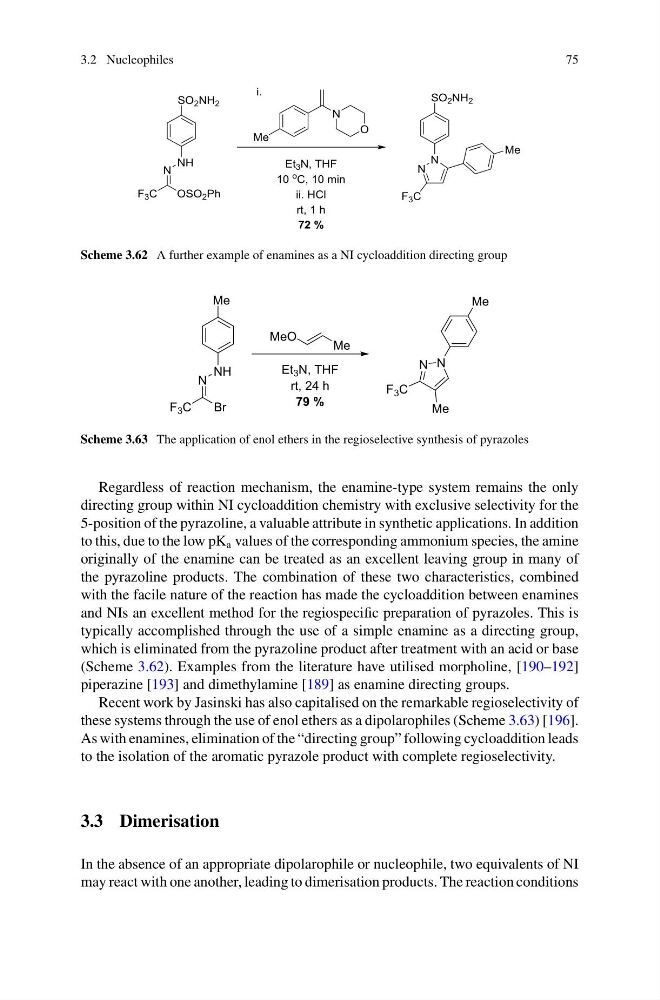
Scheme 3.62 A further example of enamines as a NI cycloaddition directing group
F 3 C
Br
N
NH
Me
Et 3 N, THF
rt, 24 h
79 %
Me
MeO
F 3 C
N N
Me
Me
Scheme 3.63 The application of enol ethers in the regioselective synthesis of pyrazoles
Regardless of reaction mechanism, the enamine-type system remains the only
directing group within NI cycloaddition chemistry with exclusive selectivity for the
5-position of the pyrazoline, a valuable attribute in synthetic applications. In addition
to this, due to the low pK a values of the corresponding ammonium species, the amine
originally of the enamine can be treated as an excellent leaving group in many of
the pyrazoline products. The combination of these two characteristics, combined
with the facile nature of the reaction has made the cycloaddition between enamines
and NIs an excellent method for the regiospecific preparation of pyrazoles. This is
typically accomplished through the use of a simple enamine as a directing group,
which is eliminated from the pyrazoline product after treatment with an acid or base
(Scheme 3.62). Examples from the literature have utilised morpholine, [190–192]
piperazine [193] and dimethylamine [189] as enamine directing groups.
Recent work by Jasinski has also capitalised on the remarkable regioselectivity of
these systems through the use of enol ethers as a dipolarophiles (Scheme 3.63) [196].
As with enamines, elimination of the “directing group” following cycloaddition leads
to the isolation of the aromatic pyrazole product with complete regioselectivity.
3.3 Dimerisation
In the absence of an appropriate dipolarophile or nucleophile, two equivalents of NI
may react with one another, leading to dimerisation products. The reaction conditions
75
F 3 C
OSO 2 Ph
N
NH
Et 3 N, THF
10
o C, 10 min
ii. HCl
rt, 1 h
72 %
N
O
Me
i.
SO 2 NH 2
F 3 C
N
N
SO 2 NH 2
Me
Scheme 3.62 A further example of enamines as a NI cycloaddition directing group
F 3 C
Br
N
NH
Me
Et 3 N, THF
rt, 24 h
79 %
Me
MeO
F 3 C
N N
Me
Me
Scheme 3.63 The application of enol ethers in the regioselective synthesis of pyrazoles
Regardless of reaction mechanism, the enamine-type system remains the only
directing group within NI cycloaddition chemistry with exclusive selectivity for the
5-position of the pyrazoline, a valuable attribute in synthetic applications. In addition
to this, due to the low pK a values of the corresponding ammonium species, the amine
originally of the enamine can be treated as an excellent leaving group in many of
the pyrazoline products. The combination of these two characteristics, combined
with the facile nature of the reaction has made the cycloaddition between enamines
and NIs an excellent method for the regiospecific preparation of pyrazoles. This is
typically accomplished through the use of a simple enamine as a directing group,
which is eliminated from the pyrazoline product after treatment with an acid or base
(Scheme 3.62). Examples from the literature have utilised morpholine, [190–192]
piperazine [193] and dimethylamine [189] as enamine directing groups.
Recent work by Jasinski has also capitalised on the remarkable regioselectivity of
these systems through the use of enol ethers as a dipolarophiles (Scheme 3.63) [196].
As with enamines, elimination of the “directing group” following cycloaddition leads
to the isolation of the aromatic pyrazole product with complete regioselectivity.
3.3 Dimerisation
In the absence of an appropriate dipolarophile or nucleophile, two equivalents of NI
may react with one another, leading to dimerisation products. The reaction conditions