

72
3 The Reactivity of Nitrile Imines
B(OH) 2
N
N
N
N
B OH
OH
N
N B(OH) 2
R
2
R
1
R
1
R
1
R
2
R
2
R
3
R
3
R
3
N
NH
R
1
R
2
R
3
H 2 O
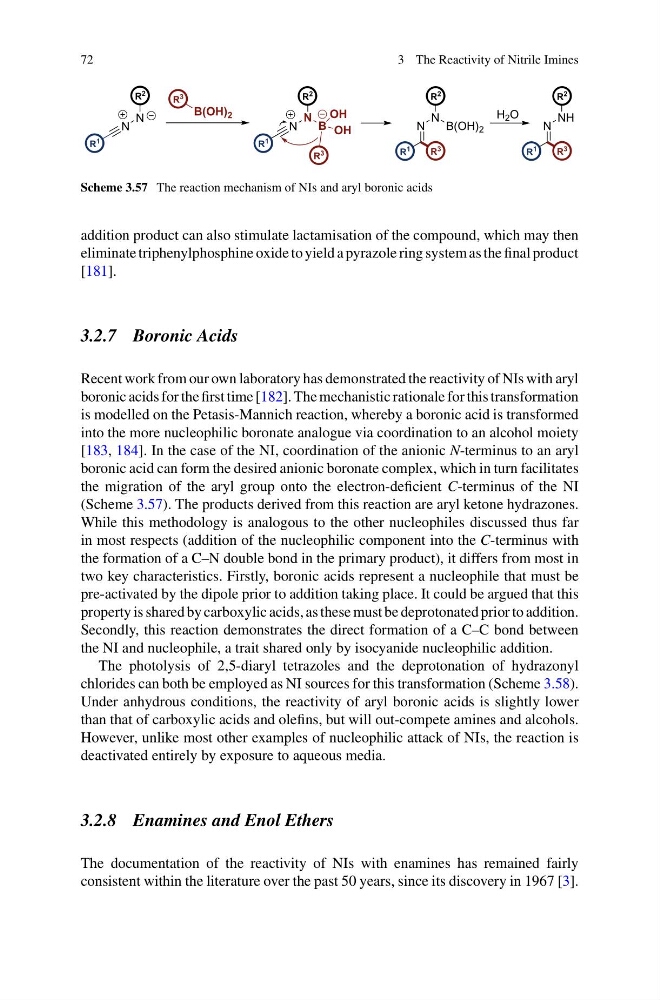
Scheme 3.57 The reaction mechanism of NIs and aryl boronic acids
addition product can also stimulate lactamisation of the compound, which may then
eliminate triphenylphosphine oxide to yield a pyrazole ring system as the final product
[181].
3.2.7 Boronic Acids
Recent work from our own laboratory has demonstrated the reactivity of NIs with aryl
boronic acids for the first time [182]. The mechanistic rationale for this transformation
is modelled on the Petasis-Mannich reaction, whereby a boronic acid is transformed
into the more nucleophilic boronate analogue via coordination to an alcohol moiety
[183, 184]. In the case of the NI, coordination of the anionic N-terminus to an aryl
boronic acid can form the desired anionic boronate complex, which in turn facilitates
the migration of the aryl group onto the electron-deficient C-terminus of the NI
(Scheme 3.57). The products derived from this reaction are aryl ketone hydrazones.
While this methodology is analogous to the other nucleophiles discussed thus far
in most respects (addition of the nucleophilic component into the C-terminus with
the formation of a C–N double bond in the primary product), it differs from most in
two key characteristics. Firstly, boronic acids represent a nucleophile that must be
pre-activated by the dipole prior to addition taking place. It could be argued that this
property is shared by carboxylic acids, as these must be deprotonated prior to addition.
Secondly, this reaction demonstrates the direct formation of a C–C bond between
the NI and nucleophile, a trait shared only by isocyanide nucleophilic addition.
The photolysis of 2,5-diaryl tetrazoles and the deprotonation of hydrazonyl
chlorides can both be employed as NI sources for this transformation (Scheme 3.58).
Under anhydrous conditions, the reactivity of aryl boronic acids is slightly lower
than that of carboxylic acids and olefins, but will out-compete amines and alcohols.
However, unlike most other examples of nucleophilic attack of NIs, the reaction is
deactivated entirely by exposure to aqueous media.
3.2.8 Enamines and Enol Ethers
The documentation of the reactivity of NIs with enamines has remained fairly
consistent within the literature over the past 50 years, since its discovery in 1967 [3].
3 The Reactivity of Nitrile Imines
B(OH) 2
N
N
N
N
B OH
OH
N
N B(OH) 2
R
2
R
1
R
1
R
1
R
2
R
2
R
3
R
3
R
3
N
NH
R
1
R
2
R
3
H 2 O
Scheme 3.57 The reaction mechanism of NIs and aryl boronic acids
addition product can also stimulate lactamisation of the compound, which may then
eliminate triphenylphosphine oxide to yield a pyrazole ring system as the final product
[181].
3.2.7 Boronic Acids
Recent work from our own laboratory has demonstrated the reactivity of NIs with aryl
boronic acids for the first time [182]. The mechanistic rationale for this transformation
is modelled on the Petasis-Mannich reaction, whereby a boronic acid is transformed
into the more nucleophilic boronate analogue via coordination to an alcohol moiety
[183, 184]. In the case of the NI, coordination of the anionic N-terminus to an aryl
boronic acid can form the desired anionic boronate complex, which in turn facilitates
the migration of the aryl group onto the electron-deficient C-terminus of the NI
(Scheme 3.57). The products derived from this reaction are aryl ketone hydrazones.
While this methodology is analogous to the other nucleophiles discussed thus far
in most respects (addition of the nucleophilic component into the C-terminus with
the formation of a C–N double bond in the primary product), it differs from most in
two key characteristics. Firstly, boronic acids represent a nucleophile that must be
pre-activated by the dipole prior to addition taking place. It could be argued that this
property is shared by carboxylic acids, as these must be deprotonated prior to addition.
Secondly, this reaction demonstrates the direct formation of a C–C bond between
the NI and nucleophile, a trait shared only by isocyanide nucleophilic addition.
The photolysis of 2,5-diaryl tetrazoles and the deprotonation of hydrazonyl
chlorides can both be employed as NI sources for this transformation (Scheme 3.58).
Under anhydrous conditions, the reactivity of aryl boronic acids is slightly lower
than that of carboxylic acids and olefins, but will out-compete amines and alcohols.
However, unlike most other examples of nucleophilic attack of NIs, the reaction is
deactivated entirely by exposure to aqueous media.
3.2.8 Enamines and Enol Ethers
The documentation of the reactivity of NIs with enamines has remained fairly
consistent within the literature over the past 50 years, since its discovery in 1967 [3].