

3.2 Nucleophiles
71
t BuO 2 C
Cl
N
NH
Et 3 N, MeCN
rt, 12 h
85 %
OHC
PPh 3
t BuO 2 C
PPh 3
N
N
OHC
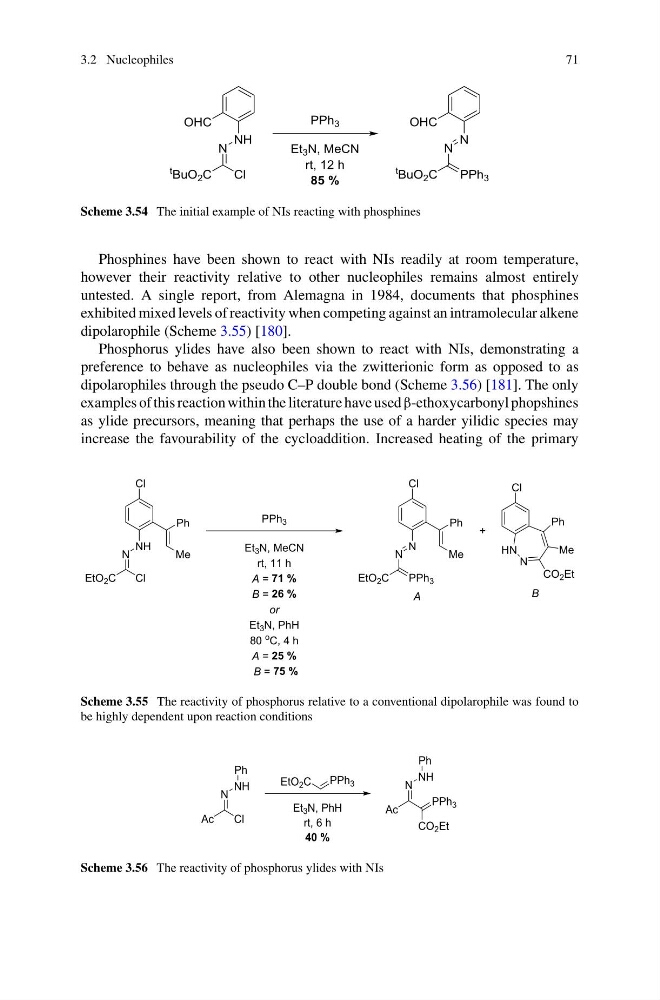
Scheme 3.54 The initial example of NIs reacting with phosphines
Phosphines have been shown to react with NIs readily at room temperature,
however their reactivity relative to other nucleophiles remains almost entirely
untested. A single report, from Alemagna in 1984, documents that phosphines
exhibited mixed levels of reactivity when competing against an intramolecular alkene
dipolarophile (Scheme 3.55) [180].
Phosphorus ylides have also been shown to react with NIs, demonstrating a
preference to behave as nucleophiles via the zwitterionic form as opposed to as
dipolarophiles through the pseudo C–P double bond (Scheme 3.56) [181]. The only
examples of this reaction within the literature have used β-ethoxycarbonyl phopshines
as ylide precursors, meaning that perhaps the use of a harder yilidic species may
increase the favourability of the cycloaddition. Increased heating of the primary
EtO 2 C
Cl
N
NH
Et 3 N, MeCN
rt, 11 h
A = 71 %
B = 26 %
or
Et 3 N, PhH
80
o C, 4 h
A = 25 %
B = 75 %
PPh 3
Cl
Ph
Me
CO 2 Et
N
HN
Cl
Ph
Me
EtO 2 C
PPh 3
N
N
Cl
Ph
Me
+
A
B
Scheme 3.55 The reactivity of phosphorus relative to a conventional dipolarophile was found to
be highly dependent upon reaction conditions
Ac
Cl
N
NH
Ph
Et 3 N, PhH
rt, 6 h
40 %
Ac
N
NH
Ph
PPh 3
CO 2 Et
PPh 3
EtO 2 C
Scheme 3.56 The reactivity of phosphorus ylides with NIs
71
t BuO 2 C
Cl
N
NH
Et 3 N, MeCN
rt, 12 h
85 %
OHC
PPh 3
t BuO 2 C
PPh 3
N
N
OHC
Scheme 3.54 The initial example of NIs reacting with phosphines
Phosphines have been shown to react with NIs readily at room temperature,
however their reactivity relative to other nucleophiles remains almost entirely
untested. A single report, from Alemagna in 1984, documents that phosphines
exhibited mixed levels of reactivity when competing against an intramolecular alkene
dipolarophile (Scheme 3.55) [180].
Phosphorus ylides have also been shown to react with NIs, demonstrating a
preference to behave as nucleophiles via the zwitterionic form as opposed to as
dipolarophiles through the pseudo C–P double bond (Scheme 3.56) [181]. The only
examples of this reaction within the literature have used β-ethoxycarbonyl phopshines
as ylide precursors, meaning that perhaps the use of a harder yilidic species may
increase the favourability of the cycloaddition. Increased heating of the primary
EtO 2 C
Cl
N
NH
Et 3 N, MeCN
rt, 11 h
A = 71 %
B = 26 %
or
Et 3 N, PhH
80
o C, 4 h
A = 25 %
B = 75 %
PPh 3
Cl
Ph
Me
CO 2 Et
N
HN
Cl
Ph
Me
EtO 2 C
PPh 3
N
N
Cl
Ph
Me
+
A
B
Scheme 3.55 The reactivity of phosphorus relative to a conventional dipolarophile was found to
be highly dependent upon reaction conditions
Ac
Cl
N
NH
Ph
Et 3 N, PhH
rt, 6 h
40 %
Ac
N
NH
Ph
PPh 3
CO 2 Et
PPh 3
EtO 2 C
Scheme 3.56 The reactivity of phosphorus ylides with NIs