

3.2 Nucleophiles
63
Ph
N
Cl
NH
Ph
O
N
H
OBn
Me
Me
Et 3 N, HFIP
rt, 1.5 h
91 %
Ph
N
N
Ph
O
N
OBn
Me
Me
Ph
N
N
Ph
O
N
BnO
Me
Me
via
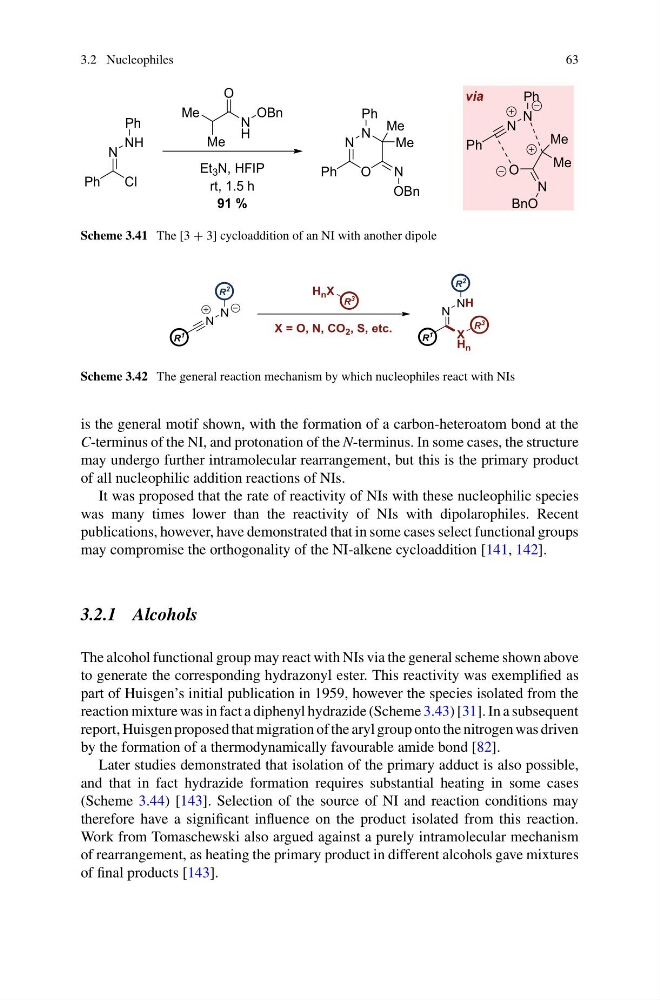
Scheme 3.41 The [3 + 3] cycloaddition of an NI with another dipole
N
N
H n X
N
NH
X
H n
X = O, N, CO 2 , S, etc.
R
1
R
2
R
1
R
2
R
3
R
3
Scheme 3.42 The general reaction mechanism by which nucleophiles react with NIs
is the general motif shown, with the formation of a carbon-heteroatom bond at the
C-terminus of the NI, and protonation of the N-terminus. In some cases, the structure
may undergo further intramolecular rearrangement, but this is the primary product
of all nucleophilic addition reactions of NIs.
It was proposed that the rate of reactivity of NIs with these nucleophilic species
was many times lower than the reactivity of NIs with dipolarophiles. Recent
publications, however, have demonstrated that in some cases select functional groups
may compromise the orthogonality of the NI-alkene cycloaddition [141, 142].
3.2.1 Alcohols
The alcohol functional group may react with NIs via the general scheme shown above
to generate the corresponding hydrazonyl ester. This reactivity was exemplified as
part of Huisgen’s initial publication in 1959, however the species isolated from the
reaction mixture was in fact a diphenyl hydrazide (Scheme 3.43) [31]. In a subsequent
report, Huisgen proposed that migration of the aryl group onto the nitrogen was driven
by the formation of a thermodynamically favourable amide bond [82].
Later studies demonstrated that isolation of the primary adduct is also possible,
and that in fact hydrazide formation requires substantial heating in some cases
(Scheme 3.44) [143]. Selection of the source of NI and reaction conditions may
therefore have a significant influence on the product isolated from this reaction.
Work from Tomaschewski also argued against a purely intramolecular mechanism
of rearrangement, as heating the primary product in different alcohols gave mixtures
of final products [143].
63
Ph
N
Cl
NH
Ph
O
N
H
OBn
Me
Me
Et 3 N, HFIP
rt, 1.5 h
91 %
Ph
N
N
Ph
O
N
OBn
Me
Me
Ph
N
N
Ph
O
N
BnO
Me
Me
via
Scheme 3.41 The [3 + 3] cycloaddition of an NI with another dipole
N
N
H n X
N
NH
X
H n
X = O, N, CO 2 , S, etc.
R
1
R
2
R
1
R
2
R
3
R
3
Scheme 3.42 The general reaction mechanism by which nucleophiles react with NIs
is the general motif shown, with the formation of a carbon-heteroatom bond at the
C-terminus of the NI, and protonation of the N-terminus. In some cases, the structure
may undergo further intramolecular rearrangement, but this is the primary product
of all nucleophilic addition reactions of NIs.
It was proposed that the rate of reactivity of NIs with these nucleophilic species
was many times lower than the reactivity of NIs with dipolarophiles. Recent
publications, however, have demonstrated that in some cases select functional groups
may compromise the orthogonality of the NI-alkene cycloaddition [141, 142].
3.2.1 Alcohols
The alcohol functional group may react with NIs via the general scheme shown above
to generate the corresponding hydrazonyl ester. This reactivity was exemplified as
part of Huisgen’s initial publication in 1959, however the species isolated from the
reaction mixture was in fact a diphenyl hydrazide (Scheme 3.43) [31]. In a subsequent
report, Huisgen proposed that migration of the aryl group onto the nitrogen was driven
by the formation of a thermodynamically favourable amide bond [82].
Later studies demonstrated that isolation of the primary adduct is also possible,
and that in fact hydrazide formation requires substantial heating in some cases
(Scheme 3.44) [143]. Selection of the source of NI and reaction conditions may
therefore have a significant influence on the product isolated from this reaction.
Work from Tomaschewski also argued against a purely intramolecular mechanism
of rearrangement, as heating the primary product in different alcohols gave mixtures
of final products [143].