

62
3 The Reactivity of Nitrile Imines
Py, DMF
rt, 2 h
68 %
HN
NH
Ph
O
N
SOCl 2
N
N
Ph
N
O
S O
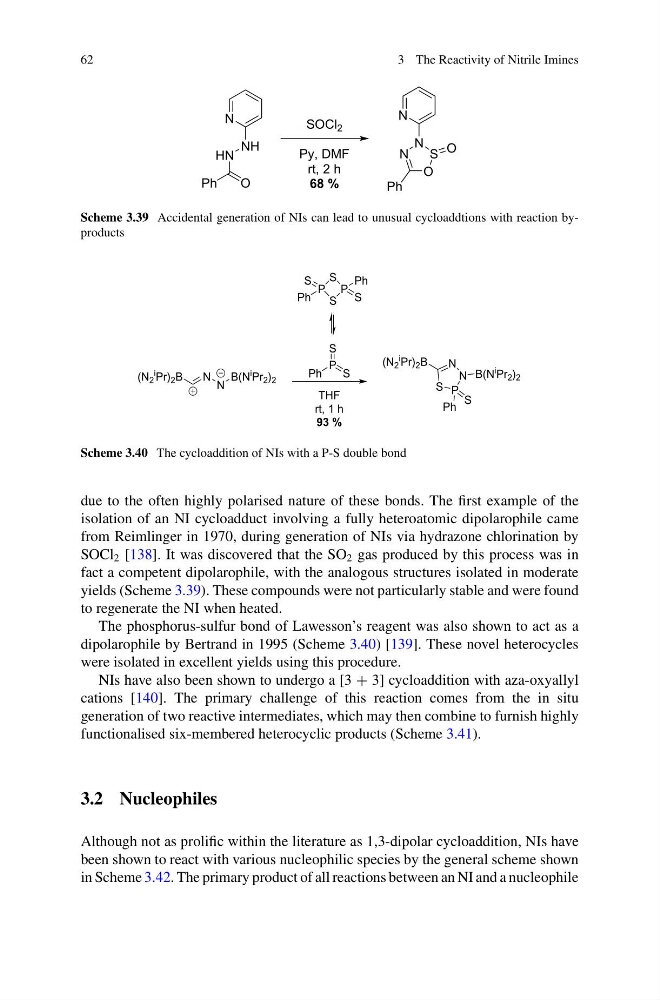
Scheme 3.39 Accidental generation of NIs can lead to unusual cycloaddtions with reaction byproducts
(N 2
i Pr) 2 B
N N
B(N
i Pr 2 ) 2
Ph
P
S
P
S
Ph
S
S
Ph
P S
S
(N 2
i Pr) 2 B
N
N B(N
i Pr 2 ) 2
S P S
Ph
THF
rt, 1 h
93 %
Scheme 3.40 The cycloaddition of NIs with a P-S double bond
due to the often highly polarised nature of these bonds. The first example of the
isolation of an NI cycloadduct involving a fully heteroatomic dipolarophile came
from Reimlinger in 1970, during generation of NIs via hydrazone chlorination by
SOCl 2 [138]. It was discovered that the SO 2 gas produced by this process was in
fact a competent dipolarophile, with the analogous structures isolated in moderate
yields (Scheme 3.39). These compounds were not particularly stable and were found
to regenerate the NI when heated.
The phosphorus-sulfur bond of Lawesson’s reagent was also shown to act as a
dipolarophile by Bertrand in 1995 (Scheme 3.40) [139]. These novel heterocycles
were isolated in excellent yields using this procedure.
NIs have also been shown to undergo a [3 + 3] cycloaddition with aza-oxyallyl
cations [140]. The primary challenge of this reaction comes from the in situ
generation of two reactive intermediates, which may then combine to furnish highly
functionalised six-membered heterocyclic products (Scheme 3.41).
3.2 Nucleophiles
Although not as prolific within the literature as 1,3-dipolar cycloaddition, NIs have
been shown to react with various nucleophilic species by the general scheme shown
in Scheme 3.42. The primary product of all reactions between an NI and a nucleophile
3 The Reactivity of Nitrile Imines
Py, DMF
rt, 2 h
68 %
HN
NH
Ph
O
N
SOCl 2
N
N
Ph
N
O
S O
Scheme 3.39 Accidental generation of NIs can lead to unusual cycloaddtions with reaction byproducts
(N 2
i Pr) 2 B
N N
B(N
i Pr 2 ) 2
Ph
P
S
P
S
Ph
S
S
Ph
P S
S
(N 2
i Pr) 2 B
N
N B(N
i Pr 2 ) 2
S P S
Ph
THF
rt, 1 h
93 %
Scheme 3.40 The cycloaddition of NIs with a P-S double bond
due to the often highly polarised nature of these bonds. The first example of the
isolation of an NI cycloadduct involving a fully heteroatomic dipolarophile came
from Reimlinger in 1970, during generation of NIs via hydrazone chlorination by
SOCl 2 [138]. It was discovered that the SO 2 gas produced by this process was in
fact a competent dipolarophile, with the analogous structures isolated in moderate
yields (Scheme 3.39). These compounds were not particularly stable and were found
to regenerate the NI when heated.
The phosphorus-sulfur bond of Lawesson’s reagent was also shown to act as a
dipolarophile by Bertrand in 1995 (Scheme 3.40) [139]. These novel heterocycles
were isolated in excellent yields using this procedure.
NIs have also been shown to undergo a [3 + 3] cycloaddition with aza-oxyallyl
cations [140]. The primary challenge of this reaction comes from the in situ
generation of two reactive intermediates, which may then combine to furnish highly
functionalised six-membered heterocyclic products (Scheme 3.41).
3.2 Nucleophiles
Although not as prolific within the literature as 1,3-dipolar cycloaddition, NIs have
been shown to react with various nucleophilic species by the general scheme shown
in Scheme 3.42. The primary product of all reactions between an NI and a nucleophile