

58
3 The Reactivity of Nitrile Imines
Et 3 N, PhH
80
o C, 1 h
92 %
N
NH
Ph
Ph
Cl
N
N Ph
Ph
N
N
S
Cl
Me
N
N
S
Cl
Me
Et 3 N, THF
rt, 18 h
65 %
N
NH
EtO 2 C
Br
N
NH
S
Me
Cl
N
N
EtO 2 C
Cl
N
HN
S
Me
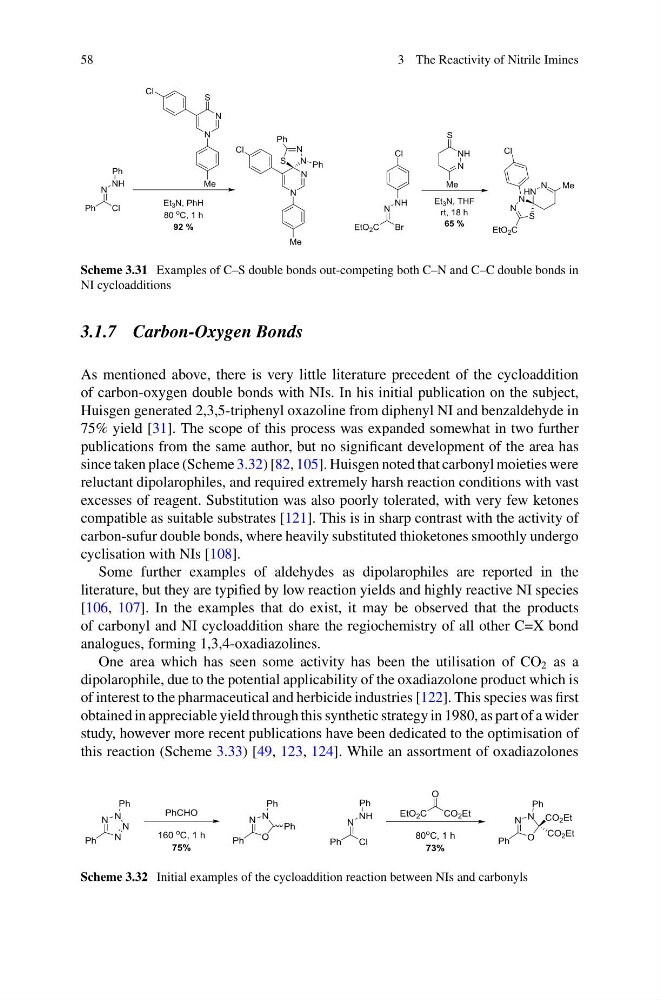
Scheme 3.31 Examples of C–S double bonds out-competing both C–N and C–C double bonds in
NI cycloadditions
3.1.7 Carbon-Oxygen Bonds
As mentioned above, there is very little literature precedent of the cycloaddition
of carbon-oxygen double bonds with NIs. In his initial publication on the subject,
Huisgen generated 2,3,5-triphenyl oxazoline from diphenyl NI and benzaldehyde in
75% yield [31]. The scope of this process was expanded somewhat in two further
publications from the same author, but no significant development of the area has
since taken place (Scheme 3.32) [82, 105]. Huisgen noted that carbonyl moieties were
reluctant dipolarophiles, and required extremely harsh reaction conditions with vast
excesses of reagent. Substitution was also poorly tolerated, with very few ketones
compatible as suitable substrates [121]. This is in sharp contrast with the activity of
carbon-sufur double bonds, where heavily substituted thioketones smoothly undergo
cyclisation with NIs [108].
Some further examples of aldehydes as dipolarophiles are reported in the
literature, but they are typified by low reaction yields and highly reactive NI species
[106, 107]. In the examples that do exist, it may be observed that the products
of carbonyl and NI cycloaddition share the regiochemistry of all other C=X bond
analogues, forming 1,3,4-oxadiazolines.
One area which has seen some activity has been the utilisation of CO 2 as a
dipolarophile, due to the potential applicability of the oxadiazolone product which is
of interest to the pharmaceutical and herbicide industries [122]. This species was first
obtained in appreciable yield through this synthetic strategy in 1980, as part of a wider
study, however more recent publications have been dedicated to the optimisation of
this reaction (Scheme 3.33) [49, 123, 124]. While an assortment of oxadiazolones
160
o C, 1 h
75%
N N
Ph
Ph
N
N
PhCHO
N N
Ph
Ph
O
Ph
N
NH
Ph
Ph
Cl
80
o C, 1 h
73%
N N
Ph
Ph
O
EtO 2 C
CO 2 Et
O
CO 2 Et
CO 2 Et
Scheme 3.32 Initial examples of the cycloaddition reaction between NIs and carbonyls
3 The Reactivity of Nitrile Imines
Et 3 N, PhH
80
o C, 1 h
92 %
N
NH
Ph
Ph
Cl
N
N Ph
Ph
N
N
S
Cl
Me
N
N
S
Cl
Me
Et 3 N, THF
rt, 18 h
65 %
N
NH
EtO 2 C
Br
N
NH
S
Me
Cl
N
N
EtO 2 C
Cl
N
HN
S
Me
Scheme 3.31 Examples of C–S double bonds out-competing both C–N and C–C double bonds in
NI cycloadditions
3.1.7 Carbon-Oxygen Bonds
As mentioned above, there is very little literature precedent of the cycloaddition
of carbon-oxygen double bonds with NIs. In his initial publication on the subject,
Huisgen generated 2,3,5-triphenyl oxazoline from diphenyl NI and benzaldehyde in
75% yield [31]. The scope of this process was expanded somewhat in two further
publications from the same author, but no significant development of the area has
since taken place (Scheme 3.32) [82, 105]. Huisgen noted that carbonyl moieties were
reluctant dipolarophiles, and required extremely harsh reaction conditions with vast
excesses of reagent. Substitution was also poorly tolerated, with very few ketones
compatible as suitable substrates [121]. This is in sharp contrast with the activity of
carbon-sufur double bonds, where heavily substituted thioketones smoothly undergo
cyclisation with NIs [108].
Some further examples of aldehydes as dipolarophiles are reported in the
literature, but they are typified by low reaction yields and highly reactive NI species
[106, 107]. In the examples that do exist, it may be observed that the products
of carbonyl and NI cycloaddition share the regiochemistry of all other C=X bond
analogues, forming 1,3,4-oxadiazolines.
One area which has seen some activity has been the utilisation of CO 2 as a
dipolarophile, due to the potential applicability of the oxadiazolone product which is
of interest to the pharmaceutical and herbicide industries [122]. This species was first
obtained in appreciable yield through this synthetic strategy in 1980, as part of a wider
study, however more recent publications have been dedicated to the optimisation of
this reaction (Scheme 3.33) [49, 123, 124]. While an assortment of oxadiazolones
160
o C, 1 h
75%
N N
Ph
Ph
N
N
PhCHO
N N
Ph
Ph
O
Ph
N
NH
Ph
Ph
Cl
80
o C, 1 h
73%
N N
Ph
Ph
O
EtO 2 C
CO 2 Et
O
CO 2 Et
CO 2 Et
Scheme 3.32 Initial examples of the cycloaddition reaction between NIs and carbonyls