

48
3 The Reactivity of Nitrile Imines
Cl
N
NH
Na 2 CO 3 , DCM
rt, 48 h
91 %
•
CO 2 Et
Ph
N
N CO 2 Et
Ph
N N
Ph
Ph
Ph
Ph
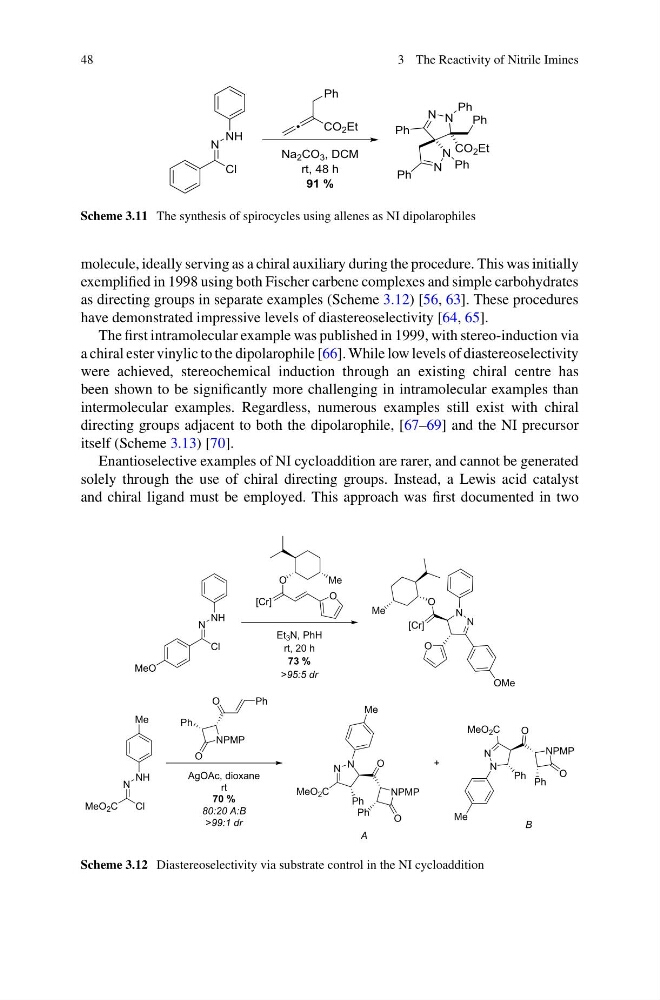
Scheme 3.11 The synthesis of spirocycles using allenes as NI dipolarophiles
molecule, ideally serving as a chiral auxiliary during the procedure. This was initially
exemplified in 1998 using both Fischer carbene complexes and simple carbohydrates
as directing groups in separate examples (Scheme 3.12) [56, 63]. These procedures
have demonstrated impressive levels of diastereoselectivity [64, 65].
The first intramolecular example was published in 1999, with stereo-induction via
a chiral ester vinylic to the dipolarophile [66]. While low levels of diastereoselectivity
were achieved, stereochemical induction through an existing chiral centre has
been shown to be significantly more challenging in intramolecular examples than
intermolecular examples. Regardless, numerous examples still exist with chiral
directing groups adjacent to both the dipolarophile, [67–69] and the NI precursor
itself (Scheme 3.13) [70].
Enantioselective examples of NI cycloaddition are rarer, and cannot be generated
solely through the use of chiral directing groups. Instead, a Lewis acid catalyst
and chiral ligand must be employed. This approach was first documented in two
Cl
N
NH
Et 3 N, PhH
rt, 20 h
73 %
>95:5 dr
MeO
N
N
OMe
O
[Cr]
Me
O
[Cr]
Me
O
O
Cl
N
NH
AgOAc, dioxane
rt
70 %
80:20 A:B
>99:1 dr
MeO 2 C
Me
NPMP
O
Ph
O
Ph
NPMP
O
Ph
O
Ph
N N
MeO 2 C
Me
NPMP
O
Ph
O
Ph
N
N
MeO 2 C
Me
+
A
B
Scheme 3.12 Diastereoselectivity via substrate control in the NI cycloaddition
3 The Reactivity of Nitrile Imines
Cl
N
NH
Na 2 CO 3 , DCM
rt, 48 h
91 %
•
CO 2 Et
Ph
N
N CO 2 Et
Ph
N N
Ph
Ph
Ph
Ph
Scheme 3.11 The synthesis of spirocycles using allenes as NI dipolarophiles
molecule, ideally serving as a chiral auxiliary during the procedure. This was initially
exemplified in 1998 using both Fischer carbene complexes and simple carbohydrates
as directing groups in separate examples (Scheme 3.12) [56, 63]. These procedures
have demonstrated impressive levels of diastereoselectivity [64, 65].
The first intramolecular example was published in 1999, with stereo-induction via
a chiral ester vinylic to the dipolarophile [66]. While low levels of diastereoselectivity
were achieved, stereochemical induction through an existing chiral centre has
been shown to be significantly more challenging in intramolecular examples than
intermolecular examples. Regardless, numerous examples still exist with chiral
directing groups adjacent to both the dipolarophile, [67–69] and the NI precursor
itself (Scheme 3.13) [70].
Enantioselective examples of NI cycloaddition are rarer, and cannot be generated
solely through the use of chiral directing groups. Instead, a Lewis acid catalyst
and chiral ligand must be employed. This approach was first documented in two
Cl
N
NH
Et 3 N, PhH
rt, 20 h
73 %
>95:5 dr
MeO
N
N
OMe
O
[Cr]
Me
O
[Cr]
Me
O
O
Cl
N
NH
AgOAc, dioxane
rt
70 %
80:20 A:B
>99:1 dr
MeO 2 C
Me
NPMP
O
Ph
O
Ph
NPMP
O
Ph
O
Ph
N N
MeO 2 C
Me
NPMP
O
Ph
O
Ph
N
N
MeO 2 C
Me
+
A
B
Scheme 3.12 Diastereoselectivity via substrate control in the NI cycloaddition