

3.1 1,3-Dipolar Cycloaddition
45
PhH
rt, 2 h
88 %
N
N
N
N
Me
N N
Me
h
H
N
O
N
Cl
CO 2 Et
THF
70
o C, 96 h
40 %
NaH
N
O
N
CO 2 Et
H
N N
Cl
Cl
O
O
PhH
80
o C, 2 h
73 %
Et 3 N
N
N
Cl
O
O
H
H
H
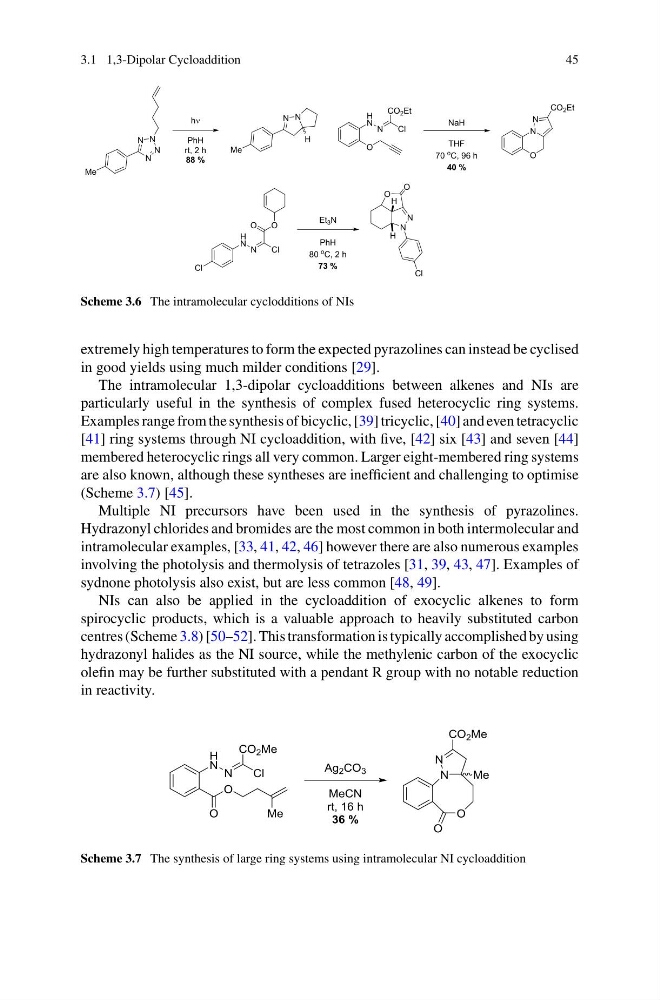
Scheme 3.6 The intramolecular cyclodditions of NIs
extremely high temperatures to form the expected pyrazolines can instead be cyclised
in good yields using much milder conditions [29].
The intramolecular 1,3-dipolar cycloadditions between alkenes and NIs are
particularly useful in the synthesis of complex fused heterocyclic ring systems.
Examples range from the synthesis of bicyclic, [39] tricyclic, [40] and even tetracyclic
[41] ring systems through NI cycloaddition, with five, [42] six [43] and seven [44]
membered heterocyclic rings all very common. Larger eight-membered ring systems
are also known, although these syntheses are inefficient and challenging to optimise
(Scheme 3.7) [45].
Multiple NI precursors have been used in the synthesis of pyrazolines.
Hydrazonyl chlorides and bromides are the most common in both intermolecular and
intramolecular examples, [33, 41, 42, 46] however there are also numerous examples
involving the photolysis and thermolysis of tetrazoles [31, 39, 43, 47]. Examples of
sydnone photolysis also exist, but are less common [48, 49].
NIs can also be applied in the cycloaddition of exocyclic alkenes to form
spirocyclic products, which is a valuable approach to heavily substituted carbon
centres (Scheme 3.8) [50–52]. This transformation is typically accomplished by using
hydrazonyl halides as the NI source, while the methylenic carbon of the exocyclic
olefin may be further substituted with a pendant R group with no notable reduction
in reactivity.
H
N N
Cl
CO 2 Me
MeCN
rt, 16 h
36 %
Ag 2 CO 3
O
O
N
N
CO 2 Me
O
O
Me
Me
Scheme 3.7 The synthesis of large ring systems using intramolecular NI cycloaddition
45
PhH
rt, 2 h
88 %
N
N
N
N
Me
N N
Me
h
H
N
O
N
Cl
CO 2 Et
THF
70
o C, 96 h
40 %
NaH
N
O
N
CO 2 Et
H
N N
Cl
Cl
O
O
PhH
80
o C, 2 h
73 %
Et 3 N
N
N
Cl
O
O
H
H
H
Scheme 3.6 The intramolecular cyclodditions of NIs
extremely high temperatures to form the expected pyrazolines can instead be cyclised
in good yields using much milder conditions [29].
The intramolecular 1,3-dipolar cycloadditions between alkenes and NIs are
particularly useful in the synthesis of complex fused heterocyclic ring systems.
Examples range from the synthesis of bicyclic, [39] tricyclic, [40] and even tetracyclic
[41] ring systems through NI cycloaddition, with five, [42] six [43] and seven [44]
membered heterocyclic rings all very common. Larger eight-membered ring systems
are also known, although these syntheses are inefficient and challenging to optimise
(Scheme 3.7) [45].
Multiple NI precursors have been used in the synthesis of pyrazolines.
Hydrazonyl chlorides and bromides are the most common in both intermolecular and
intramolecular examples, [33, 41, 42, 46] however there are also numerous examples
involving the photolysis and thermolysis of tetrazoles [31, 39, 43, 47]. Examples of
sydnone photolysis also exist, but are less common [48, 49].
NIs can also be applied in the cycloaddition of exocyclic alkenes to form
spirocyclic products, which is a valuable approach to heavily substituted carbon
centres (Scheme 3.8) [50–52]. This transformation is typically accomplished by using
hydrazonyl halides as the NI source, while the methylenic carbon of the exocyclic
olefin may be further substituted with a pendant R group with no notable reduction
in reactivity.
H
N N
Cl
CO 2 Me
MeCN
rt, 16 h
36 %
Ag 2 CO 3
O
O
N
N
CO 2 Me
O
O
Me
Me
Scheme 3.7 The synthesis of large ring systems using intramolecular NI cycloaddition