

2.3 Hydrazones
19
N
N
- Hg
0
N
N
H
OAc
- AcOH
R
2
R
2
R
1
R
1
N
NH
H
Hg(OAc) 2
R
2
R
1
N
N
H
Hg(OAc)
R
2
R
1
- AcOH
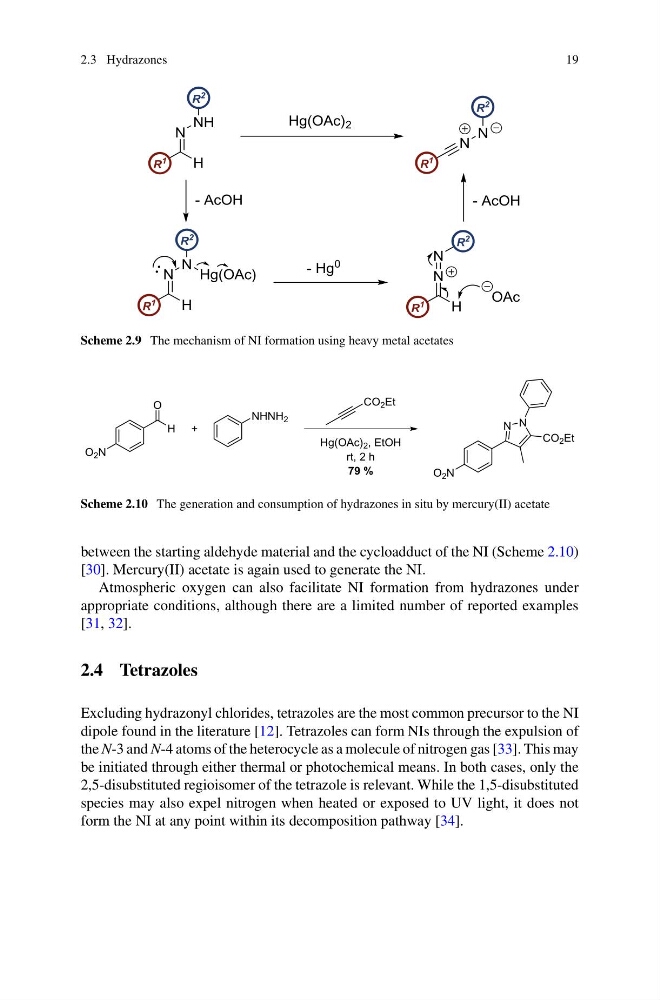
Scheme 2.9 The mechanism of NI formation using heavy metal acetates
O
H
O 2 N
NHNH 2
N
O 2 N
N
CO 2 Et
CO 2 Et
Hg(OAc) 2 , EtOH
rt, 2 h
79 %
+
Scheme 2.10 The generation and consumption of hydrazones in situ by mercury(II) acetate
between the starting aldehyde material and the cycloadduct of the NI (Scheme 2.10)
[30]. Mercury(II) acetate is again used to generate the NI.
Atmospheric oxygen can also facilitate NI formation from hydrazones under
appropriate conditions, although there are a limited number of reported examples
[31, 32].
2.4 Tetrazoles
Excluding hydrazonyl chlorides, tetrazoles are the most common precursor to the NI
dipole found in the literature [12]. Tetrazoles can form NIs through the expulsion of
the N-3 and N-4 atoms of the heterocycle as a molecule of nitrogen gas [33]. This may
be initiated through either thermal or photochemical means. In both cases, only the
2,5-disubstituted regioisomer of the tetrazole is relevant. While the 1,5-disubstituted
species may also expel nitrogen when heated or exposed to UV light, it does not
form the NI at any point within its decomposition pathway [34].
19
N
N
- Hg
0
N
N
H
OAc
- AcOH
R
2
R
2
R
1
R
1
N
NH
H
Hg(OAc) 2
R
2
R
1
N
N
H
Hg(OAc)
R
2
R
1
- AcOH
Scheme 2.9 The mechanism of NI formation using heavy metal acetates
O
H
O 2 N
NHNH 2
N
O 2 N
N
CO 2 Et
CO 2 Et
Hg(OAc) 2 , EtOH
rt, 2 h
79 %
+
Scheme 2.10 The generation and consumption of hydrazones in situ by mercury(II) acetate
between the starting aldehyde material and the cycloadduct of the NI (Scheme 2.10)
[30]. Mercury(II) acetate is again used to generate the NI.
Atmospheric oxygen can also facilitate NI formation from hydrazones under
appropriate conditions, although there are a limited number of reported examples
[31, 32].
2.4 Tetrazoles
Excluding hydrazonyl chlorides, tetrazoles are the most common precursor to the NI
dipole found in the literature [12]. Tetrazoles can form NIs through the expulsion of
the N-3 and N-4 atoms of the heterocycle as a molecule of nitrogen gas [33]. This may
be initiated through either thermal or photochemical means. In both cases, only the
2,5-disubstituted regioisomer of the tetrazole is relevant. While the 1,5-disubstituted
species may also expel nitrogen when heated or exposed to UV light, it does not
form the NI at any point within its decomposition pathway [34].