

18
2 The Generation of Nitrile Imine Derivatives
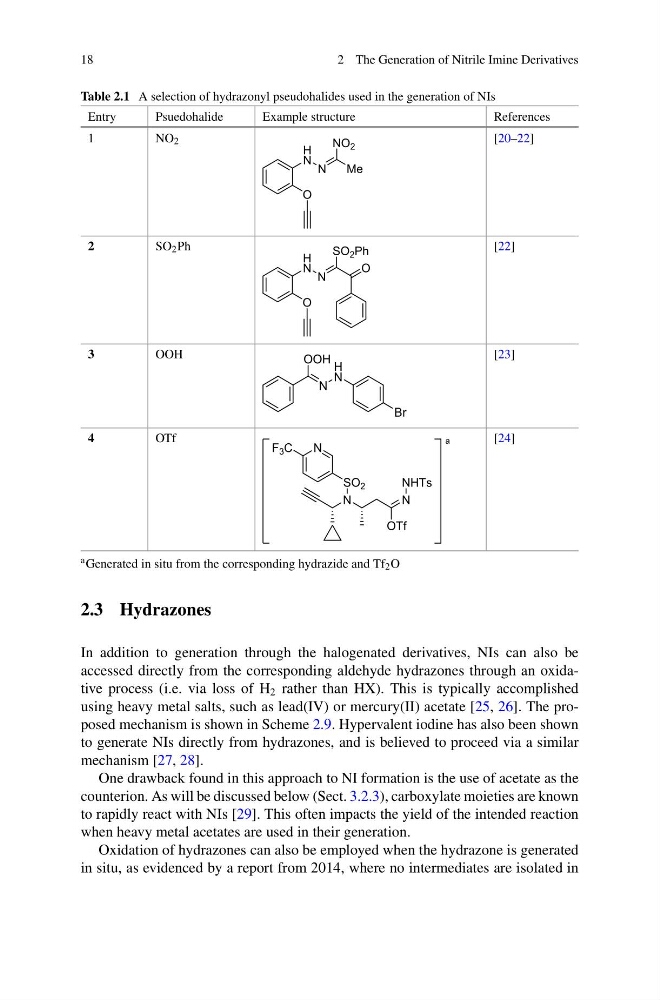
Table 2.1 A selection of hydrazonyl pseudohalides used in the generation of NIs
Entry
Psuedohalide
Example structure
References
1
NO 2
H
N N
Me
NO 2
O
[20–22]
2
SO 2 Ph
H
N N
SO 2 Ph
O
O
[22]
3
OOH
N
OOH H
N
Br
[23]
4
OTf
N
N
SO 2
N
F 3 C
NHTs
OTf
a
[24]
a Generated in situ from the corresponding hydrazide and Tf 2 O
2.3 Hydrazones
In addition to generation through the halogenated derivatives, NIs can also be
accessed directly from the corresponding aldehyde hydrazones through an oxidative process (i.e. via loss of H 2 rather than HX). This is typically accomplished
using heavy metal salts, such as lead(IV) or mercury(II) acetate [25, 26]. The proposed mechanism is shown in Scheme 2.9. Hypervalent iodine has also been shown
to generate NIs directly from hydrazones, and is believed to proceed via a similar
mechanism [27, 28].
One drawback found in this approach to NI formation is the use of acetate as the
counterion. As will be discussed below (Sect. 3.2.3), carboxylate moieties are known
to rapidly react with NIs [29]. This often impacts the yield of the intended reaction
when heavy metal acetates are used in their generation.
Oxidation of hydrazones can also be employed when the hydrazone is generated
in situ, as evidenced by a report from 2014, where no intermediates are isolated in
2 The Generation of Nitrile Imine Derivatives
Table 2.1 A selection of hydrazonyl pseudohalides used in the generation of NIs
Entry
Psuedohalide
Example structure
References
1
NO 2
H
N N
Me
NO 2
O
[20–22]
2
SO 2 Ph
H
N N
SO 2 Ph
O
O
[22]
3
OOH
N
OOH H
N
Br
[23]
4
OTf
N
N
SO 2
N
F 3 C
NHTs
OTf
a
[24]
a Generated in situ from the corresponding hydrazide and Tf 2 O
2.3 Hydrazones
In addition to generation through the halogenated derivatives, NIs can also be
accessed directly from the corresponding aldehyde hydrazones through an oxidative process (i.e. via loss of H 2 rather than HX). This is typically accomplished
using heavy metal salts, such as lead(IV) or mercury(II) acetate [25, 26]. The proposed mechanism is shown in Scheme 2.9. Hypervalent iodine has also been shown
to generate NIs directly from hydrazones, and is believed to proceed via a similar
mechanism [27, 28].
One drawback found in this approach to NI formation is the use of acetate as the
counterion. As will be discussed below (Sect. 3.2.3), carboxylate moieties are known
to rapidly react with NIs [29]. This often impacts the yield of the intended reaction
when heavy metal acetates are used in their generation.
Oxidation of hydrazones can also be employed when the hydrazone is generated
in situ, as evidenced by a report from 2014, where no intermediates are isolated in