

2.2 Hydrazonyl Psuedohalides
17
EtO 2 C
H
N
NH
O 2 N
NO 2
EtO 2 C
Br
N
NH
O 2 N
NO 2
Br 2
AcOH
0
o C, 3 h
69 %
CCl 4 , PPh 3
MeCN
rt, 20 h
64 %
O
NH
Cl
N
NH
HN
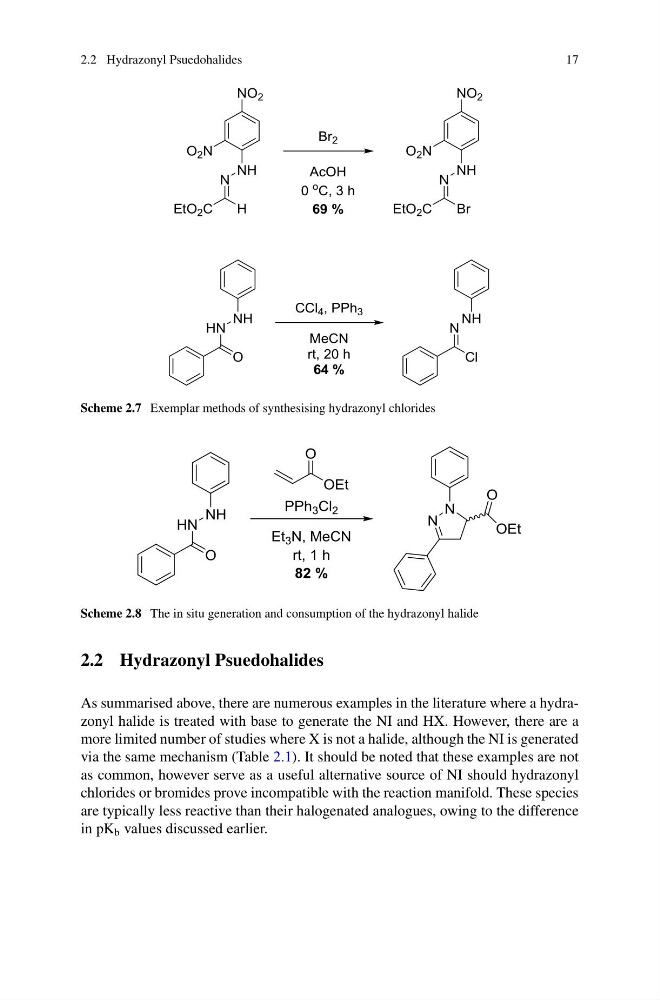
Scheme 2.7 Exemplar methods of synthesising hydrazonyl chlorides
PPh 3 Cl 2
Et 3 N, MeCN
rt, 1 h
82 %
HN
NH
O
OEt
O
N
N
OEt
O
Scheme 2.8 The in situ generation and consumption of the hydrazonyl halide
2.2 Hydrazonyl Psuedohalides
As summarised above, there are numerous examples in the literature where a hydrazonyl halide is treated with base to generate the NI and HX. However, there are a
more limited number of studies where X is not a halide, although the NI is generated
via the same mechanism (Table 2.1). It should be noted that these examples are not
as common, however serve as a useful alternative source of NI should hydrazonyl
chlorides or bromides prove incompatible with the reaction manifold. These species
are typically less reactive than their halogenated analogues, owing to the difference
in pK b values discussed earlier.
17
EtO 2 C
H
N
NH
O 2 N
NO 2
EtO 2 C
Br
N
NH
O 2 N
NO 2
Br 2
AcOH
0
o C, 3 h
69 %
CCl 4 , PPh 3
MeCN
rt, 20 h
64 %
O
NH
Cl
N
NH
HN
Scheme 2.7 Exemplar methods of synthesising hydrazonyl chlorides
PPh 3 Cl 2
Et 3 N, MeCN
rt, 1 h
82 %
HN
NH
O
OEt
O
N
N
OEt
O
Scheme 2.8 The in situ generation and consumption of the hydrazonyl halide
2.2 Hydrazonyl Psuedohalides
As summarised above, there are numerous examples in the literature where a hydrazonyl halide is treated with base to generate the NI and HX. However, there are a
more limited number of studies where X is not a halide, although the NI is generated
via the same mechanism (Table 2.1). It should be noted that these examples are not
as common, however serve as a useful alternative source of NI should hydrazonyl
chlorides or bromides prove incompatible with the reaction manifold. These species
are typically less reactive than their halogenated analogues, owing to the difference
in pK b values discussed earlier.