

16
2 The Generation of Nitrile Imine Derivatives
MeO 2 C
Cl
N
NH
Me
MeO
O
MeO 2 C
N
N
Me
OMe
O
H 2 O, NaOH
Cy 4 N
+ Cl
- , 24 h, rt
quant.
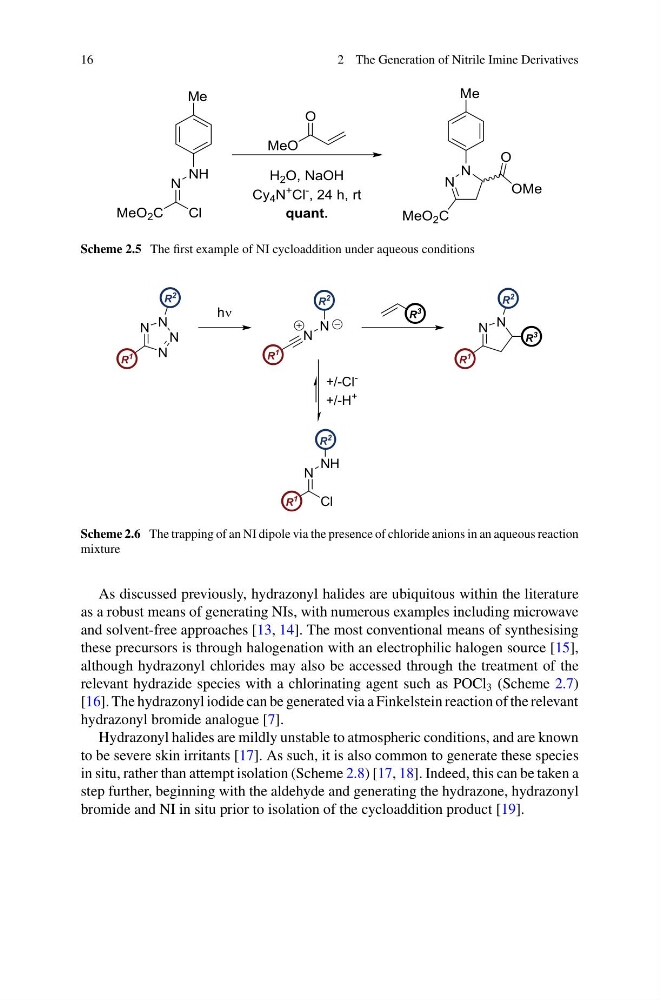
Scheme 2.5 The first example of NI cycloaddition under aqueous conditions
N
N
N N
N
N
N
N
h
N
NH
+/-Cl
-
+/-H
+
Cl
R
2
R
1
R
1
R
2
R
3
R
2
R
1
R
3
R
2
R
1
Scheme 2.6 The trapping of an NI dipole via the presence of chloride anions in an aqueous reaction
mixture
As discussed previously, hydrazonyl halides are ubiquitous within the literature
as a robust means of generating NIs, with numerous examples including microwave
and solvent-free approaches [13, 14]. The most conventional means of synthesising
these precursors is through halogenation with an electrophilic halogen source [15],
although hydrazonyl chlorides may also be accessed through the treatment of the
relevant hydrazide species with a chlorinating agent such as POCl 3 (Scheme 2.7)
[16]. The hydrazonyl iodide can be generated via a Finkelstein reaction of the relevant
hydrazonyl bromide analogue [7].
Hydrazonyl halides are mildly unstable to atmospheric conditions, and are known
to be severe skin irritants [17]. As such, it is also common to generate these species
in situ, rather than attempt isolation (Scheme 2.8) [17, 18]. Indeed, this can be taken a
step further, beginning with the aldehyde and generating the hydrazone, hydrazonyl
bromide and NI in situ prior to isolation of the cycloaddition product [19].
2 The Generation of Nitrile Imine Derivatives
MeO 2 C
Cl
N
NH
Me
MeO
O
MeO 2 C
N
N
Me
OMe
O
H 2 O, NaOH
Cy 4 N
+ Cl
- , 24 h, rt
quant.
Scheme 2.5 The first example of NI cycloaddition under aqueous conditions
N
N
N N
N
N
N
N
h
N
NH
+/-Cl
-
+/-H
+
Cl
R
2
R
1
R
1
R
2
R
3
R
2
R
1
R
3
R
2
R
1
Scheme 2.6 The trapping of an NI dipole via the presence of chloride anions in an aqueous reaction
mixture
As discussed previously, hydrazonyl halides are ubiquitous within the literature
as a robust means of generating NIs, with numerous examples including microwave
and solvent-free approaches [13, 14]. The most conventional means of synthesising
these precursors is through halogenation with an electrophilic halogen source [15],
although hydrazonyl chlorides may also be accessed through the treatment of the
relevant hydrazide species with a chlorinating agent such as POCl 3 (Scheme 2.7)
[16]. The hydrazonyl iodide can be generated via a Finkelstein reaction of the relevant
hydrazonyl bromide analogue [7].
Hydrazonyl halides are mildly unstable to atmospheric conditions, and are known
to be severe skin irritants [17]. As such, it is also common to generate these species
in situ, rather than attempt isolation (Scheme 2.8) [17, 18]. Indeed, this can be taken a
step further, beginning with the aldehyde and generating the hydrazone, hydrazonyl
bromide and NI in situ prior to isolation of the cycloaddition product [19].