

130
4 Applications of Nitrile Imine Derivatives
N O
OMe
N N
OMe
NO 2
HN
OMe
reduction potential
Increased
conjugation
Electronegative
Heterocycle
Electron
-withdrawing
Group
Electronegative
Heterocycle
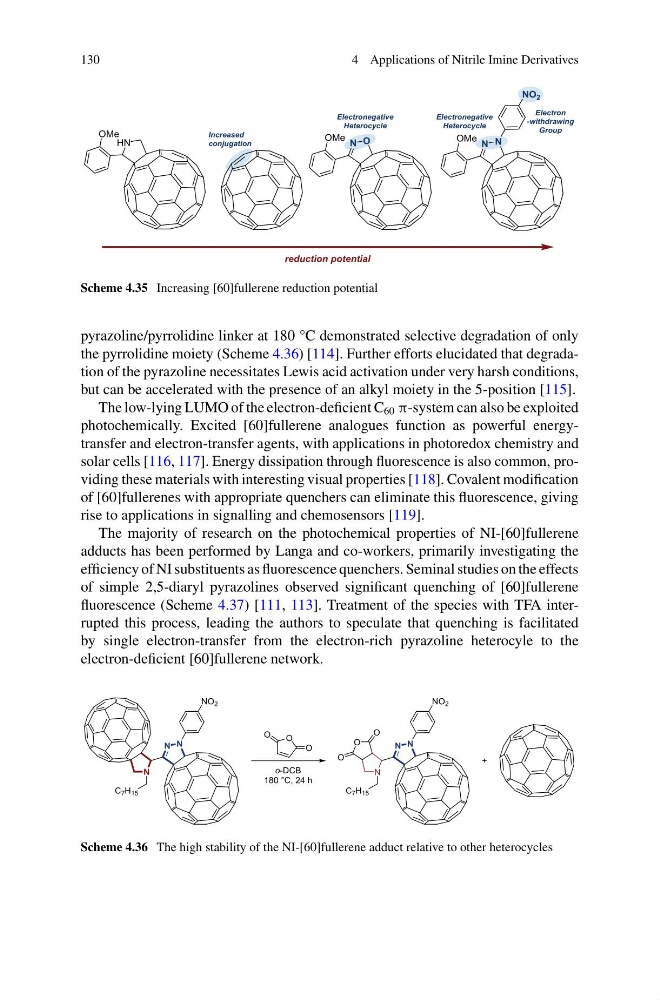
Scheme 4.35 Increasing [60]fullerene reduction potential
pyrazoline/pyrrolidine linker at 180 °C demonstrated selective degradation of only
the pyrrolidine moiety (Scheme 4.36) [114]. Further efforts elucidated that degradation of the pyrazoline necessitates Lewis acid activation under very harsh conditions,
but can be accelerated with the presence of an alkyl moiety in the 5-position [115].
The low-lying LUMO of the electron-deficient C 60 π-system can also be exploited
photochemically. Excited [60]fullerene analogues function as powerful energytransfer and electron-transfer agents, with applications in photoredox chemistry and
solar cells [116, 117]. Energy dissipation through fluorescence is also common, providing these materials with interesting visual properties [118]. Covalent modification
of [60]fullerenes with appropriate quenchers can eliminate this fluorescence, giving
rise to applications in signalling and chemosensors [119].
The majority of research on the photochemical properties of NI-[60]fullerene
adducts has been performed by Langa and co-workers, primarily investigating the
efficiency of NI substituents as fluorescence quenchers. Seminal studies on the effects
of simple 2,5-diaryl pyrazolines observed significant quenching of [60]fullerene
fluorescence (Scheme 4.37) [111, 113]. Treatment of the species with TFA interrupted this process, leading the authors to speculate that quenching is facilitated
by single electron-transfer from the electron-rich pyrazoline heterocyle to the
electron-deficient [60]fullerene network.
N N
NO 2
N
C 7 H 15
N N
NO 2
N
C 7 H 15
O
O
O
+
o-DCB
180 °C, 24 h
O
O
O
Scheme 4.36 The high stability of the NI-[60]fullerene adduct relative to other heterocycles
4 Applications of Nitrile Imine Derivatives
N O
OMe
N N
OMe
NO 2
HN
OMe
reduction potential
Increased
conjugation
Electronegative
Heterocycle
Electron
-withdrawing
Group
Electronegative
Heterocycle
Scheme 4.35 Increasing [60]fullerene reduction potential
pyrazoline/pyrrolidine linker at 180 °C demonstrated selective degradation of only
the pyrrolidine moiety (Scheme 4.36) [114]. Further efforts elucidated that degradation of the pyrazoline necessitates Lewis acid activation under very harsh conditions,
but can be accelerated with the presence of an alkyl moiety in the 5-position [115].
The low-lying LUMO of the electron-deficient C 60 π-system can also be exploited
photochemically. Excited [60]fullerene analogues function as powerful energytransfer and electron-transfer agents, with applications in photoredox chemistry and
solar cells [116, 117]. Energy dissipation through fluorescence is also common, providing these materials with interesting visual properties [118]. Covalent modification
of [60]fullerenes with appropriate quenchers can eliminate this fluorescence, giving
rise to applications in signalling and chemosensors [119].
The majority of research on the photochemical properties of NI-[60]fullerene
adducts has been performed by Langa and co-workers, primarily investigating the
efficiency of NI substituents as fluorescence quenchers. Seminal studies on the effects
of simple 2,5-diaryl pyrazolines observed significant quenching of [60]fullerene
fluorescence (Scheme 4.37) [111, 113]. Treatment of the species with TFA interrupted this process, leading the authors to speculate that quenching is facilitated
by single electron-transfer from the electron-rich pyrazoline heterocyle to the
electron-deficient [60]fullerene network.
N N
NO 2
N
C 7 H 15
N N
NO 2
N
C 7 H 15
O
O
O
+
o-DCB
180 °C, 24 h
O
O
O
Scheme 4.36 The high stability of the NI-[60]fullerene adduct relative to other heterocycles