

120
4 Applications of Nitrile Imine Derivatives
h
PBS buffer, DMSO
rt, 5 min
O
N
N
N
N
OMe
O
N
N
OMe
O
N
N
MeO
CO 2 H
HO 2 C
C 16 H 33HN
O
NHC16H33
O
O
NHC16H33
HO 2 C
GFP
O
N
N
N N
MeO
GFP
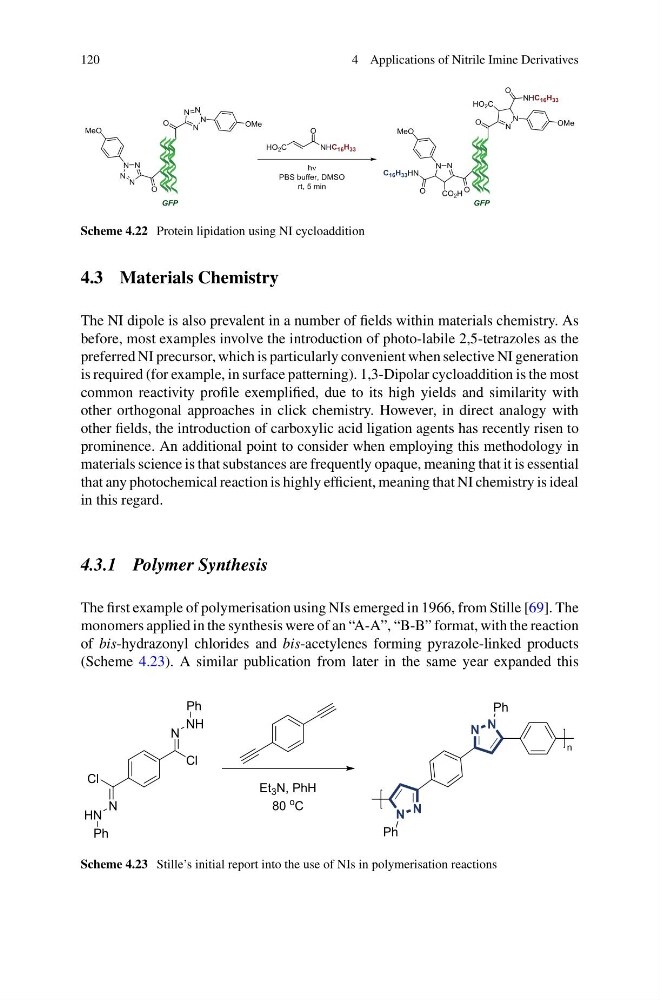
Scheme 4.22 Protein lipidation using NI cycloaddition
4.3 Materials Chemistry
The NI dipole is also prevalent in a number of fields within materials chemistry. As
before, most examples involve the introduction of photo-labile 2,5-tetrazoles as the
preferred NI precursor, which is particularly convenient when selective NI generation
is required (for example, in surface patterning). 1,3-Dipolar cycloaddition is the most
common reactivity profile exemplified, due to its high yields and similarity with
other orthogonal approaches in click chemistry. However, in direct analogy with
other fields, the introduction of carboxylic acid ligation agents has recently risen to
prominence. An additional point to consider when employing this methodology in
materials science is that substances are frequently opaque, meaning that it is essential
that any photochemical reaction is highly efficient, meaning that NI chemistry is ideal
in this regard.
4.3.1 Polymer Synthesis
The first example of polymerisation using NIs emerged in 1966, from Stille [69]. The
monomers applied in the synthesis were of an “A-A”, “B-B” format, with the reaction
of bis-hydrazonyl chlorides and bis-acetylenes forming pyrazole-linked products
(Scheme 4.23). A similar publication from later in the same year expanded this
Et 3 N, PhH
80
o C
N
Cl
N
Cl
NH
Ph
HN
Ph
N
N N
Ph
N
Ph
n
Scheme 4.23 Stille’s initial report into the use of NIs in polymerisation reactions
4 Applications of Nitrile Imine Derivatives
h
PBS buffer, DMSO
rt, 5 min
O
N
N
N
N
OMe
O
N
N
OMe
O
N
N
MeO
CO 2 H
HO 2 C
C 16 H 33HN
O
NHC16H33
O
O
NHC16H33
HO 2 C
GFP
O
N
N
N N
MeO
GFP
Scheme 4.22 Protein lipidation using NI cycloaddition
4.3 Materials Chemistry
The NI dipole is also prevalent in a number of fields within materials chemistry. As
before, most examples involve the introduction of photo-labile 2,5-tetrazoles as the
preferred NI precursor, which is particularly convenient when selective NI generation
is required (for example, in surface patterning). 1,3-Dipolar cycloaddition is the most
common reactivity profile exemplified, due to its high yields and similarity with
other orthogonal approaches in click chemistry. However, in direct analogy with
other fields, the introduction of carboxylic acid ligation agents has recently risen to
prominence. An additional point to consider when employing this methodology in
materials science is that substances are frequently opaque, meaning that it is essential
that any photochemical reaction is highly efficient, meaning that NI chemistry is ideal
in this regard.
4.3.1 Polymer Synthesis
The first example of polymerisation using NIs emerged in 1966, from Stille [69]. The
monomers applied in the synthesis were of an “A-A”, “B-B” format, with the reaction
of bis-hydrazonyl chlorides and bis-acetylenes forming pyrazole-linked products
(Scheme 4.23). A similar publication from later in the same year expanded this
Et 3 N, PhH
80
o C
N
Cl
N
Cl
NH
Ph
HN
Ph
N
N N
Ph
N
Ph
n
Scheme 4.23 Stille’s initial report into the use of NIs in polymerisation reactions