

4.2 Bioorthogonal Chemistry
119
N
N
N
N
O
HN
O
biotin
O
NH
O
OH
OH
OH
O
NH
O
OH
OH
N
N
O
NH
O
biotin
Dye
strepta
-vidin
O
NH
O
OH
OH
N
N
O
NH
O
biotin
Dye
strepta
-vidin
h
DMSO, PBS (1:1)
rt, 1 min
PBS (1:1)
rt, 30 min
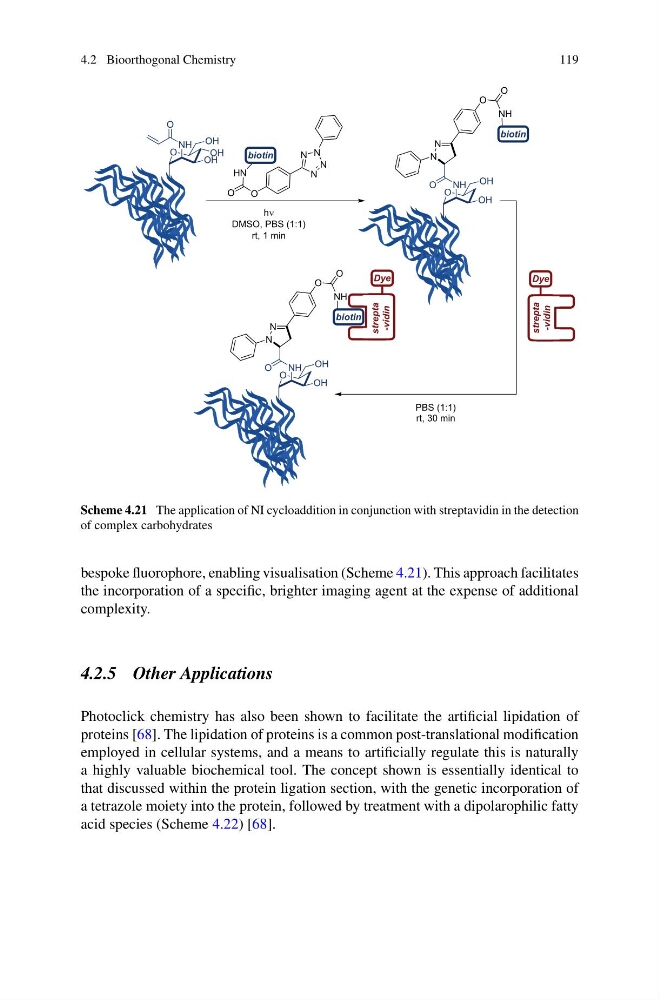
Scheme 4.21 The application of NI cycloaddition in conjunction with streptavidin in the detection
of complex carbohydrates
bespoke fluorophore, enabling visualisation (Scheme 4.21). This approach facilitates
the incorporation of a specific, brighter imaging agent at the expense of additional
complexity.
4.2.5 Other Applications
Photoclick chemistry has also been shown to facilitate the artificial lipidation of
proteins [68]. The lipidation of proteins is a common post-translational modification
employed in cellular systems, and a means to artificially regulate this is naturally
a highly valuable biochemical tool. The concept shown is essentially identical to
that discussed within the protein ligation section, with the genetic incorporation of
a tetrazole moiety into the protein, followed by treatment with a dipolarophilic fatty
acid species (Scheme 4.22) [68].
119
N
N
N
N
O
HN
O
biotin
O
NH
O
OH
OH
OH
O
NH
O
OH
OH
N
N
O
NH
O
biotin
Dye
strepta
-vidin
O
NH
O
OH
OH
N
N
O
NH
O
biotin
Dye
strepta
-vidin
h
DMSO, PBS (1:1)
rt, 1 min
PBS (1:1)
rt, 30 min
Scheme 4.21 The application of NI cycloaddition in conjunction with streptavidin in the detection
of complex carbohydrates
bespoke fluorophore, enabling visualisation (Scheme 4.21). This approach facilitates
the incorporation of a specific, brighter imaging agent at the expense of additional
complexity.
4.2.5 Other Applications
Photoclick chemistry has also been shown to facilitate the artificial lipidation of
proteins [68]. The lipidation of proteins is a common post-translational modification
employed in cellular systems, and a means to artificially regulate this is naturally
a highly valuable biochemical tool. The concept shown is essentially identical to
that discussed within the protein ligation section, with the genetic incorporation of
a tetrazole moiety into the protein, followed by treatment with a dipolarophilic fatty
acid species (Scheme 4.22) [68].