

soil and its quality. Therefore the use of different organic augmentations with
vermitechnology can serve as a tool to ensure sustainable agro-ecosystem for
betterment of crop productivity and soil quality. This technology can also be adopted
for proper waste management, because bacterial carrier in the gut wall of earthworm
provides an essential microenvironment for appropriate degradation of large polymers such as lignin, cellulose, etc. Improvement in the rate of composting or
compost quality is done through microbial inoculation, nanoparticle utilizations,
and regulated surveillance during composting. To sum up, it can be claimed that for
robust maintenance of ecological health of soil, crop quality, and least chemical
bio-magnification, this traditional methodology offers a new solution for sustainable
agriculture management and human health.
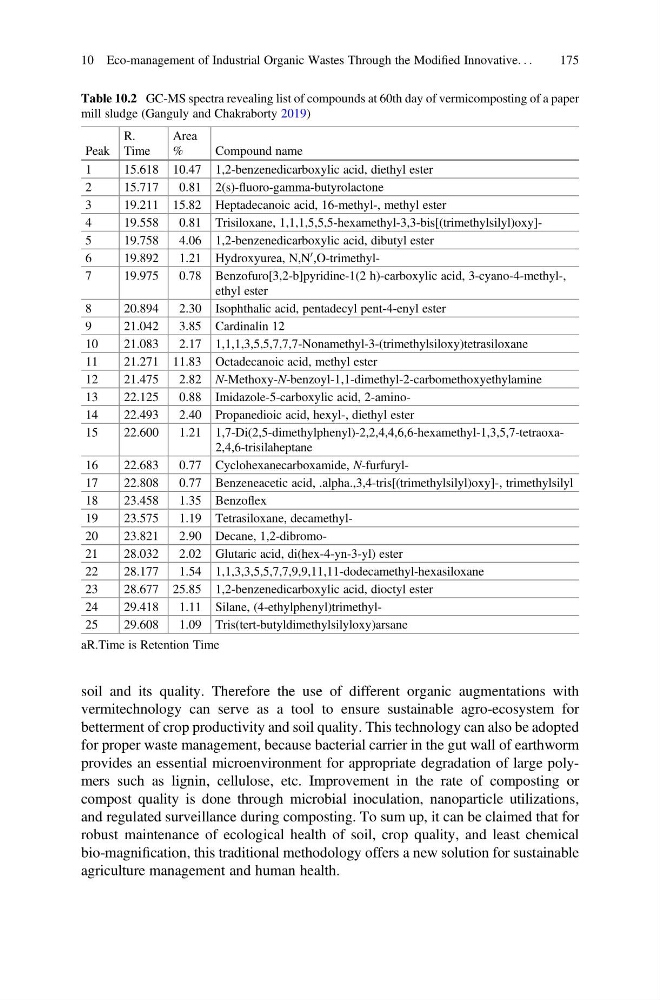
Table 10.2 GC-MS spectra revealing list of compounds at 60th day of vermicomposting of a paper
mill sludge (Ganguly and Chakraborty 2019)
Peak
R.
Time
Area
%
Compound name
1
15.618 10.47 1,2-benzenedicarboxylic acid, diethyl ester
2
15.717
0.81 2(s)-fluoro-gamma-butyrolactone
3
19.211 15.82 Heptadecanoic acid, 16-methyl-, methyl ester
4
19.558
0.81 Trisiloxane, 1,1,1,5,5,5-hexamethyl-3,3-bis[(trimethylsilyl)oxy]5
19.758
4.06 1,2-benzenedicarboxylic acid, dibutyl ester
6
19.892
1.21 Hydroxyurea, N,N
0 ,O-trimethyl7
19.975
0.78 Benzofuro[3,2-b]pyridine-1(2 h)-carboxylic acid, 3-cyano-4-methyl-,
ethyl ester
8
20.894
2.30 Isophthalic acid, pentadecyl pent-4-enyl ester
9
21.042
3.85 Cardinalin 12
10
21.083
2.17 1,1,1,3,5,5,7,7,7-Nonamethyl-3-(trimethylsiloxy)tetrasiloxane
11
21.271 11.83 Octadecanoic acid, methyl ester
12
21.475
2.82 N-Methoxy-N-benzoyl-1,1-dimethyl-2-carbomethoxyethylamine
13
22.125
0.88 Imidazole-5-carboxylic acid, 2-amino14
22.493
2.40 Propanedioic acid, hexyl-, diethyl ester
15
22.600
1.21 1,7-Di(2,5-dimethylphenyl)-2,2,4,4,6,6-hexamethyl-1,3,5,7-tetraoxa2,4,6-trisilaheptane
16
22.683
0.77 Cyclohexanecarboxamide, N-furfuryl17
22.808
0.77 Benzeneacetic acid, .alpha.,3,4-tris[(trimethylsilyl)oxy]-, trimethylsilyl
18
23.458
1.35 Benzoflex
19
23.575
1.19 Tetrasiloxane, decamethyl20
23.821
2.90 Decane, 1,2-dibromo21
28.032
2.02 Glutaric acid, di(hex-4-yn-3-yl) ester
22
28.177
1.54 1,1,3,3,5,5,7,7,9,9,11,11-dodecamethyl-hexasiloxane
23
28.677 25.85 1,2-benzenedicarboxylic acid, dioctyl ester
24
29.418
1.11 Silane, (4-ethylphenyl)trimethyl25
29.608
1.09 Tris(tert-butyldimethylsilyloxy)arsane
aR.Time is Retention Time
10 Eco-management of Industrial Organic Wastes Through the Modified Innovative. . .
175
vermitechnology can serve as a tool to ensure sustainable agro-ecosystem for
betterment of crop productivity and soil quality. This technology can also be adopted
for proper waste management, because bacterial carrier in the gut wall of earthworm
provides an essential microenvironment for appropriate degradation of large polymers such as lignin, cellulose, etc. Improvement in the rate of composting or
compost quality is done through microbial inoculation, nanoparticle utilizations,
and regulated surveillance during composting. To sum up, it can be claimed that for
robust maintenance of ecological health of soil, crop quality, and least chemical
bio-magnification, this traditional methodology offers a new solution for sustainable
agriculture management and human health.
Table 10.2 GC-MS spectra revealing list of compounds at 60th day of vermicomposting of a paper
mill sludge (Ganguly and Chakraborty 2019)
Peak
R.
Time
Area
%
Compound name
1
15.618 10.47 1,2-benzenedicarboxylic acid, diethyl ester
2
15.717
0.81 2(s)-fluoro-gamma-butyrolactone
3
19.211 15.82 Heptadecanoic acid, 16-methyl-, methyl ester
4
19.558
0.81 Trisiloxane, 1,1,1,5,5,5-hexamethyl-3,3-bis[(trimethylsilyl)oxy]5
19.758
4.06 1,2-benzenedicarboxylic acid, dibutyl ester
6
19.892
1.21 Hydroxyurea, N,N
0 ,O-trimethyl7
19.975
0.78 Benzofuro[3,2-b]pyridine-1(2 h)-carboxylic acid, 3-cyano-4-methyl-,
ethyl ester
8
20.894
2.30 Isophthalic acid, pentadecyl pent-4-enyl ester
9
21.042
3.85 Cardinalin 12
10
21.083
2.17 1,1,1,3,5,5,7,7,7-Nonamethyl-3-(trimethylsiloxy)tetrasiloxane
11
21.271 11.83 Octadecanoic acid, methyl ester
12
21.475
2.82 N-Methoxy-N-benzoyl-1,1-dimethyl-2-carbomethoxyethylamine
13
22.125
0.88 Imidazole-5-carboxylic acid, 2-amino14
22.493
2.40 Propanedioic acid, hexyl-, diethyl ester
15
22.600
1.21 1,7-Di(2,5-dimethylphenyl)-2,2,4,4,6,6-hexamethyl-1,3,5,7-tetraoxa2,4,6-trisilaheptane
16
22.683
0.77 Cyclohexanecarboxamide, N-furfuryl17
22.808
0.77 Benzeneacetic acid, .alpha.,3,4-tris[(trimethylsilyl)oxy]-, trimethylsilyl
18
23.458
1.35 Benzoflex
19
23.575
1.19 Tetrasiloxane, decamethyl20
23.821
2.90 Decane, 1,2-dibromo21
28.032
2.02 Glutaric acid, di(hex-4-yn-3-yl) ester
22
28.177
1.54 1,1,3,3,5,5,7,7,9,9,11,11-dodecamethyl-hexasiloxane
23
28.677 25.85 1,2-benzenedicarboxylic acid, dioctyl ester
24
29.418
1.11 Silane, (4-ethylphenyl)trimethyl25
29.608
1.09 Tris(tert-butyldimethylsilyloxy)arsane
aR.Time is Retention Time
10 Eco-management of Industrial Organic Wastes Through the Modified Innovative. . .
175