

475
2012; Beyer et al. 2016; Bock et al. 2018). Much of the information to support
impact assessments was based on toxicity tests under controlled laboratory conditions, and relatively few studies focused on deep ocean species and communities.
Toxicity testing protocols require careful consideration of habitat requirements and
adaptations to the deep ocean environment (e.g., low temperature, high pressure) as
these factors may influence the sensitivity and response of biological resources to
petroleum. Additionally, temperature is known to influence the dissolution rate of
hydrocarbon fractions, thus possibly resulting in delayed effects to exposed aquatic
receptors.
To address knowledge gaps, comparative studies under relevant environmental
conditions are recommended that include standard test species and closely related
shallow- and deepwater species exposed to single hydrocarbon compounds, crude
oil, and/or dispersants. Another aspect that is not well understood is the rate at
which deep ocean communities recover from exposure to oil. Under the assumption
that the physical constraints imposed by the deep ocean environment influence the
growth rate and colonization of many subsea species, it is also likely that recovery
would be slow. Some specific recommendations and research needed to advance the
science of ecotoxicology of deep ocean spills include:
• Genetic markers for adverse effects in invertebrates are not well established, and
more studies are needed to identify markers that are unique to invertebrates and
not extrapolated from vertebrate studies.
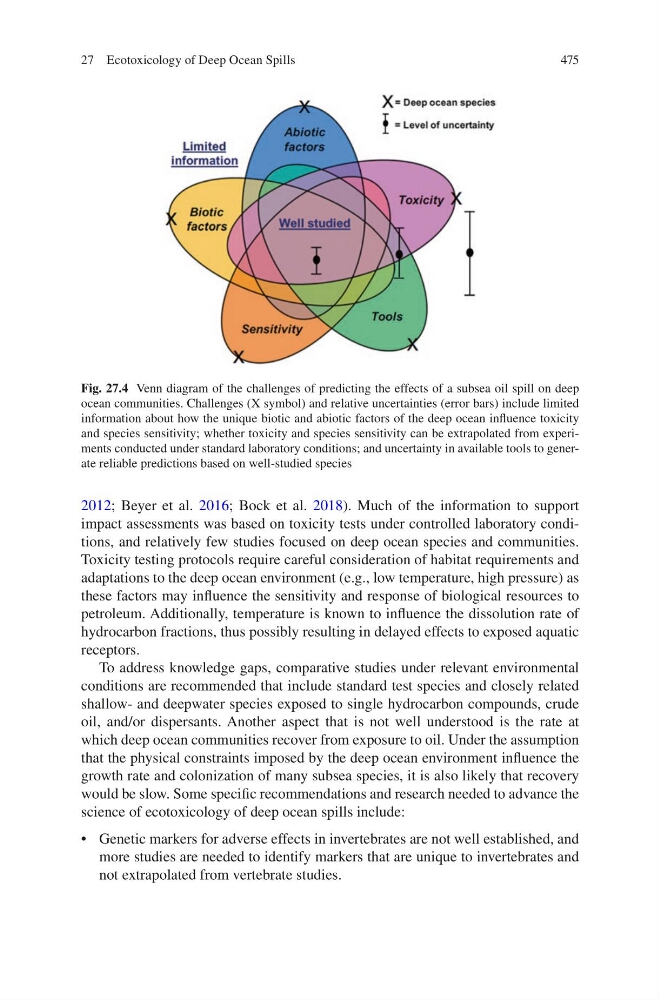
Fig. 27.4 Venn diagram of the challenges of predicting the effects of a subsea oil spill on deep
ocean communities. Challenges (X symbol) and relative uncertainties (error bars) include limited
information about how the unique biotic and abiotic factors of the deep ocean influence toxicity
and species sensitivity; whether toxicity and species sensitivity can be extrapolated from experiments conducted under standard laboratory conditions; and uncertainty in available tools to generate reliable predictions based on well-studied species
27 Ecotoxicology of Deep Ocean Spills
2012; Beyer et al. 2016; Bock et al. 2018). Much of the information to support
impact assessments was based on toxicity tests under controlled laboratory conditions, and relatively few studies focused on deep ocean species and communities.
Toxicity testing protocols require careful consideration of habitat requirements and
adaptations to the deep ocean environment (e.g., low temperature, high pressure) as
these factors may influence the sensitivity and response of biological resources to
petroleum. Additionally, temperature is known to influence the dissolution rate of
hydrocarbon fractions, thus possibly resulting in delayed effects to exposed aquatic
receptors.
To address knowledge gaps, comparative studies under relevant environmental
conditions are recommended that include standard test species and closely related
shallow- and deepwater species exposed to single hydrocarbon compounds, crude
oil, and/or dispersants. Another aspect that is not well understood is the rate at
which deep ocean communities recover from exposure to oil. Under the assumption
that the physical constraints imposed by the deep ocean environment influence the
growth rate and colonization of many subsea species, it is also likely that recovery
would be slow. Some specific recommendations and research needed to advance the
science of ecotoxicology of deep ocean spills include:
• Genetic markers for adverse effects in invertebrates are not well established, and
more studies are needed to identify markers that are unique to invertebrates and
not extrapolated from vertebrate studies.
Fig. 27.4 Venn diagram of the challenges of predicting the effects of a subsea oil spill on deep
ocean communities. Challenges (X symbol) and relative uncertainties (error bars) include limited
information about how the unique biotic and abiotic factors of the deep ocean influence toxicity
and species sensitivity; whether toxicity and species sensitivity can be extrapolated from experiments conducted under standard laboratory conditions; and uncertainty in available tools to generate reliable predictions based on well-studied species
27 Ecotoxicology of Deep Ocean Spills