

50
2 High-Efficient Anaerobic Fermentation Technology of Organic …
production (Stage II, 69–93 h), peak methanogenic stage (Stage III, 89–113 h), and
late methanogenic stage (Stage IV, 401–425 h).
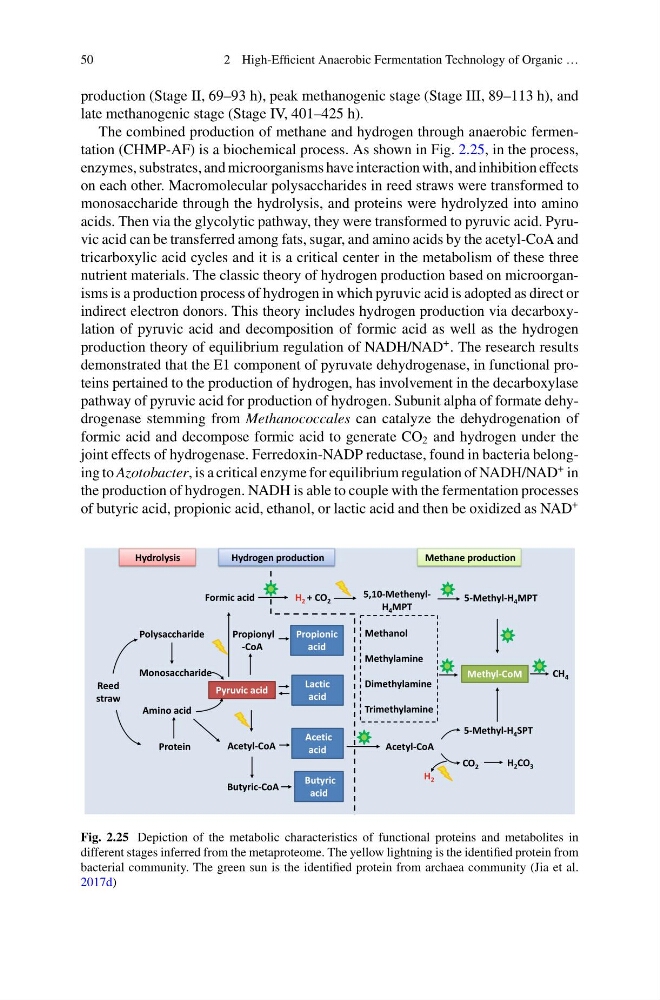
The combined production of methane and hydrogen through anaerobic fermentation (CHMP-AF) is a biochemical process. As shown in Fig. 2.25, in the process,
enzymes, substrates, and microorganisms have interaction with, and inhibition effects
on each other. Macromolecular polysaccharides in reed straws were transformed to
monosaccharide through the hydrolysis, and proteins were hydrolyzed into amino
acids. Then via the glycolytic pathway, they were transformed to pyruvic acid. Pyruvic acid can be transferred among fats, sugar, and amino acids by the acetyl-CoA and
tricarboxylic acid cycles and it is a critical center in the metabolism of these three
nutrient materials. The classic theory of hydrogen production based on microorganisms is a production process of hydrogen in which pyruvic acid is adopted as direct or
indirect electron donors. This theory includes hydrogen production via decarboxylation of pyruvic acid and decomposition of formic acid as well as the hydrogen
production theory of equilibrium regulation of NADH/NAD
+ . The research results
demonstrated that the E1 component of pyruvate dehydrogenase, in functional proteins pertained to the production of hydrogen, has involvement in the decarboxylase
pathway of pyruvic acid for production of hydrogen. Subunit alpha of formate dehydrogenase stemming from Methanococcales can catalyze the dehydrogenation of
formic acid and decompose formic acid to generate CO 2 and hydrogen under the
joint effects of hydrogenase. Ferredoxin-NADP reductase, found in bacteria belonging to Azotobacter, is a critical enzyme for equilibrium regulation of NADH/NAD
+ in
the production of hydrogen. NADH is able to couple with the fermentation processes
of butyric acid, propionic acid, ethanol, or lactic acid and then be oxidized as NAD
+
Reed
straw
Polysaccharide
Monosaccharide
Protein
Amino acid
Pyruvic acid
Acetyl-CoA
Acetic
acid
Butyric-CoA
Butyric
acid
Lactic
acid
Propionic
acid
Propionyl
-CoA
Formic acid
H 2 + CO 2
5,10-MethenylH 4 MPT
5-Methyl-H 4 MPT
Methyl-CoM
CH 4
Acetyl-CoA
5-Methyl-H 4 SPT
CO 2
H 2 CO 3
Methanol
Methylamine
Dimethylamine
Trimethylamine
Hydrolysis
Hydrogen production
Methane production
H 2
Fig. 2.25 Depiction of the metabolic characteristics of functional proteins and metabolites in
different stages inferred from the metaproteome. The yellow lightning is the identified protein from
bacterial community. The green sun is the identified protein from archaea community (Jia et al.
2017d)
2 High-Efficient Anaerobic Fermentation Technology of Organic …
production (Stage II, 69–93 h), peak methanogenic stage (Stage III, 89–113 h), and
late methanogenic stage (Stage IV, 401–425 h).
The combined production of methane and hydrogen through anaerobic fermentation (CHMP-AF) is a biochemical process. As shown in Fig. 2.25, in the process,
enzymes, substrates, and microorganisms have interaction with, and inhibition effects
on each other. Macromolecular polysaccharides in reed straws were transformed to
monosaccharide through the hydrolysis, and proteins were hydrolyzed into amino
acids. Then via the glycolytic pathway, they were transformed to pyruvic acid. Pyruvic acid can be transferred among fats, sugar, and amino acids by the acetyl-CoA and
tricarboxylic acid cycles and it is a critical center in the metabolism of these three
nutrient materials. The classic theory of hydrogen production based on microorganisms is a production process of hydrogen in which pyruvic acid is adopted as direct or
indirect electron donors. This theory includes hydrogen production via decarboxylation of pyruvic acid and decomposition of formic acid as well as the hydrogen
production theory of equilibrium regulation of NADH/NAD
+ . The research results
demonstrated that the E1 component of pyruvate dehydrogenase, in functional proteins pertained to the production of hydrogen, has involvement in the decarboxylase
pathway of pyruvic acid for production of hydrogen. Subunit alpha of formate dehydrogenase stemming from Methanococcales can catalyze the dehydrogenation of
formic acid and decompose formic acid to generate CO 2 and hydrogen under the
joint effects of hydrogenase. Ferredoxin-NADP reductase, found in bacteria belonging to Azotobacter, is a critical enzyme for equilibrium regulation of NADH/NAD
+ in
the production of hydrogen. NADH is able to couple with the fermentation processes
of butyric acid, propionic acid, ethanol, or lactic acid and then be oxidized as NAD
+
Reed
straw
Polysaccharide
Monosaccharide
Protein
Amino acid
Pyruvic acid
Acetyl-CoA
Acetic
acid
Butyric-CoA
Butyric
acid
Lactic
acid
Propionic
acid
Propionyl
-CoA
Formic acid
H 2 + CO 2
5,10-MethenylH 4 MPT
5-Methyl-H 4 MPT
Methyl-CoM
CH 4
Acetyl-CoA
5-Methyl-H 4 SPT
CO 2
H 2 CO 3
Methanol
Methylamine
Dimethylamine
Trimethylamine
Hydrolysis
Hydrogen production
Methane production
H 2
Fig. 2.25 Depiction of the metabolic characteristics of functional proteins and metabolites in
different stages inferred from the metaproteome. The yellow lightning is the identified protein from
bacterial community. The green sun is the identified protein from archaea community (Jia et al.
2017d)