

2.3 Research on High-Efficient Anaerobic Fermentation Technology …
51
to generate hydrogen. This ensures equilibrium of NADH/NAD
+ in the metabolism.
Hence, many VFAs were observed in the later production stages of hydrogen and
then subjected to decomposition into one-carbon compounds and CO 2 by virtue of
microorganisms to be reduced for producing methane.
Production of methane from microorganisms is a process capable of reducing
methyl in one-carbon compounds and CO 2 to methane under the joint action of
numerous coenzymes and enzymes in the one-carbon metabolism. Coenzymes which
are closely related to production of methane can be classified into two types: one is
the one-carbon carriers, including H 4 MPT, H 4 SPT and coenzyme M; and the other
is carriers of electron consisting of coenzyme F 420 , ferredoxin, coenzyme B and
cytochrome. The result indicates that the three pathways for production of methane
exist in the CHMP-AF using reed straw. This was realized by the cooperation of
numerous archaea proteins and small amounts of bacterial proteins, with diversity
and microorganic differences in different stages.
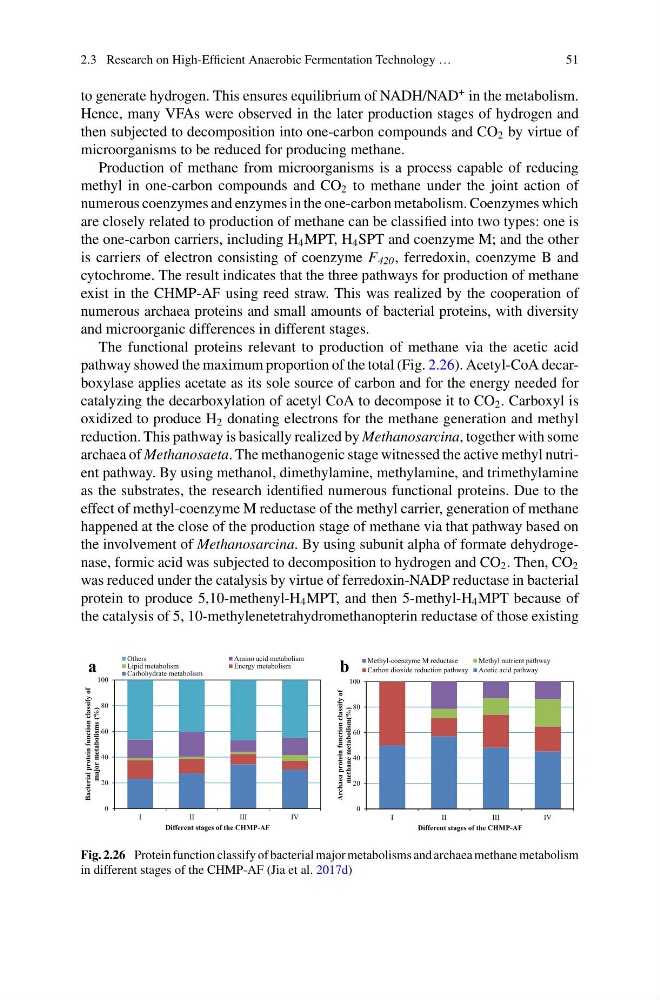
The functional proteins relevant to production of methane via the acetic acid
pathway showed the maximum proportion of the total (Fig. 2.26). Acetyl-CoA decarboxylase applies acetate as its sole source of carbon and for the energy needed for
catalyzing the decarboxylation of acetyl CoA to decompose it to CO 2 . Carboxyl is
oxidized to produce H 2 donating electrons for the methane generation and methyl
reduction. This pathway is basically realized by Methanosarcina, together with some
archaea of Methanosaeta. The methanogenic stage witnessed the active methyl nutrient pathway. By using methanol, dimethylamine, methylamine, and trimethylamine
as the substrates, the research identified numerous functional proteins. Due to the
effect of methyl-coenzyme M reductase of the methyl carrier, generation of methane
happened at the close of the production stage of methane via that pathway based on
the involvement of Methanosarcina. By using subunit alpha of formate dehydrogenase, formic acid was subjected to decomposition to hydrogen and CO 2 . Then, CO 2
was reduced under the catalysis by virtue of ferredoxin-NADP reductase in bacterial
protein to produce 5,10-methenyl-H 4 MPT, and then 5-methyl-H 4 MPT because of
the catalysis of 5, 10-methylenetetrahydromethanopterin reductase of those existing
0
20
40
60
80
100
I
II
III
IV
Bacterial protein function classify of
major metabolisms (%)
Different stages of the CHMP-AF
Others
Amino acid metabolism
Lipid metabolism
Energy metabolism
Carbohydrate metabolism
0
20
40
60
80
100
I
I I
I I I
I V
Archaea protein function classify of
methane metabolism(%)
Different stages of the CHMP-AF
Methyl-coenzyme M reductase
Methyl nutrient pathway
Carbon dioxide reduction pathway Acetic acid pathway
a
b
Fig. 2.26 Protein function classify of bacterial major metabolisms and archaea methane metabolism
in different stages of the CHMP-AF (Jia et al. 2017d)
51
to generate hydrogen. This ensures equilibrium of NADH/NAD
+ in the metabolism.
Hence, many VFAs were observed in the later production stages of hydrogen and
then subjected to decomposition into one-carbon compounds and CO 2 by virtue of
microorganisms to be reduced for producing methane.
Production of methane from microorganisms is a process capable of reducing
methyl in one-carbon compounds and CO 2 to methane under the joint action of
numerous coenzymes and enzymes in the one-carbon metabolism. Coenzymes which
are closely related to production of methane can be classified into two types: one is
the one-carbon carriers, including H 4 MPT, H 4 SPT and coenzyme M; and the other
is carriers of electron consisting of coenzyme F 420 , ferredoxin, coenzyme B and
cytochrome. The result indicates that the three pathways for production of methane
exist in the CHMP-AF using reed straw. This was realized by the cooperation of
numerous archaea proteins and small amounts of bacterial proteins, with diversity
and microorganic differences in different stages.
The functional proteins relevant to production of methane via the acetic acid
pathway showed the maximum proportion of the total (Fig. 2.26). Acetyl-CoA decarboxylase applies acetate as its sole source of carbon and for the energy needed for
catalyzing the decarboxylation of acetyl CoA to decompose it to CO 2 . Carboxyl is
oxidized to produce H 2 donating electrons for the methane generation and methyl
reduction. This pathway is basically realized by Methanosarcina, together with some
archaea of Methanosaeta. The methanogenic stage witnessed the active methyl nutrient pathway. By using methanol, dimethylamine, methylamine, and trimethylamine
as the substrates, the research identified numerous functional proteins. Due to the
effect of methyl-coenzyme M reductase of the methyl carrier, generation of methane
happened at the close of the production stage of methane via that pathway based on
the involvement of Methanosarcina. By using subunit alpha of formate dehydrogenase, formic acid was subjected to decomposition to hydrogen and CO 2 . Then, CO 2
was reduced under the catalysis by virtue of ferredoxin-NADP reductase in bacterial
protein to produce 5,10-methenyl-H 4 MPT, and then 5-methyl-H 4 MPT because of
the catalysis of 5, 10-methylenetetrahydromethanopterin reductase of those existing
0
20
40
60
80
100
I
II
III
IV
Bacterial protein function classify of
major metabolisms (%)
Different stages of the CHMP-AF
Others
Amino acid metabolism
Lipid metabolism
Energy metabolism
Carbohydrate metabolism
0
20
40
60
80
100
I
I I
I I I
I V
Archaea protein function classify of
methane metabolism(%)
Different stages of the CHMP-AF
Methyl-coenzyme M reductase
Methyl nutrient pathway
Carbon dioxide reduction pathway Acetic acid pathway
a
b
Fig. 2.26 Protein function classify of bacterial major metabolisms and archaea methane metabolism
in different stages of the CHMP-AF (Jia et al. 2017d)